-
×
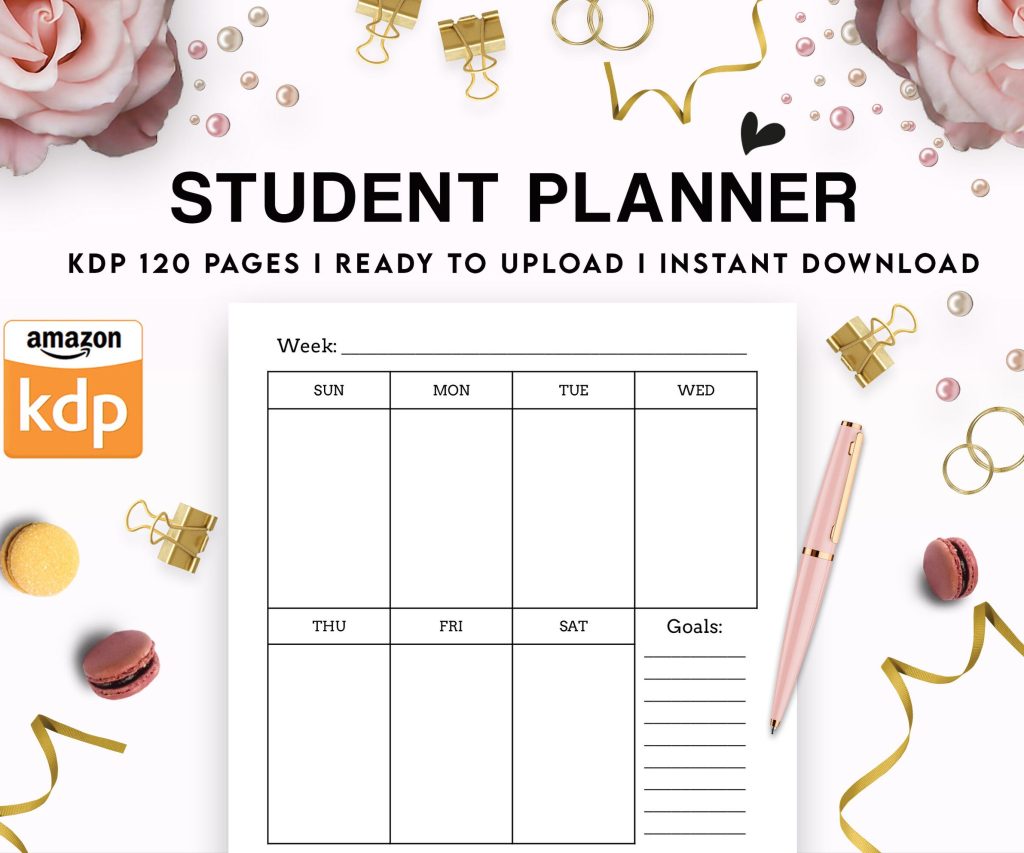 Student Planner Journal 120 pages Ready to Upload PDF Commercial Use KDP Template 6x9" 8.5x11" for Low Content book
1 × $0.00
Student Planner Journal 120 pages Ready to Upload PDF Commercial Use KDP Template 6x9" 8.5x11" for Low Content book
1 × $0.00
Subtotal: $0.00

Okay so the whole Amazon KDP thing is basically just Amazon’s self-publishing platform and honestly once you get past the initial setup confusion it’s pretty straightforward. I was literally helping someone set this up last Tuesday while my cat kept walking across my keyboard so let me just brain dump everything you actually need to know.
First thing – you need to go to kdp.amazon.com and create an account. Super basic stuff but here’s what nobody tells you: use the SAME email as your regular Amazon account if you already have one. Makes your life easier later when you’re trying to track sales or whatever. They’re gonna ask for tax info right away which is annoying but you gotta fill out either a W-9 if you’re in the US or W-8 if you’re international. Don’t skip this or they’ll withhold like 30% of your royalties which… yeah no thanks.
So Amazon lets you do ebooks (Kindle) and paperbacks (print-on-demand) and honestly most people should start with ebooks because there’s literally zero upfront cost. Paperbacks are cool and all but you need to think about printing costs eating into your royalties.
For ebooks the file format matters way more than you’d think. Amazon wants either DOC, DOCX, or ideally EPUB files. I usually just write everything in Google Docs or Word and upload the DOCX directly. Their system converts it automatically and like 80% of the time it works fine. That other 20% though… you’ll need to use their Kindle Create tool which is free and actually not terrible once you figure it out.
Your cover needs to be 2560 x 1600 pixels minimum for ebooks. I know that sounds random but it’s their standard. For paperbacks it depends on your trim size but we’ll get to that in a sec.
Here’s the thing about covers – you can use Canva or whatever but make sure you own the commercial rights to any images or fonts. Amazon doesn’t check this super carefully during upload but if someone reports you later it’s a whole nightmare. I use either public domain images from places like Unsplash or I buy stock photos from places like Depositphotos when I need something specific.
Oh and another thing – your cover needs to look good as a tiny thumbnail because that’s how 90% of people will first see it. I literally squint at my screen from across the room to test this which probably makes me look insane but it works.
When you click “Create New Title” in your KDP dashboard you’ll get hit with a million fields to fill out. The important ones:
The description thing trips people up constantly. You can use basic HTML tags like for bold and for italics and
for line breaks. Makes your description actually readable instead of just a blob of text. I spent like three hours figuring this out when I first started because their help docs are kinda vague about it.
So those 7 keyword boxes… don’t just stuff them with random words. Think about what someone would actually TYPE into Amazon search. Like if you wrote a cookbook about air fryers, you’d want phrases like “easy air fryer recipes” or “air fryer cookbook for beginners” not just “cooking” or “food” because those are way too broad.
Wait I forgot to mention – Amazon’s algorithm also looks at your title, subtitle, and description for keywords so you don’t need to repeat those in your keyword boxes. Use those boxes for variations and related terms people might search for.
Okay so pricing is where people overthink everything. For ebooks you can price between $0.99 and $200 but realistically you want to be in the $2.99 to $9.99 range for most genres. Here’s why:
If you price between $2.99 and $9.99 you get 70% royalty (minus a small delivery fee based on file size). Outside that range you only get 35% royalty. The math is pretty simple – a $2.99 book at 70% makes you about $2.04 per sale. A $0.99 book at 35% makes you $0.35. You’d need to sell almost 6x as many copies at $0.99 to make the same money.
For paperbacks Amazon takes their cut for printing costs PLUS their percentage so your royalties are way lower. Like I have a 120-page paperback priced at $12.99 and I make about $3.50 per sale after printing costs. You can use their pricing calculator in the dashboard to figure out exactly what you’ll make before you publish.
This is gonna sound weird but enrolling in KDP Select is actually a bigger decision than most people realize. If you check that box you’re giving Amazon exclusive distribution rights for 90 days. In exchange you get:
I usually enroll my books in Select for at least the first 90 days because the Kindle Unlimited money can be significant. Like I have one book that makes more from KU page reads than from actual sales. But if you wanna distribute to Apple Books, Kobo, whatever – you can’t do Select. It’s either Amazon exclusive or wide distribution, not both.
After you fill out all the metadata stuff you upload your manuscript file. Amazon’s gonna process it and show you a previewer so you can check how it looks on different devices. DO NOT SKIP THIS STEP. I’ve caught so many formatting issues in the previewer – weird page breaks, messed up chapter headings, images that don’t display right.
For paperbacks you also need to upload your cover as a single PDF that includes the front cover, spine, and back cover. Amazon has a cover calculator that tells you the exact dimensions based on your page count and paper type. The spine width calculation is super important because if you get it wrong your cover won’t line up properly when they print it.
Your interior file needs to be a PDF with the right trim size. Most people do 6″ x 9″ for non-fiction or 5″ x 8″ for fiction. You can choose white or cream paper (cream costs slightly more to print but looks more professional for novels).
Margins matter way more than you’d think. You need at least 0.5″ on the outside edges and 0.75″ on the inside (gutter) for books under 400 pages. Over 400 pages and that gutter needs to be even wider. Their help docs have the exact specs but honestly just use their paperback templates – saves so much headache.
So you click publish and then… you wait. Ebooks usually go live within 24-72 hours. Paperbacks can take up to 5 days because they have to approve the actual print file. You’ll get an email when it’s live but I’m always obsessively refreshing my dashboard anyway.
One thing that caught me off guard my first time – your book might not show up in search right away even after it’s live. Amazon’s search algorithm needs time to index everything. Give it like a week before you panic about not being able to find your own book.
Oh and another thing – you can order author copies of your paperbacks at printing cost which is awesome for having physical copies to show people or whatever. It’s under the three dots menu next to your book in the dashboard.
The KDP dashboard has sales reports, royalty reports, and if you’re in Select you’ll see KU page reads. Sales reports update every few hours but aren’t exactly real-time. Royalty reports show what you’ll actually get paid and those get finalized about 60 days after the month ends because of returns and stuff.
Page reads are weird because they don’t show up immediately – there’s like a 2-3 day delay. And you get paid per page read through the KU Global Fund which changes every month. Recently it’s been around $0.004 per page so like if someone reads your whole 250-page book you’d make about a dollar from that.
Not formatting the manuscript properly before upload – use styles for your headings, don’t just make text bigger and bold manually. Amazon’s converter works way better with properly formatted Word docs.
Choosing categories that are too competitive – like putting your book in “Fiction > Literature” where you’re competing with classics instead of finding a more specific niche.
Forgetting to fill out your author bio and not linking to other books you’ve published. Cross-promotion is huge.
Pricing too high right out the gate when you have zero reviews. Nobody’s gonna take a chance on an unknown author’s $12.99 ebook when they have no social proof.
Not using all 7 keyword boxes or wasting them on single words instead of phrases.
Wait I should mention – you can update pretty much everything except your ISBN after publishing. So if you realize your description sucks or you wanna change your price, just go back into the dashboard and edit. Changes usually go live within a few hours for most fields.
The whole process really isn’t as complicated as it seems when you’re staring at all those empty fields for the first time. I was watching The Office for like the tenth time when I published my first book and kept having to pause because I was so nervous about messing something up. But honestly Amazon’s pretty forgiving and everything’s editable so just… get it done and fix stuff later if you need to.
DISCOVER OUR FREE BEST SELLING PRODUCTS
Editable Canva Lined Journal: Express Your Thoughts – KDP Template
Lined Pages Journal 120 pages Ready to Upload PDF Commercial Use KDP Template 6×9 8.5×11 5×8 for Notebooks, Diaries, Low Content
Lined Pages Journal 120 pages Ready to Upload PDF Commercial Use KDP Template 6×9 8.5×11 5×8 for Notebooks, Diaries, Low Content
Cute Dogs Coloring Book for Kids | Activity Book | KDP Ready-To-Upload
Daily Planner Diary : Diary Planners for Everyday Productivity, 120 pages, 6×9 Size | Amazon KDP Interior
Wolf Coloring KDP interior For Adults, Used as Low Content Book, PDF Template Ready To Upload COMMERCIAL Use 8.5×11"
Coloring Animals Head Book for Kids, Perfect for ages 2-4, 4-8 | 8.5×11 PDF
Printable Blank Comic Book Pages PDF : Create Your Own Comics – 3 Available Sizes
Notes KDP interior Ready To Upload, Sizes 8.5×11 6×9 5×8 inch PDF FILE Used as Amazon KDP Paperback Low Content Book, journal, Notebook, Planner, COMMERCIAL Use
Black Lined Journal: 120 Pages of Black Lined Paper Perfect for Journaling, KDP Notebook Template – 6×9
Student Planner Journal 120 pages Ready to Upload PDF Commercial Use KDP Template 6×9" 8.5×11" for Low Content book
Recipe Journal Template – Editable Recipe Book Template, 120 Pages – Amazon KDP Interior