Okay so here’s the thing about scaling KDP income – most people completely overthink it in the beginning and then don’t think strategically enough once they get a few books out there. I made like $47 my first month back in 2017 and thought I’d discovered a goldmine, which… I kinda had, but not in the way I expected.
The basic business model is pretty straightforward. You create books, upload them to KDP, Amazon handles printing and shipping for paperbacks or delivery for ebooks, and you get royalties. But scaling is where people either plateau at $500/month forever or actually build something that pays real bills.
Understanding Your Actual Revenue Streams
So you’ve got three main formats – ebooks, paperbacks, and hardcovers. Ebooks pay 35% or 70% royalty depending on your pricing (gotta price between $2.99-$9.99 for the 70%). Paperbacks and hardcovers pay 60% of list price minus printing costs. And printing costs… they’re not nothing. A 120-page paperback costs about $2.50 to print, so if you price it at $7.99, you’re looking at roughly $2.30 profit per sale.
Here’s what nobody tells you though – paperbacks outsell ebooks in the low-content and certain niche spaces by like 10 to 1. I’ve got planners that sell maybe 3 ebook copies a month and 200+ paperback copies. The math just works different depending on what you’re publishing.
The Content Types That Actually Scale
I’ve tested everything. Literally everything. My Dropbox is a graveyard of ideas that made $0.
Low-Content Books
These are your journals, planners, notebooks, logbooks. The profit margins aren’t huge per book but the volume can be insane. I’ve got a simple gratitude journal that’s made me about $18k over three years. Nothing fancy. Just lined pages with prompts.
The key with low-content is you need volume AND you need to niche down hard. Don’t make a “journal for women” – make a “gratitude journal for nurses working night shifts” or whatever. Specific sells.
Production is fast too. Once you’ve got templates set up in Canva or whatever you use, you can pump out variations. I made 15 different fitness logbooks in one weekend last year while binging that show about chess (Queen’s Gambit, couldn’t stop watching).
No-Content Books
Notebooks, sketchbooks, blank recipe books. Even simpler than low-content. Lower royalties per sale usually but you can create these SO fast. I use these mainly to fill out my catalog and capture long-tail keywords.
Ebooks and Actual Books
This is where the real money is if you can do it right. I’m not talking about writing the next great novel here – I’m talking about practical how-to guides, niche non-fiction, short reads that solve specific problems.
My best performing ebook is a 35-page guide about setting up home recording studios under $500. Makes about $800-1200/month just sitting there. Took me a weekend to write because I actually know that stuff from my old hobby.
The Scaling Framework That Actually Works
Okay so this is gonna sound counterintuitive but you don’t scale by just making more books. You scale by building systems.
The Template System
Stop creating from scratch every time. Build templates for everything. I’ve got master templates for:
- Journal interiors (lined, dotted, blank)
- Planner layouts (daily, weekly, monthly)
- Cover designs (probably 30+ base designs I just modify)
- Book descriptions
- Keyword research spreadsheets
Once you’ve got templates, creating a new book takes hours instead of days. My current record is publishing 4 planners in one day. They weren’t masterpieces but they sell.
The Series Approach
Instead of random books, create series. I’ve got a whole line of “Practical Logbooks for [Profession]” – made ones for teachers, nurses, contractors, real estate agents, etc. Same interior, different cover and title tweaks.
This does two things – it makes production faster AND it means when someone buys one and likes it, they might buy others. Plus Amazon’s algorithm seems to like when you have related books.
The Niche Domination Strategy
Pick 3-5 niches and absolutely flood them. Don’t spread yourself thin across 50 different topics. I focused hard on fitness tracking, teacher planning, and hobbyist logbooks. Now when people search for specific terms in those niches, multiple of my books show up.
Wait I forgot to mention – you need like at least 30-50 books in a niche before this really kicks in. I know that sounds like a lot but if you’re using templates it’s doable.
Pricing Strategy That Doesn’t Leave Money on the Table
Most beginners price way too low. They see competitors at $5.99 and think they need to undercut. That’s… not how this works.
I price most paperbacks between $7.99-$12.99 depending on page count. Hardcovers $19.99-$24.99. Ebooks $4.99-$6.99.
Here’s the thing – people shopping for a specific planner or journal aren’t usually price shopping that hard. They’re looking for something that fits their exact need. If your book looks professional and solves their problem, an extra $2-3 doesn’t matter.
I tested this extensively last year. Raised prices on 40 books by 20-30%. Sales dropped maybe 5%. Revenue jumped 15%.
The Paperback-Hardcover Play
Always offer both if your content works for it. Price the hardcover about 2.5x the paperback. Most people buy paperback but enough people buy hardcover that it adds up. I make an extra $400-600/month just from hardcover sales across my catalog.
Marketing Without Burning Money
Okay so funny story – I spent $2000 on Amazon ads in my first year and made back maybe $600 in attributable sales. Complete disaster. Now I spend about $300/month on ads and they’re profitable, but that’s because I finally figured out what actually works.
Amazon Ads Done Right
Only advertise books that are already selling organically. Don’t try to force a book that nobody wants. Use auto campaigns first to gather data, then transition to manual campaigns targeting specific competitor ASINs.
I keep bids low – like $0.15-$0.30 – and just let it run. Not trying to dominate, just trying to stay visible and catch some spillover traffic.
The Organic Growth Hack
This is gonna sound weird but the best “marketing” is just having more books. Amazon’s algorithm favors publishers with bigger catalogs. Once I crossed 100 books, my overall sales jumped even though I wasn’t actively promoting anything.
More books = more entry points = more chances for Amazon to recommend your stuff.
Keywords and SEO
This matters SO much more than people think. Your seven keyword slots plus your title and subtitle are everything for discoverability.
I use a mix of high-volume competitive terms and super specific long-tail phrases. Like for a meal planning book, I’d use “meal planner” (competitive) but also “meal planning journal for diabetics” or “weekly meal prep notebook family of 4” or whatever.
Tools like Publisher Rocket help but honestly just searching Amazon and looking at what autocomplete suggests tells you a lot.
The Production Schedule
When I was scaling from $500/month to $5k/month, I was publishing 8-12 books per month minimum. Now I publish maybe 4-6 but they’re more strategic.
I batch everything. One day for research and keyword hunting. One day for creating 5-6 interiors. One day for covers. One day for descriptions and uploading. My dog hates those days because I barely leave my desk.
Outsourcing What Makes Sense
I tried outsourcing everything at one point – hired designers on Fiverr and Upwork. Mixed results honestly. The problem is explaining exactly what you want takes almost as long as doing it yourself sometimes.
What DOES work is outsourcing research and data entry type stuff. I have a VA who helps with keyword research and uploading books. Costs me $300/month and saves probably 15-20 hours.
The Numbers You Need to Track
Don’t just look at total sales. Track:
- Revenue per book
- Sales velocity (how many copies per day)
- BSR trends for your top performers
- Ad spend vs. ad revenue by campaign
- Which niches are growing vs. declining
I’ve got a spreadsheet that’s probably too complicated but it shows me exactly which books are pulling their weight and which are dead weight.
About 20% of my catalog generates 80% of revenue. That’s normal. The other 80% of books are still worth having though – they’re like lottery tickets that occasionally hit and they fill out your author presence.
Scaling Beyond Just More Books
Once you’re consistently over $2k-3k/month, you can start thinking about other moves.
Building an Author Platform
I’ve got three pen names now for different niches. Keeps things organized and lets me build niche-specific brands. Each has its own Amazon author page and eventually I’ll add websites but honestly haven’t needed to yet.
Expanding to Other Platforms
KDP is king but there’s money in IngramSpark, Lulu, even Etsy for certain products. I’m testing Etsy right now with digital downloads and printables. Made $340 last month which isn’t huge but it’s something.
The Subscription Play
Some people build enough of a catalog that they can launch a membership or subscription for new releases. Haven’t done this myself but I know publishers making good money this way.
Avoiding the Mistakes That Kill Growth
Copyright violations will destroy your account. Don’t use images you don’t have rights to. Don’t copy other people’s books. Don’t use trademarked terms. Amazon doesn’t mess around.
I’ve had books taken down for accidentally using a font I didn’t have commercial license for. Now I triple-check everything.
Also – quality matters more as you scale. My early books were kinda rough. Now I make sure everything looks professional because your reputation across your catalog matters. One crappy book can hurt sales of your other books through negative reviews.
The Reality of Timeline and Income
Month 1-3: You’re probably making under $200/month unless you get lucky
Month 4-6: If you’re publishing consistently, maybe $500-1000
Month 7-12: Could hit $2k-3k if you’re doing it right
Year 2+: This is where it compounds if you’ve built a solid catalog
I hit $5k/month around month 18. Now I average between $8k-12k depending on the month. Q4 is always huge because of holiday shopping.
The people making $50k+ months on KDP either have massive catalogs (500+ books), got lucky with a hit book, or are doing something more advanced like using ads aggressively with high-margin ebooks.
Oh and another thing – this isn’t passive income in the beginning. That’s a myth. Once you’ve got 100+ books out there and systems running, it becomes more passive. But building the catalog takes real work.
Your first 50 books are the hardest because you’re still figuring out what works and you don’t have momentum yet. Push through that phase.

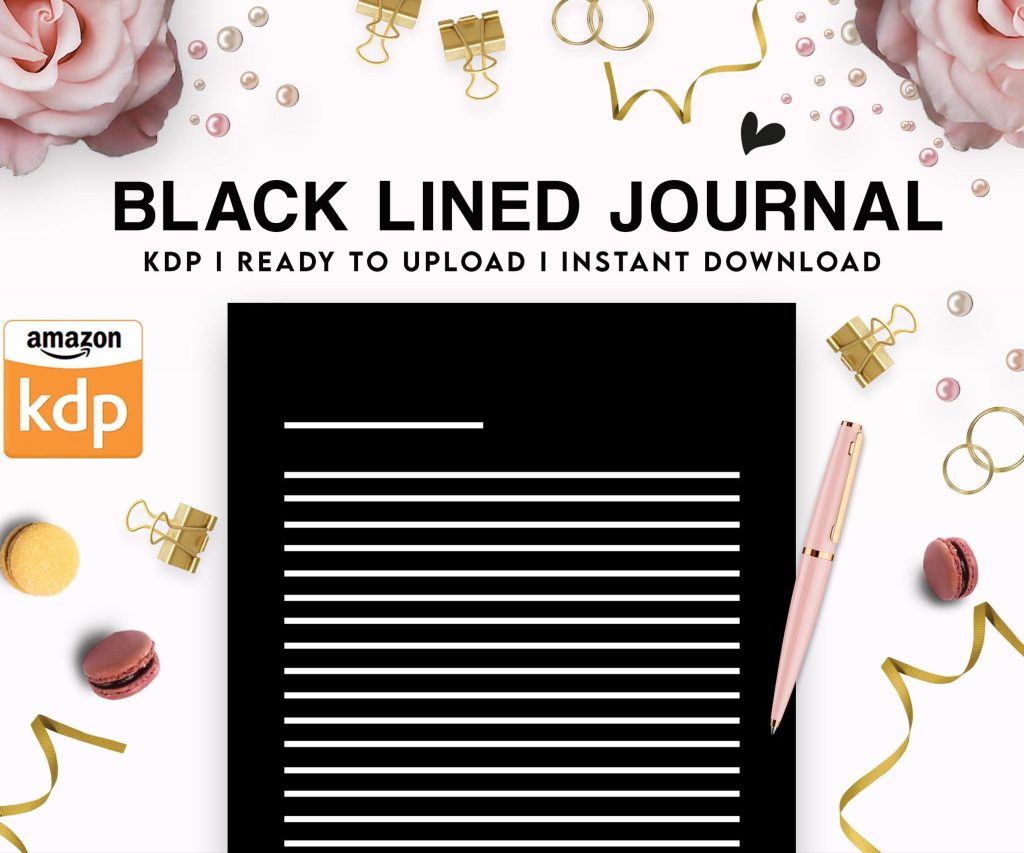 Black Lined Journal: 120 Pages of Black Lined Paper Perfect for Journaling, KDP Notebook Template - 6×9
1 × $0.00
Black Lined Journal: 120 Pages of Black Lined Paper Perfect for Journaling, KDP Notebook Template - 6×9
1 × $0.00 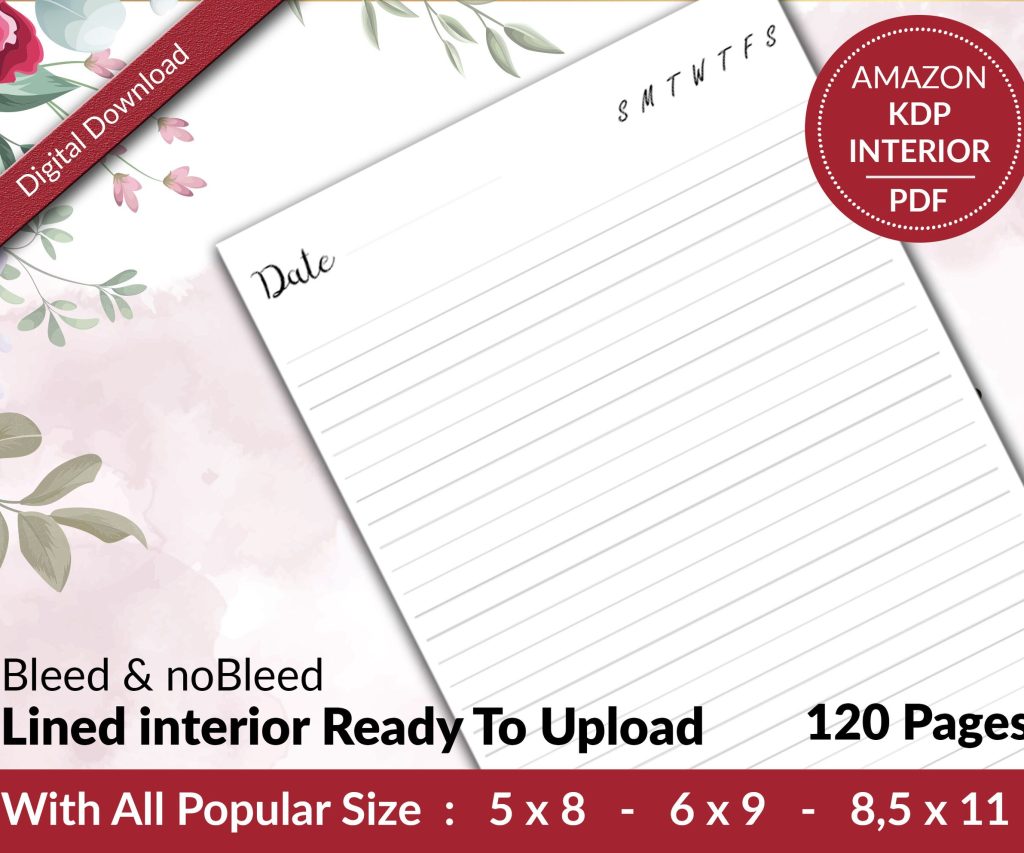 Lined Pages Journal 120 pages Ready to Upload PDF Commercial Use KDP Template 6x9 8.5x11 5x8 for Notebooks, Diaries, Low Content
1 × $0.00
Lined Pages Journal 120 pages Ready to Upload PDF Commercial Use KDP Template 6x9 8.5x11 5x8 for Notebooks, Diaries, Low Content
1 × $0.00  Cute Dogs Coloring Book for Kids | Activity Book | KDP Ready-To-Upload
1 × $0.00
Cute Dogs Coloring Book for Kids | Activity Book | KDP Ready-To-Upload
1 × $0.00 
DISCOVER OUR FREE BEST SELLING PRODUCTS
Editable Canva Lined Journal: Express Your Thoughts – KDP Template
Lined Pages Journal 120 pages Ready to Upload PDF Commercial Use KDP Template 6×9 8.5×11 5×8 for Notebooks, Diaries, Low Content
Lined Pages Journal 120 pages Ready to Upload PDF Commercial Use KDP Template 6×9 8.5×11 5×8 for Notebooks, Diaries, Low Content
Cute Dogs Coloring Book for Kids | Activity Book | KDP Ready-To-Upload
Daily Planner Diary : Diary Planners for Everyday Productivity, 120 pages, 6×9 Size | Amazon KDP Interior
Wolf Coloring KDP interior For Adults, Used as Low Content Book, PDF Template Ready To Upload COMMERCIAL Use 8.5×11"
Coloring Animals Head Book for Kids, Perfect for ages 2-4, 4-8 | 8.5×11 PDF
Printable Blank Comic Book Pages PDF : Create Your Own Comics – 3 Available Sizes
Notes KDP interior Ready To Upload, Sizes 8.5×11 6×9 5×8 inch PDF FILE Used as Amazon KDP Paperback Low Content Book, journal, Notebook, Planner, COMMERCIAL Use
Black Lined Journal: 120 Pages of Black Lined Paper Perfect for Journaling, KDP Notebook Template – 6×9
Student Planner Journal 120 pages Ready to Upload PDF Commercial Use KDP Template 6×9" 8.5×11" for Low Content book
Recipe Journal Template – Editable Recipe Book Template, 120 Pages – Amazon KDP Interior