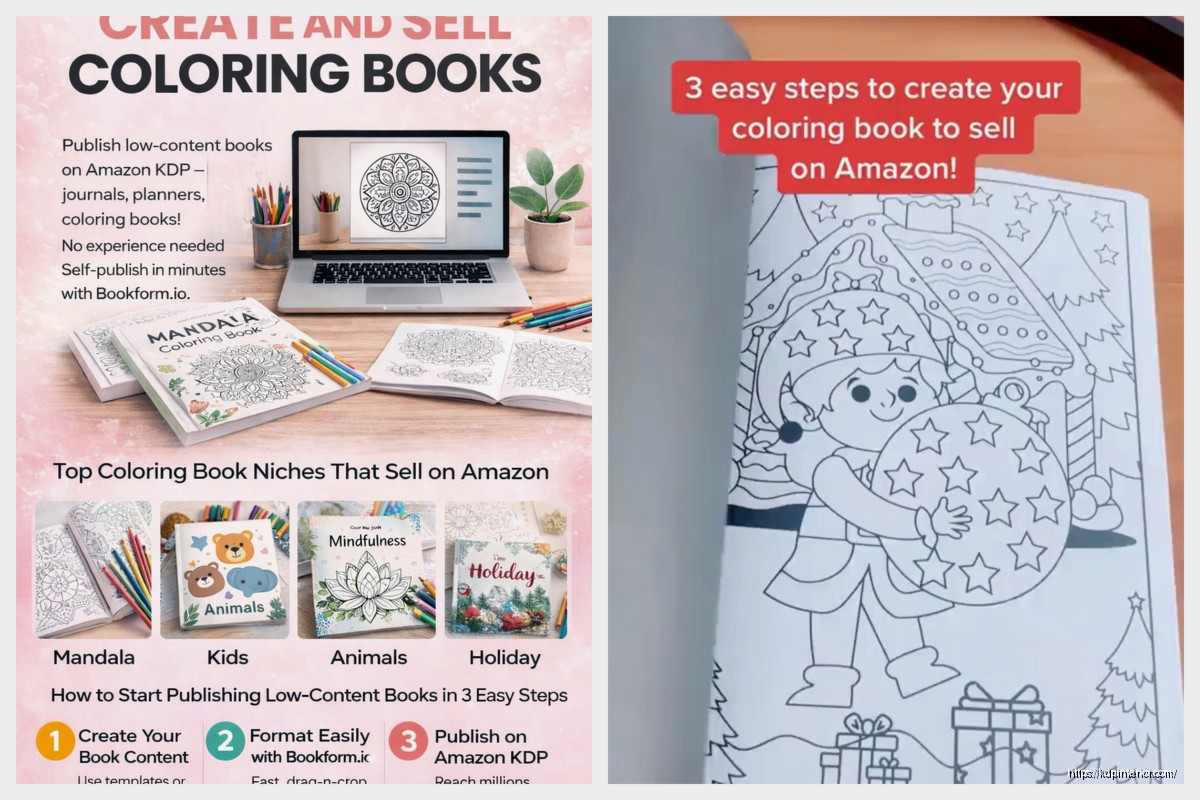
Okay so adult coloring books are literally one of the easiest ways to make consistent money on KDP if you actually understand what people want to buy. I just launched three new ones last month and two are already ranking in the top 50 of their categories which is… honestly better than I expected.
Here’s the thing nobody tells you upfront – the “adult coloring book” market isn’t really one market. It’s like five different customer bases who want completely different things. You’ve got the stress-relief crowd, the intricate-pattern people, the themed buyers (like mandalas or animals or whatever), the swear word coloring people which yeah that’s a whole thing, and then the seasonal shoppers who only buy around holidays.
I started with mandalas because everyone says they’re saturated but here’s what I learned – saturated just means there’s proven demand. You just gotta make yours better or slightly different. My first mandala book did maybe $200 the first month which felt disappointing until I realized I’d done basically zero keyword research and my cover looked like every other mandala book on page three of search results.
The Cover Thing Everyone Gets Wrong
Your cover needs to show EXACTLY what’s inside but also stand out at thumbnail size. I spent like two weeks designing these elaborate covers with gradients and multiple design elements and they all tanked. Then I made one that was just a clean white background with one really detailed coloring page example in black and white, added some colored pencils in the corner for context, and that one finally started moving.
The thumbnail test is real – shrink your cover down to like 120 pixels wide on your screen. Can you still tell what it is? Does it look different from the 20 other books next to it in search results? If not, start over.
Oh and another thing – don’t put colored examples on your cover if your book is black and white inside. Sounds obvious but I see this constantly and the reviews always mention it. People feel tricked even if you never said it was colored.
What Actually Goes Inside
You need minimum 50 pages of actual coloring content. I usually do 50-100 depending on complexity. More isn’t always better because printing costs go up and then you either eat the cost or price yourself out of impulse buy range.
Each design needs to be on its own page with a blank page behind it. This is non-negotiable. People use markers and they bleed through. If you don’t include blank backs, you’ll get absolutely roasted in reviews and your book dies. I learned this the expensive way with my second book where I tried to save on page count. Dumb move.
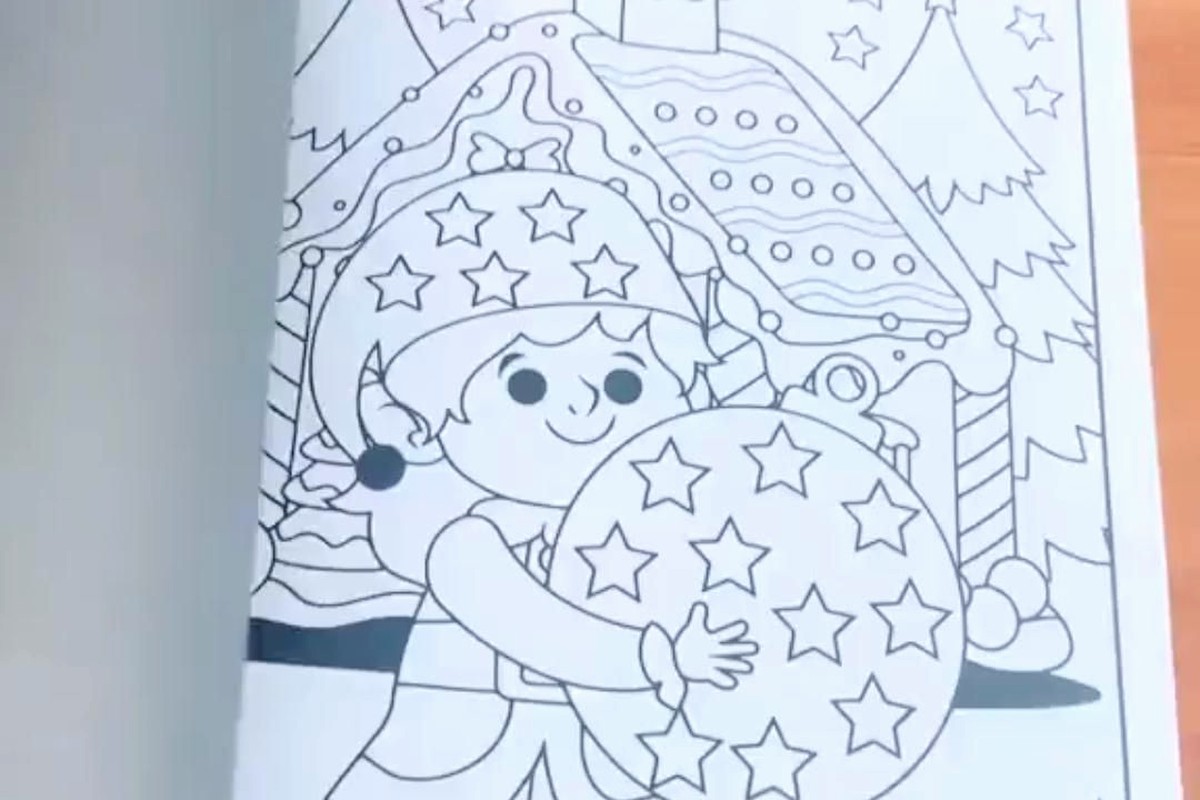
The designs themselves – this is where most people overthink it or underthink it, there’s no middle ground. Too simple and people feel ripped off. Too complex and they feel overwhelmed and never actually color it. I aim for medium-high complexity with clear sections. Like… you want someone to look at a page and think “oh that’ll take me 30-45 minutes” not “that’ll take me six hours and I’ll never finish.”
Creating the Actual Designs
I use a mix of Creative Fabrica subscription for base elements and then I modify everything in Affinity Designer. Canva works too but it’s harder to get the clean black lines you need. Some people use Adobe Illustrator which is probably the best option if you already know it but the learning curve is brutal if you’re starting from scratch.
Your lines need to be thick enough that they show up clearly when printed but not so thick that there’s barely any white space to color. I use 2-3pt lines usually. Test print everything before you upload because what looks good on screen doesn’t always translate.
Wait I forgot to mention – never ever use gray lines or “sketch” style lines. Only solid black. The printers at Amazon are not sophisticated enough for subtle gray variations and your book will look muddy and cheap.
The Niche Research Part That Actually Matters
Go to Amazon and search “adult coloring books” then look at what’s ranking on pages 1-3. Not page one – that’s usually dominated by established publishers with huge back catalogs. Pages 2-3 is where you find what’s working for indie publishers right now.
Open like 15-20 books in new tabs. Look at:
– Their titles and subtitles
– Their covers (what elements repeat?)
– Their page count and price
– Their review content (what do people love or complain about?)
– Their BSR (anything under 100k is making decent money)
I keep a spreadsheet of this stuff which sounds nerdy but it’s literally how I figure out what to make next. My cat keeps walking across the keyboard while I’m doing this which is super annoying but whatever.
Themes that are consistently working right now – nature scenes, geometric patterns, animals (especially detailed ones like owls or wolves), positive affirmations mixed with designs, and specific niches like “coloring books for anxiety” or “Christian coloring books” or whatever.
Keyword Strategy That Actually Gets Traffic
Your seven backend keywords on KDP are crucial. Don’t waste them on obvious stuff like “coloring book” – Amazon already knows that from your category. Use them for specific descriptive phrases like:
– intricate designs for adults
– stress relief coloring pages
– detailed animal patterns
– mindfulness coloring activity
– meditation coloring book
Whatever describes your specific book’s vibe. I use Helium 10’s free Chrome extension to see what keywords similar books are ranking for, then I target ones with decent search volume but not insane competition.
Your title needs keywords too but it also needs to make sense to humans. Something like “Intricate Mandala Designs: Adult Coloring Book with 50 Detailed Patterns for Stress Relief and Relaxation” works better than “Coloring Book for Adults Mandalas Patterns Relaxation Stress” which is just keyword stuffing and looks desperate.
The Printing and Pricing Mess
Always use black and white interior with white paper. Cream paper can work for certain vintage or rustic themes but it makes colors look muddy usually. Black and white keeps your printing costs low which means you can price competitively and still make money.
I price most of my coloring books between $5.99 and $8.99. Sweet spot seems to be $6.99 for 50-60 pages, $7.99 for 75-100 pages. Anything over $9.99 better be really special or have like 150+ pages because buyers get picky.
Use the 8.5 x 11 inch size. Yes, smaller sizes like 8 x 10 are cute but they’re not standard printer paper size which means higher costs and lower royalties. The math doesn’t work out unless you’re charging premium prices.
Bleed settings – turn them OFF for coloring books. You want your designs centered on the page with nice margins. If you use bleed, designs go right to the edge and it looks weird for this type of book. Plus it’s harder to color when the design runs off the page.
The Launch Phase Nobody Explains Well
Okay so funny story – my first coloring book sat there with zero sales for like three weeks and I thought I’d completely wasted my time. Then I ran a 99 cent promo for five days using a promotion on Facebook groups and sold maybe 80 copies. That got my BSR low enough that organic traffic kicked in and it’s been selling 3-5 copies a day ever since at full price.
You need some kind of initial push. Either:
– A countdown deal or promo price
– Ads (which I’ll get to)
– Posting in relevant Facebook groups that allow promos
– Getting your friends/family to buy copies (not review, just buy)
Just sitting there hoping for organic sales rarely works for new books in competitive categories.
Amazon Ads For Coloring Books
I run auto campaigns at like 30 cents per click to start. Let it gather data for a week or two, then look at what search terms are actually converting. Create manual campaigns targeting those specific keywords.
My ad spend is usually $3-5 per day per book. Some days I’ll get 10 sales from $4 in ads which is amazing. Other days I’ll spend $5 and get one sale. It averages out to profitable if your book is priced right and your content is good.
Don’t expect ads to work immediately. The algorithm needs time to figure out who to show your ads to. I’ve had campaigns that looked terrible for the first month then suddenly clicked and became my best performers.
Series vs Standalone Books
This is gonna sound weird but I make way more money from series than individual books. Once someone likes your first coloring book, they’ll buy your second and third if they’re similar quality and theme.
I’ve got a mandala series with four books now. The first one brings people in, then maybe 30% of buyers check out my author page and grab another one. That’s passive income from work I did once.
Name your series something searchable. “Mindful Mandalas Series” or “Nature’s Beauty Coloring Collection” or whatever fits your theme. Make the covers obviously related but not identical.
Reviews and How To Get Them
Coloring books are hard to get reviews on because people don’t think to review them. They just color and move on. My review rate is maybe 1% if I’m lucky.
The books that do get reviews usually have something in the back like “If you enjoyed this book, please consider leaving a review” with simple instructions. Don’t beg or offer incentives, just a simple reminder.
Good reviews mention specific things like “the paper quality is great for markers” or “the designs are the perfect complexity level” or “I love the variety of patterns.” If you’re not getting those kinds of reviews, something’s wrong with your product.
Bad reviews usually say designs are too simple, too complex, not enough pages, pages bleed through, or cover is misleading. Fix those things in your next edition or next book.
Stuff That Doesn’t Work
Trying to compete directly with big publishers – they have brand recognition and huge marketing budgets, you don’t. Find your specific angle.
Making books that are too niche – “coloring books for left-handed accountants who like cats” might seem smart but there’s no search volume. Balance specific with searchable.
Copying other books exactly – Amazon’s content guidelines will flag you and customers will notice and review bomb you. Always create original content even if you’re inspired by what’s selling.
Ignoring the look inside preview – this is the most important part after your cover. The first 5-10 pages need to show your best designs and make people want to buy. I always put my most impressive pages at the front.
Okay I think that covers most of the important stuff. The main thing is just to start with one book, see what works and what doesn’t, then make your next one better. My first three books were honestly kinda rough but they taught me everything I needed to know to make books that actually sell consistently. You’re gonna mess some things up and that’s fine, just keep iterating.

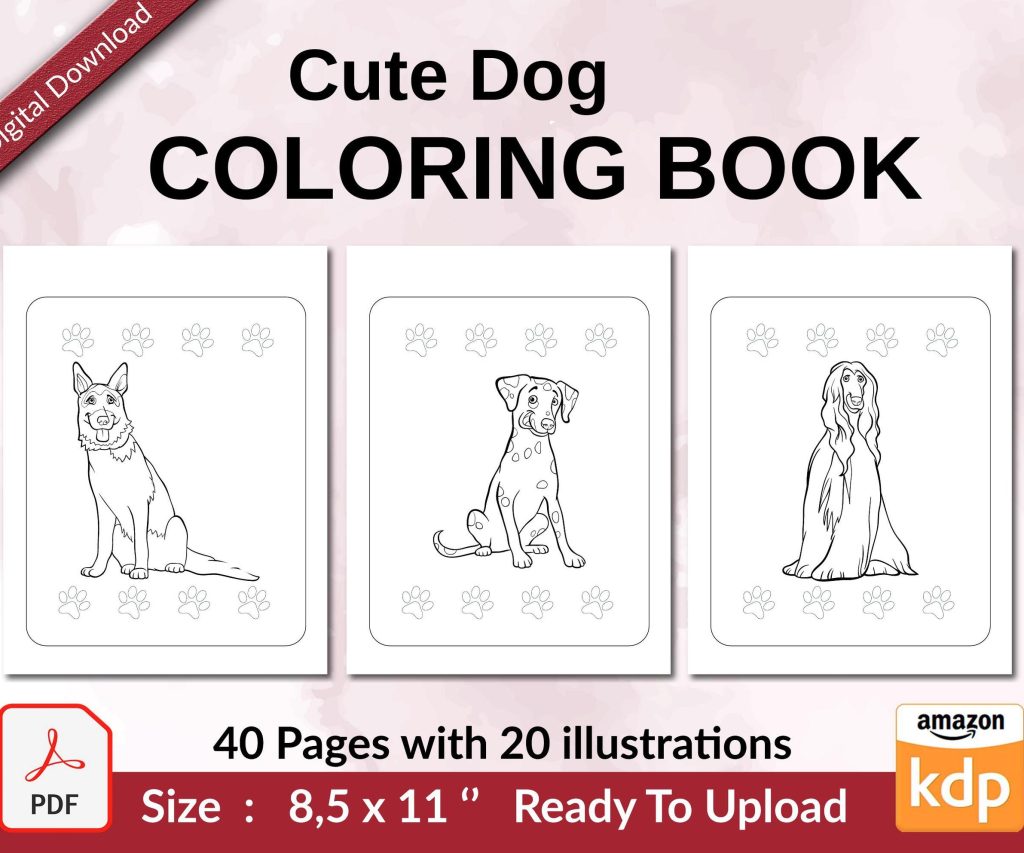 Cute Dogs Coloring Book for Kids | Activity Book | KDP Ready-To-Upload
1 × $0.00
Cute Dogs Coloring Book for Kids | Activity Book | KDP Ready-To-Upload
1 × $0.00 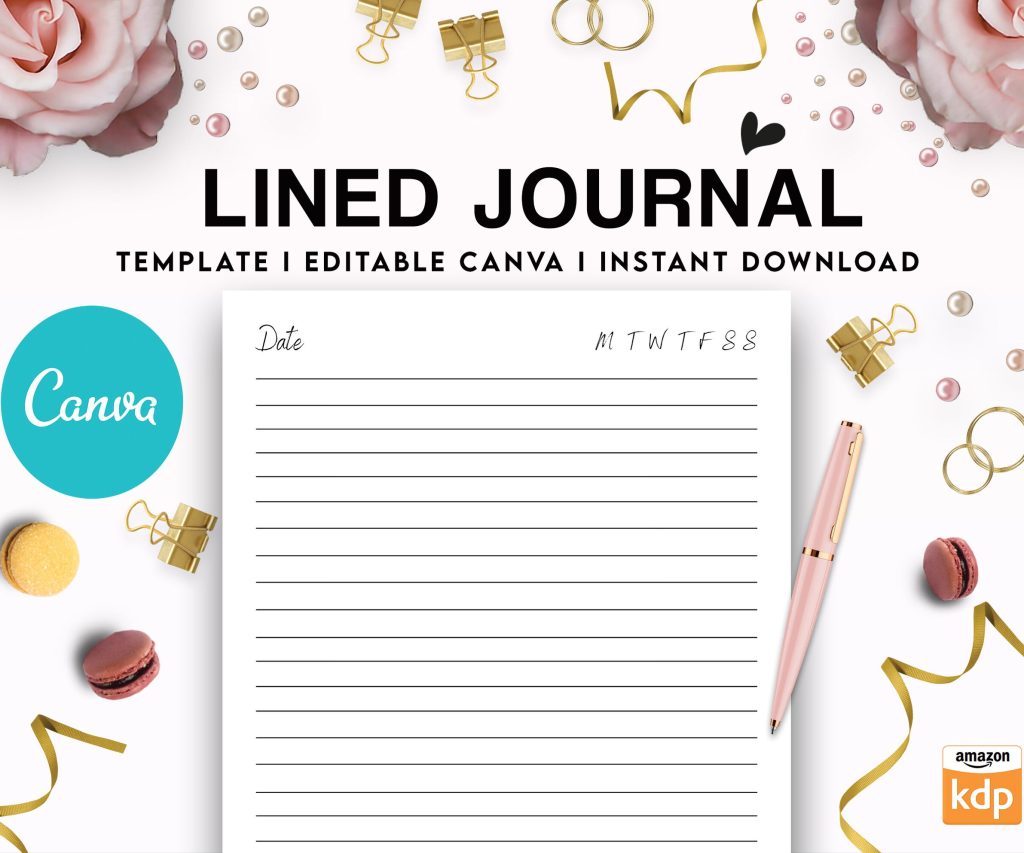 Editable Canva Lined Journal: Express Your Thoughts - KDP Template
1 × $0.00
Editable Canva Lined Journal: Express Your Thoughts - KDP Template
1 × $0.00 
DISCOVER OUR FREE BEST SELLING PRODUCTS
Editable Canva Lined Journal: Express Your Thoughts – KDP Template
Lined Pages Journal 120 pages Ready to Upload PDF Commercial Use KDP Template 6×9 8.5×11 5×8 for Notebooks, Diaries, Low Content
Lined Pages Journal 120 pages Ready to Upload PDF Commercial Use KDP Template 6×9 8.5×11 5×8 for Notebooks, Diaries, Low Content
Cute Dogs Coloring Book for Kids | Activity Book | KDP Ready-To-Upload
Daily Planner Diary : Diary Planners for Everyday Productivity, 120 pages, 6×9 Size | Amazon KDP Interior
Wolf Coloring KDP interior For Adults, Used as Low Content Book, PDF Template Ready To Upload COMMERCIAL Use 8.5×11"
Coloring Animals Head Book for Kids, Perfect for ages 2-4, 4-8 | 8.5×11 PDF
Printable Blank Comic Book Pages PDF : Create Your Own Comics – 3 Available Sizes
Notes KDP interior Ready To Upload, Sizes 8.5×11 6×9 5×8 inch PDF FILE Used as Amazon KDP Paperback Low Content Book, journal, Notebook, Planner, COMMERCIAL Use
Black Lined Journal: 120 Pages of Black Lined Paper Perfect for Journaling, KDP Notebook Template – 6×9
Student Planner Journal 120 pages Ready to Upload PDF Commercial Use KDP Template 6×9" 8.5×11" for Low Content book
Recipe Journal Template – Editable Recipe Book Template, 120 Pages – Amazon KDP Interior