-
×
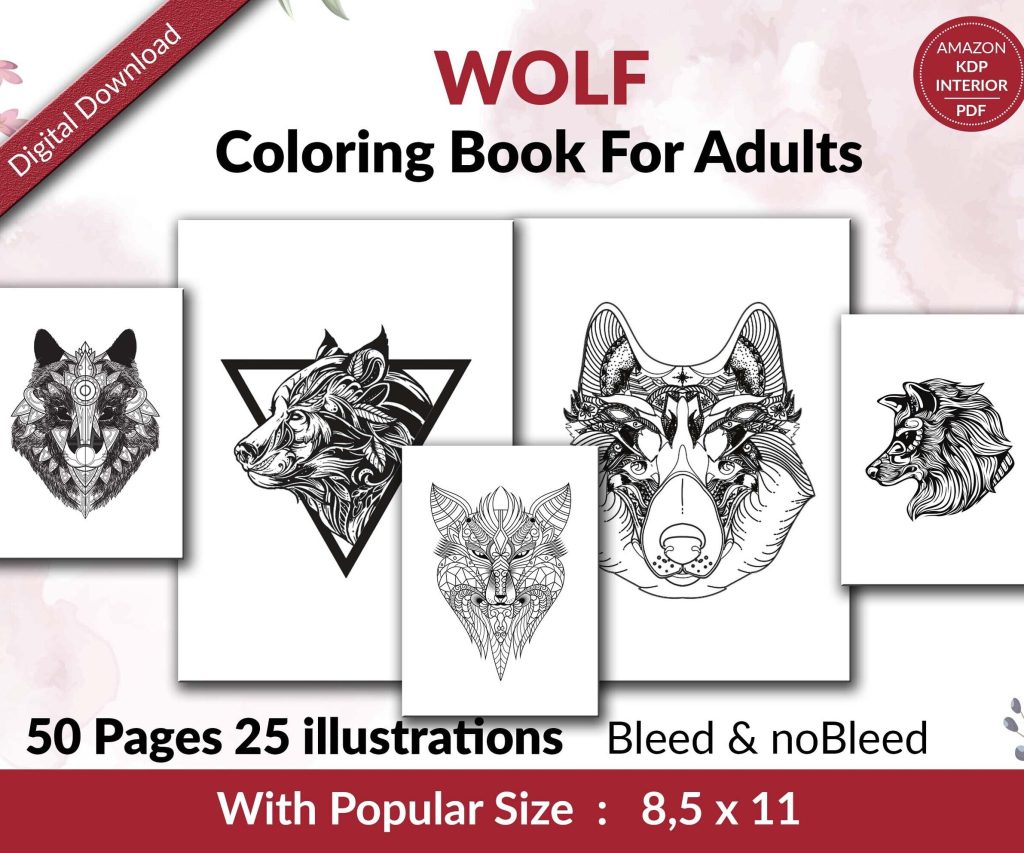 Wolf Coloring KDP interior For Adults, Used as Low Content Book, PDF Template Ready To Upload COMMERCIAL Use 8.5x11"
1 × $0.00
Wolf Coloring KDP interior For Adults, Used as Low Content Book, PDF Template Ready To Upload COMMERCIAL Use 8.5x11"
1 × $0.00
Subtotal: $0.00

Okay so I just uploaded three new adult coloring books last month and here’s what actually worked versus what everyone on YouTube tells you to do.
The adult coloring niche is saturated but not dead, which sounds contradictory but hear me out. The market’s flooded with generic mandala books and “stress relief” patterns that all look identical. Where you can still make decent money is going super specific with your themes. Like I made $847 last month from a single coloring book about Art Deco architecture patterns, which sounds random but that’s exactly the point.
Don’t just search “adult coloring books” on Amazon and copy what you see on page one. Those sellers already won the SEO game years ago and have thousands of reviews. You need to dig into what people are searching for but can’t find enough variety in.
I use a combo of Amazon’s search bar autocomplete and this thing where I lurk in Facebook groups for adult coloring enthusiasts. The Facebook groups thing sounds tedious but people literally post “I wish there was a coloring book about X” and nobody’s listening. That’s free market research sitting right there.
Some niches that are working right now: gothic architecture details, vintage seed packet designs, 1920s fashion illustrations, anatomical hearts and medical imagery (weird but true), Celtic knotwork but make it modern, Japanese yokai creatures. The key is being specific enough that your book is THE book for that thing, not just another option.
Most of my successful books are between 50-100 pages. You want single-sided printing obviously because bleed-through ruins the experience and you’ll get destroyed in reviews. That means if you want 50 coloring pages, your book is actually 100+ pages because you need blank backs.
I usually do: title page, introduction page with coloring tips, 50 coloring designs with blank backs, then maybe a “this book belongs to” page at the end. That gets you to about 104 pages which is a solid count.
Pricing is where everyone screws up. They price at $5.99 or $6.99 because that’s what the big publishers do, but you don’t have their review count or brand recognition. I price my new releases at $8.99-$9.99 for a 50-page book. Sounds high but adult coloring book buyers are willing to pay for quality designs. They’re not looking for the cheapest option, they’re looking for designs they actually want to color.
Your royalty at $8.99 after printing costs is usually around $2.50-$3.00 depending on page count. Sell 10 books a day and that’s $750-$900 monthly from one book. Obviously you won’t hit 10 a day immediately but it gives you the math.
Here’s the thing nobody wants to admit – you don’t have to draw these yourself. I can’t draw for shit. My stick figures look like they’re having medical emergencies.
I use a combination of public domain images from sources like Rawpixel, the New York Public Library digital collections, and old botanical illustrations from biodiversity heritage library. Then I trace them in Illustrator or convert them to line art using Photoshop’s threshold and pen tool functions.
Wait I forgot to mention – make sure whatever you’re using is actually public domain or you have the commercial license. I almost got burned on this in 2021 when I used some “free” images that turned out to have weird restrictions. Check the license terms twice.
For creating patterns and mandalas, there’s software like Amaziograph that makes it easier, or you can use Illustrator’s transform and rotate functions. I watched like 15 YouTube tutorials on creating mandala patterns before I figured it out. My cat kept walking across my keyboard during one tutorial and somehow that random key combination showed me a shortcut I still use.
The designs need enough detail to be interesting but not so much that they’re overwhelming. I aim for medium complexity – not a kids book with three shapes, but also not one of those insane detailed books that takes 8 hours per page. Most adults want to finish a page in one sitting while watching Netflix.
Your interior needs to be 8.5 x 11 inches for adult coloring books. That’s the standard and going smaller feels cheap. Use pure white paper (#FFFFFF) for your background, pure black (#000000) for your lines.
Line weight is critical and everyone gets this wrong at first. Your lines should be between 1.5-2.5 points thick. Thinner than that and they’re hard to see, thicker and it limits the colorers’ options. I use 2-point lines for most designs.
Margins need to be at least 0.5 inches on all sides for KDP’s requirements, but I actually do 0.75 inches because it gives the design breathing room and prevents anything important from being too close to the spine.
Oh and another thing – every single page needs to be the same dimensions exactly. I made this mistake once where one page was 8.49 x 11 instead of 8.5 x 11 and KDP’s system rejected the whole file. Had to redo the entire interior.
Your cover needs to show what’s inside but also stand out in thumbnail view. I create covers that show 2-3 of my best designs from the interior arranged in an interesting layout with the title overlaid.
Don’t use those generic “girl with flowers in her hair” stock photos that every coloring book uses. Don’t use the same fonts everyone uses (looking at you, Montserrat and Raleway).
I find my fonts on Creative Fabrica or Font Bunny, something with personality that matches the theme. Art Deco book gets an Art Deco font. Gothic architecture gets something with medieval vibes but still readable.
The title format that works: “[SPECIFIC THEME] Coloring Book: [DESCRIPTOR] Designs for Adults” or “[THEME]: An Adult Coloring Book with [NUMBER] [ADJECTIVE] Designs”
So like “Art Deco Architecture Coloring Book: Intricate Geometric Patterns and Building Details for Adults” or “Gothic Cathedrals: An Adult Coloring Book with 50 Stunning Medieval Designs”
Your seven keyword slots are precious real estate. Don’t waste them on single words like “coloring” or “books.” Use phrases people actually search.
I use: the specific theme + “coloring book”, theme + “adult coloring”, “detailed coloring book for adults”, theme + “patterns”, “stress relief coloring”, “[theme] designs”, and then one slot for a related secondary theme.
For that Art Deco book I mentioned, my keywords included “art deco coloring book”, “architecture coloring book for adults”, “geometric patterns coloring”, “1920s designs”, “detailed coloring book”, “art deco patterns”, and “vintage design coloring”
Your description needs to sell the experience and be specific about what’s inside. Don’t just say “beautiful designs” – say “50 intricate Art Deco building facades featuring the Chrysler Building, Radio City Music Hall, and other iconic 1920s architecture”
List out features: single-sided pages, large 8.5×11 size, variety of complexity levels, suitable for markers/pens/pencils. People want to know this stuff before buying.
Price your book at $0.99-$1.99 for the first week to get initial sales velocity going. Yeah your royalty sucks at that price but you need Amazon’s algorithm to notice you exist. After you get 15-20 sales, raise it to your actual target price.
Run a small Facebook ad campaign targeting coloring book groups and pages. I spend about $30-50 on a new release and target people who like adult coloring books plus my specific theme. So for a botanical coloring book, I targeted coloring book fans who also liked gardening pages.
This is gonna sound weird but I also make a free sample PDF with 5 pages and share it in relevant Reddit communities and Facebook groups (where self-promotion is allowed). People try it, like it, then some of them buy the full book.
Get your friends and family to buy copies and leave honest reviews. I know everyone says this but those first 5 reviews really do matter. After that, reviews come more naturally if your book is actually good.
Using images that aren’t actually public domain or properly licensed. This will get your account terminated eventually.
Making designs too simple or too complex. Medium complexity sells better for most themes.
Putting content too close to the spine or edges. Leave proper margins.
Not checking how the cover looks in thumbnail size. If your title isn’t readable at thumbnail size, redesign it.
Copying someone else’s book too closely. Amazon will catch this and so will customers in reviews.
Only making mandala books. The mandala market is beyond saturated.
Forgetting to add a call-to-action at the end for your other books. I have a page at the back showing my other coloring books with text like “If you enjoyed this book, check out my other designs.”
One book makes you maybe $50-200 a month if it’s decent. To hit $2k-5k monthly you need multiple books working for you. I currently have 23 adult coloring books published and 8 of them make consistent money every month.
The strategy is publishing consistently – I aim for one new coloring book every 3-4 weeks. Not all of them will be winners but enough will perform decently that it adds up.
Track what themes work and double down on those. My Art Deco book did well so I made a follow-up with Art Deco fashion designs, then one with Art Deco patterns. Now I have an Art Deco series and people who buy one often buy the others.
Series work really well in this niche actually. “Volume 1” and “Volume 2” in your title lets customers know there’s more content if they like your style.
Also don’t sleep on holidays. I published a “Spooky Victorian Houses Coloring Book” in August and it sold really well September-October. Holiday books can make 60% of their annual income in 6-8 weeks if timed right.
The income is definitely not passive at first but once you have 15-20 books out there, the older ones keep selling while you work on new releases. That’s when it starts feeling more passive.
My best month was December 2023 when I hit $4,200 across all my coloring books, but average is more like $2,500-3,000 monthly. Not gonna quit your day job money but solid side income for work you do once and it keeps paying.
DISCOVER OUR FREE BEST SELLING PRODUCTS
Editable Canva Lined Journal: Express Your Thoughts – KDP Template
Lined Pages Journal 120 pages Ready to Upload PDF Commercial Use KDP Template 6×9 8.5×11 5×8 for Notebooks, Diaries, Low Content
Lined Pages Journal 120 pages Ready to Upload PDF Commercial Use KDP Template 6×9 8.5×11 5×8 for Notebooks, Diaries, Low Content
Cute Dogs Coloring Book for Kids | Activity Book | KDP Ready-To-Upload
Daily Planner Diary : Diary Planners for Everyday Productivity, 120 pages, 6×9 Size | Amazon KDP Interior
Wolf Coloring KDP interior For Adults, Used as Low Content Book, PDF Template Ready To Upload COMMERCIAL Use 8.5×11"
Coloring Animals Head Book for Kids, Perfect for ages 2-4, 4-8 | 8.5×11 PDF
Printable Blank Comic Book Pages PDF : Create Your Own Comics – 3 Available Sizes
Notes KDP interior Ready To Upload, Sizes 8.5×11 6×9 5×8 inch PDF FILE Used as Amazon KDP Paperback Low Content Book, journal, Notebook, Planner, COMMERCIAL Use
Black Lined Journal: 120 Pages of Black Lined Paper Perfect for Journaling, KDP Notebook Template – 6×9
Student Planner Journal 120 pages Ready to Upload PDF Commercial Use KDP Template 6×9" 8.5×11" for Low Content book
Recipe Journal Template – Editable Recipe Book Template, 120 Pages – Amazon KDP Interior