
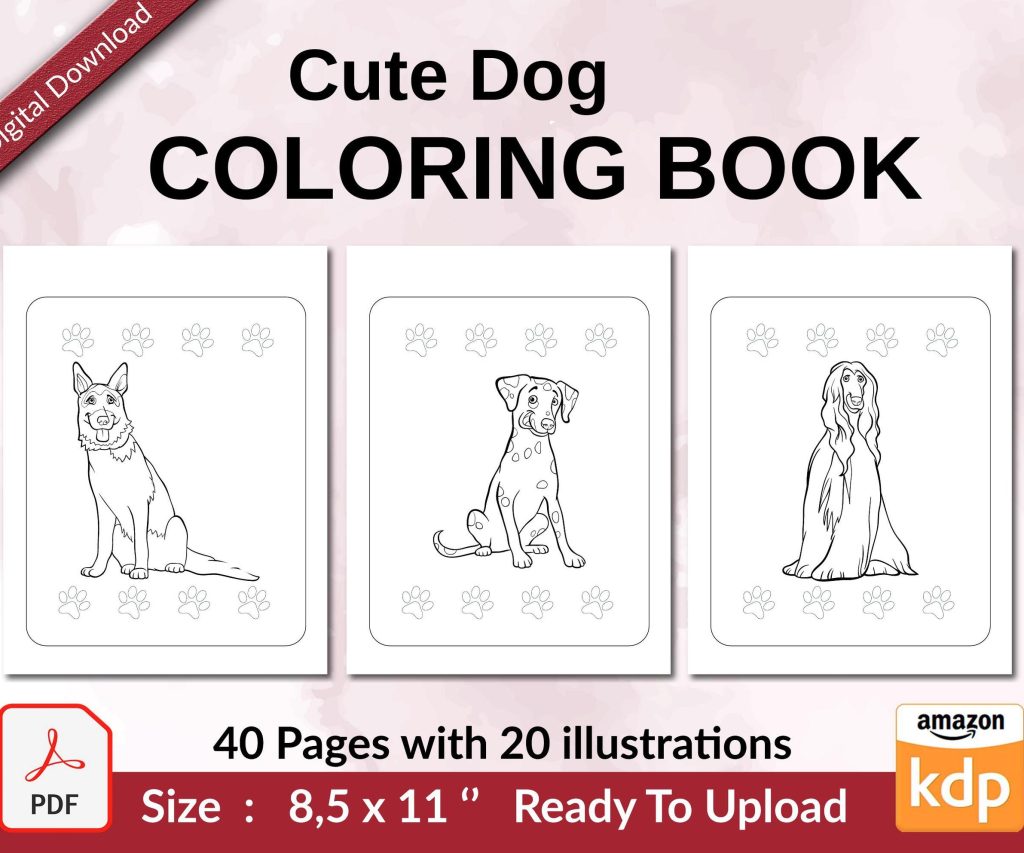
 Cute Dogs Coloring Book for Kids | Activity Book | KDP Ready-To-Upload
 Subtotal: $0.00
Amazon KDP guide, KDP book publishing
Amazon KDP Direct Publishing: Print & Digital Options
05
May
May
Okay so Amazon KDP has two main publishing options and honestly the way they’ve set it up is pretty straightforward once you wrap your head around it. You’ve got your digital ebooks (Kindle format) and print books (paperback and hardcover), and you can do either one or both for the same content.
Let me start with ebooks since that’s probably what most people think of first when they hear Kindle. You upload a manuscript file – usually EPUB, MOBI, or even a Word doc works fine – and Amazon converts it to their Kindle format. The file size limit is 650 MB which sounds huge but trust me, unless you’re doing a photography book with massive images, you’ll never hit that. I’ve published like 150+ ebooks and my biggest file was maybe 15 MB.
The pricing structure for ebooks is where it gets interesting because Amazon has two royalty options: 35% and 70%. Most people want that 70% obviously but there’s a catch. You can only get 70% royalty if your book is priced between $2.99 and $9.99. Anything outside that range drops you to 35%. Oh and another thing – the 70% option has delivery costs based on file size. It’s like $0.15 per MB or something close to that. So if your ebook is 5 MB, they deduct about $0.75 from your royalty per sale.
For print books it’s completely different because you’re dealing with actual production costs. Amazon offers paperback and hardcover now – they added hardcover maybe two years ago I think? The paperback option has been around forever and it’s super reliable. Hardcover is newer and honestly the quality is pretty solid but the royalty margins are tighter.
Here’s how print royalties work and this is gonna sound complicated but stay with me. Amazon calculates: (list price) minus (printing cost) minus (Amazon’s cut which is 40% of list price for books sold on Amazon.com or 60% for expanded distribution). What’s left is your royalty.
Printing costs depend on page count, trim size, and whether you use black/white or color interior. A 100-page paperback with black interior in 6×9 trim size costs about $2.50 to print. Same book in color? More like $4.50 or higher. The color printing is expensive which is why most low-content books that need color (like planners with colored elements) have to be priced higher to make any profit.
Wait I forgot to mention – when you’re setting up a book on KDP you literally just click “Create” and choose Kindle eBook or Paperback. If you want both formats for the same title, you create them separately but link them afterward so they show up together on the Amazon product page. That linking happens automatically most of the time if your title and author name match exactly, but sometimes you gotta manually link them through KDP support.
The manuscript specs are different for each format obviously. Ebooks are pretty forgiving – like I said, Word docs work fine, EPUB is better if you know how to format it properly. Amazon has this Kindle Create tool that’s free and it helps format your ebook manuscript, adds table of contents, all that stuff. I used it for my first maybe 20 books then switched to just doing EPUBs in Calibre because I got tired of the limitations.
For print manuscripts you need a print-ready PDF. This means properly formatted with margins (gutter margins are important – that’s the extra space near the binding), bleed if your cover or interior has images that go to the edge of the page, and the right trim size. Amazon has templates you can download for every trim size they offer. The templates are Word or PowerPoint files with the margins already set up.
Trim sizes for paperback include like 5×8, 5.5×8.5, 6×9, 7×10, 8.5×11 and a bunch of others. The 6×9 is standard for most nonfiction and novels. 8.5×11 is what you’d use for workbooks or planners. Hardcover has fewer options – I think it’s just 6×9, 7×10, and 8.5×11.
Oh and funny story – I once uploaded a 300-page paperback manuscript with the wrong trim size and didn’t realize until I ordered a proof copy. The text was all squished because I’d formatted it for 6×9 but selected 5×8 in the setup. Had to redo the whole interior. Cost me like three days and my cat knocked over my coffee right onto the proof copy when it arrived so that was a whole thing.
The cover requirements are specific too. For ebooks you just need a front cover image, minimum 1000 pixels on the shortest side, but Amazon recommends 2560×1600 pixels. JPG or TIFF format. The cover needs to look good as a thumbnail because that’s how most people see it when browsing.
Print covers are more involved because you need a full wrap – front cover, spine, back cover, all in one file. Amazon has a cover calculator that tells you the exact dimensions based on your page count and paper type. The spine width changes depending on how many pages you have. A 100-page book has a skinnier spine than a 300-page book, obviously. You also need to account for bleed (usually 0.125 inches on all edges) and keep important stuff like text and barcodes outside the “safety zone” so nothing gets trimmed off.
I use Canva for most of my covers now but I started with GIMP which is free. Photoshop is overkill unless you’re doing super complex designs. The KDP Cover Creator tool is actually decent if you’re just starting out and don’t wanna mess with design software. It’s basic but functional.
Let’s talk about ISBN numbers real quick because this confuses people. For ebooks you don’t need an ISBN – Amazon assigns a free ASIN (Amazon Standard Identification Number). For print books you can either use Amazon’s free ISBN or buy your own. If you use Amazon’s free ISBN, it lists “Independently published” as the publisher and you can only sell that edition on Amazon. If you buy your own ISBN from Bowker (that’s the official US ISBN agency, costs like $125 for one or $295 for 10), you can list yourself as publisher and use that same ISBN to publish on other platforms like IngramSpark.
I always use Amazon’s free ISBN for print books unless I’m planning to go wide with that specific title. Most of my books are Amazon-exclusive anyway because that’s where the volume is.
KDP Select is another thing you gotta decide on for ebooks. It’s an optional program where you make your ebook exclusive to Amazon for 90 days at a time. In exchange you get access to KDP Select benefits: readers can borrow your book through Kindle Unlimited and you earn money from the KU Global Fund based on pages read. You also get promotional tools like free book days and Kindle Countdown Deals.
The KU page reads can be really lucrative depending on your niche. Romance and thriller authors make bank from KU because readers in those genres devour books. I’ve had months where KU page reads earned me more than actual sales. The payout per page read fluctuates – it’s been around $0.004 to $0.005 per page lately, so if someone reads your 200-page book that’s roughly $0.80 to $1.00 for you.
But going exclusive means you can’t publish that ebook anywhere else – not Apple Books, not Kobo, not your own website, nowhere. Print books aren’t affected by KDP Select, only ebooks. So you can have your ebook in KDP Select and still sell the paperback version on other platforms.
Expanded Distribution is an option for print books where Amazon distributes your book to libraries, academic institutions, and bookstores through wholesale channels. Sounds great but the royalty is way lower – they take 60% instead of 40%, so you need to price your book higher to make anything. I’ve never bothered with it because the sales volume from expanded distribution is usually pretty minimal for self-published books.
When you’re uploading your files there’s a preview tool that shows how your book will look on different devices. Use it. I’ve caught formatting issues in the previewer that would’ve looked terrible on actual Kindles. For print books you can order a proof copy before publishing – either a physical copy shipped to you or a digital proof you review online. Always order the physical proof for your first print book. The digital proof doesn’t show you things like cover alignment or how the spine looks.
Pricing strategy is its own whole topic but basically for ebooks you want to consider that $2.99-$9.99 sweet spot for 70% royalty. I usually price low-content books and shorter guides at $2.99-$4.99, longer comprehensive books at $6.99-$9.99. For print books you gotta calculate backward from your desired royalty. If you want to make $3 per book and your printing cost is $3, and Amazon takes 40%, then… your list price needs to be at least $10. Math gets annoying but there are royalty calculators online.
One more thing about formats – you can do large print editions which are literally just bigger text in a bigger trim size. Some authors publish the same book in regular and large print as separate editions. It’s a small niche but large print books sell to libraries and older readers who need bigger text. I haven’t messed with this much but it’s an option.
The actual upload process is pretty simple. You fill out the book details (title, subtitle, author name, description, keywords, categories), upload your manuscript and cover, set your pricing and distribution options, then hit publish. For ebooks it usually goes live within 24-72 hours. Print books take a bit longer, maybe 72 hours after you approve the proof.
Keywords and categories matter for discoverability but that’s more of a marketing thing than a publishing option thing. You get seven keyword phrases and two categories to start, though you can email KDP support to add up to 10 categories total.
Oh wait – content guidelines. Amazon’s pretty strict about what you can publish. No public domain content that’s just copied without adding value, no misleading titles, no copyrighted material you don’t own, no excessive profanity in certain categories (like kids books obviously), and a bunch of other rules. Read their content guidelines before publishing because getting your account banned is a real thing that happens to people who violate the rules.
The dashboard shows your sales, royalties, KU page reads if applicable, and all your published titles. Reports update roughly every 24 hours but there’s a delay, so sales from today might not show up until tomorrow. Payments happen about 60 days after the end of the month – so royalties earned in January get paid out at the end of March. You need to hit a $100 threshold for direct deposit or $10 for check/wire transfer.
I think that covers the main print and digital options. There’s obviously more detailed stuff like formatting specifics and marketing strategies but you asked about the publishing options themselves and that’s the core of it. KDP makes it pretty easy once you’ve done it a couple times – the first book is always the hardest because you’re figuring out the system but after that it’s basically rinse and repeat.
DISCOVER OUR FREE BEST SELLING PRODUCTS
Editable Canva Lined Journal: Express Your Thoughts – KDP Template
Lined Pages Journal 120 pages Ready to Upload PDF Commercial Use KDP Template 6×9 8.5×11 5×8 for Notebooks, Diaries, Low Content
Lined Pages Journal 120 pages Ready to Upload PDF Commercial Use KDP Template 6×9 8.5×11 5×8 for Notebooks, Diaries, Low Content
Cute Dogs Coloring Book for Kids | Activity Book | KDP Ready-To-Upload
Daily Planner Diary : Diary Planners for Everyday Productivity, 120 pages, 6×9 Size | Amazon KDP Interior
Wolf Coloring KDP interior For Adults, Used as Low Content Book, PDF Template Ready To Upload COMMERCIAL Use 8.5×11"
Coloring Animals Head Book for Kids, Perfect for ages 2-4, 4-8 | 8.5×11 PDF
Printable Blank Comic Book Pages PDF : Create Your Own Comics – 3 Available Sizes
Notes KDP interior Ready To Upload, Sizes 8.5×11 6×9 5×8 inch PDF FILE Used as Amazon KDP Paperback Low Content Book, journal, Notebook, Planner, COMMERCIAL Use
Black Lined Journal: 120 Pages of Black Lined Paper Perfect for Journaling, KDP Notebook Template – 6×9
Student Planner Journal 120 pages Ready to Upload PDF Commercial Use KDP Template 6×9" 8.5×11" for Low Content book
Recipe Journal Template – Editable Recipe Book Template, 120 Pages – Amazon KDP Interior