
-
×
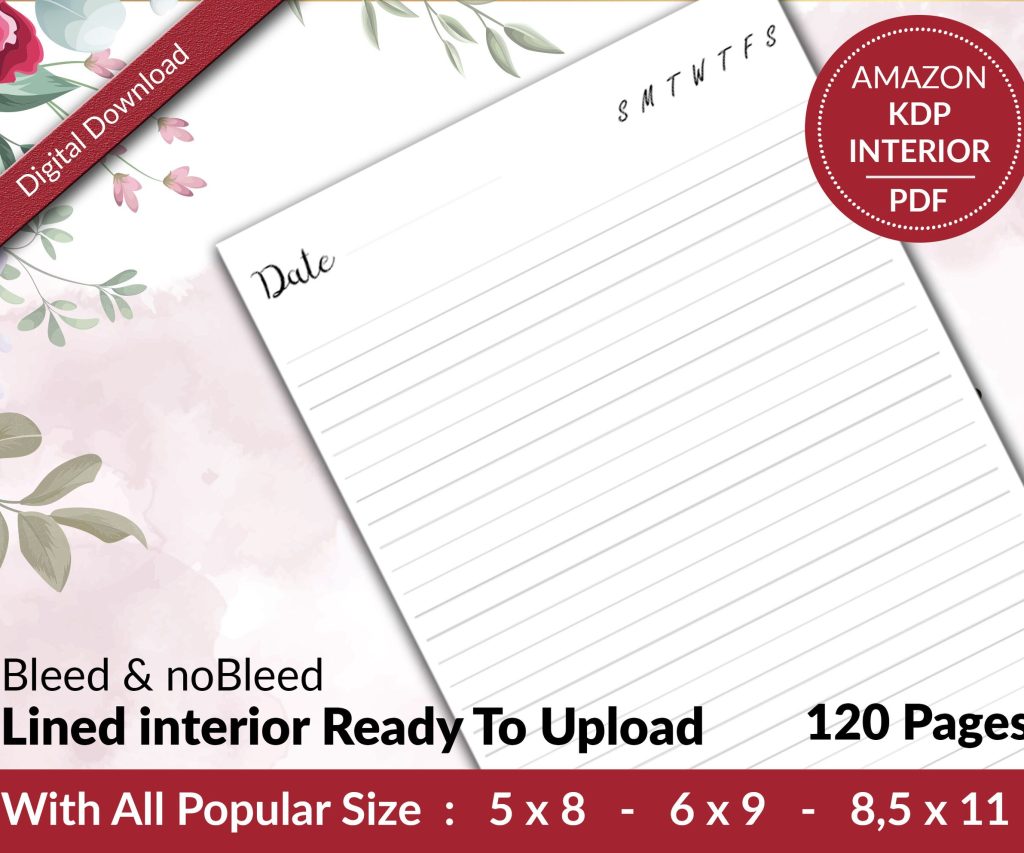 Lined Pages Journal 120 pages Ready to Upload PDF Commercial Use KDP Template 6x9 8.5x11 5x8 for Notebooks, Diaries, Low Content
1 × $0.00
Lined Pages Journal 120 pages Ready to Upload PDF Commercial Use KDP Template 6x9 8.5x11 5x8 for Notebooks, Diaries, Low Content
1 × $0.00
Subtotal: $0.00
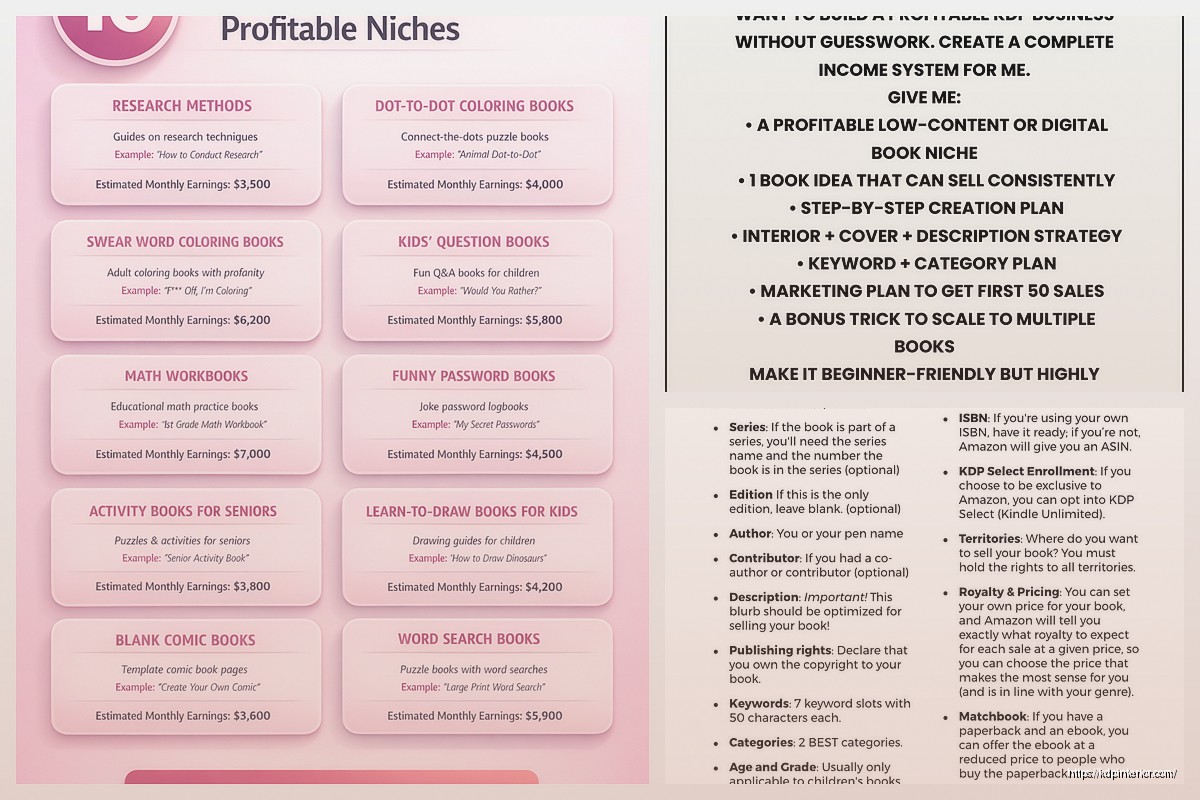
Okay so I just pulled together some real examples from my own catalog and a few publishers I consult with, and honestly the pattern is kinda obvious once you see it laid out.
This one still blows my mind because it’s so stupidly simple. One of my clients published a password logbook in March 2021, right when everyone was stuck at home dealing with like 50 different streaming services and forgot which email they used for what. The book itself? 110 pages, basic table layout with columns for website, username, password, and notes. Cover was navy blue with a simple lock icon.
Here’s what made it work though – the subtitle was super specific: “Internet Password Logbook – Discreet Design for Seniors with Large Print and Alphabetical Tabs.” That senior angle? Chef’s kiss. The large print thing meant we could stretch the content across more pages, justify a higher price point ($6.99 instead of $4.99), and the alphabetical tabs made it actually useful instead of just another generic password book.
First month did maybe $200. But then Mother’s Day hit and boom – $2,400 that month alone. We hadn’t even optimized for Mother’s Day, people just started buying it as a gift. The reviews mentioned stuff like “bought this for my mom who keeps passwords on sticky notes” and that became our entire marketing angle for the next version.
Oh and another thing – not all examples are gonna be home runs from day one. I published a mandala coloring book in 2019 that absolutely tanked. Like $50 total revenue over 6 months. The problem? It was just… mandalas. Nothing special, no theme, competing with 10,000 other identical books.
So I pulled it, and here’s where it gets interesting. I relaunched the SAME designs but themed it as “Mandalas for Stress Relief – Nurses Edition” with little stethoscope and medical symbols worked into some of the designs. Added a few nurse-specific patterns (like mandalas shaped vaguely like hearts and medicine bottles). Changed maybe 30% of the content, kept the rest identical.
That version did $4,200 in the first year. Same basic product, different angle. The nurse niche was already buying tons of self-care stuff, and this felt personalized to them even though honestly most of the mandalas were still just… mandalas.
Wait I forgot to mention – the key was launching it right before Nurse Appreciation Week in May. Timing matters more than people think. I actually almost missed that launch window because my dog got sick and I was at the emergency vet, but I uploaded it from my phone in the waiting room at like 2am. Sometimes you just gotta make it work.
Okay so this is gonna sound weird but one of my most consistent earners is a budget planner that I spent maybe 6 hours creating total. It’s called “Paycheck Budget Planner – Bi-Weekly Edition for Hourly Workers” and it does about $1,500-2,000 per month, every single month, for the past 3 years.
Most budget planners assume monthly income. This one is designed for people who get paid every two weeks, which is actually how most hourly workers get paid. Inside it’s got sections for each pay period with bill tracking, expense categories, and debt payoff trackers. Nothing revolutionary.
The magic was in the keyword research. I found that “bi-weekly budget planner” had decent search volume but low competition. Most publishers were focused on “monthly budget planner” or just “budget planner.” By going super specific, I basically owned that micro-niche.
After that worked, I created variations:
Each one links to the others in the description. Someone buys the bi-weekly planner, finishes it, sees the debt payoff version in the “other books by this author” section, buys that too. I’m probably leaving money on the table by not having a better backend funnel but whatever, it works.
This is gonna sound ridiculous. I published a “Chicken Journal – Backyard Chicken Keeping Log” in 2020. My neighbor kept chickens and was tracking everything in a spiral notebook, and I was like… wait, is this a thing?
Turns out backyard chicken keeping exploded during the pandemic. This journal tracks egg production, feed consumption, health notes, breeding records, all that stuff. It’s 120 pages of basically the same table repeated with different headers. Sold maybe 30 copies the first month.
But then someone posted it in a backyard chicken Facebook group (not me, just a random customer), and it went nuts. Did $3,800 that month. The Facebook groups for niche hobbies are insane for organic marketing – you literally cannot buy that kind of targeted exposure.
I immediately created a whole series: Duck Journal, Goat Journal, Rabbit Journal, Beekeeping Journal. The beekeeping one does okay ($300-400/month), the others are hit or miss. But the chicken journal still pulls $800-1,200 monthly.
What I learned is that niche hobbyists are incredibly underserved in the low-content space. They’ll buy anything that’s specifically for their hobby because most products are too general. A regular journal doesn’t work for them – they want something that speaks their language and has the exact tracking they need.
Okay so funny story – I published a composition notebook thinking I’d target students. Called it “College Ruled Notebook – 120 Pages.” Super generic, did like $15 total.
Relaunched the exact same interior as “Songwriter’s Notebook – College Ruled Pages for Lyrics and Music Notes” with a music-themed cover. Changed nothing else. That version does $400-600/month consistently.
Same product. Different title and cover. The songwriter angle meant I could charge $7.99 instead of $5.99, and people bought it because it felt made for them even though it’s literally just college ruled pages.
This taught me that the product itself matters way less than the positioning. You’re not selling 120 pages of lined paper – you’re selling a tool for songwriters to capture their creative genius or whatever. The emotional angle matters.
I gotta mention gratitude journals because everyone and their mom publishes these, but there’s still money in it if you’re smart. I’ve got three different gratitude journals:
The Christian women one works because I added Bible verses and faith-based prompts. It’s not just “what are you grateful for” – it’s “what blessing did God provide today” type stuff. That specificity cuts through the noise.
The kids one has simple prompts and pictures to color. Parents buy it thinking it’ll teach gratitude, kids use it for like a week, whatever. But it sells because parents are desperately trying to raise non-terrible humans.
Wait I should talk about seasonal stuff because timing is everything. I’ve got a Halloween activity book for kids that does $2,500-3,000 in October and maybe $200 total the rest of the year. That’s fine – I launch it in August, ride the October wave, then ignore it.
The trick with seasonal is having it live on Amazon at least 2-3 months before the peak season. Amazon’s algorithm needs time to figure out what your book is and who to show it to. If you upload a Christmas planner in December, you’ve already missed it.
My Christmas gift tracker (helps people track who they bought what for) goes live in August, starts getting traction in September, peaks in November/December. Makes about $4,000 during those two months, then dies until next year.
I basically have a calendar now where I launch seasonal products 3-4 months before the actual season. Halloween stuff in July, Christmas in August, Valentine’s in November, graduation planners in February. It feels weird uploading Christmas content in summer but that’s what works.
This is gonna sound random but I made a blank recipe book – just pages with sections for ingredients, instructions, notes. Basic stuff. Called it “My Family Recipes – Blank Recipe Book to Write In Your Own Recipes.”
It does $300-500/month consistently, and spikes around Mother’s Day and Christmas. The reviews are all like “bought this for my grandma to write down her recipes before she forgets them” which is honestly kinda sad but also sweet? People are using it to preserve family cooking traditions.
I didn’t expect the emotional angle there but it’s real. This isn’t just a recipe organizer – it’s a way to preserve family memories. That’s what people are actually buying.
Looking at all these examples, the pattern is pretty clear. The successful ones all have:
The failures were all generic. Generic notebook, generic coloring book, generic journal. Nobody wakes up thinking “I need a generic notebook.” They wake up thinking “I need somewhere to write my song lyrics” or “I need to track my chicken’s egg production.”
Oh and another thing – don’t overthink the interior design. My best sellers have super simple interiors. Tables, lines, prompts. Nothing fancy. I wasted months in 2019 making these elaborate planner designs with decorative elements and borders and whatever, and they didn’t sell any better than the simple versions. Sometimes I was literally watching The Office while designing these and getting distracted… probably why they were overdesigned honestly.
The cover matters way more than the interior for low-content. People judge the book by the cover (literally), buy it, and as long as the interior does what they expected, they’re happy. I use Canva for covers, keep them clean and professional, make sure the title is readable in thumbnail size.
Start with one niche, one product, test it for 2-3 months. If it works, create variations and related products. If it doesn’t work, figure out why – wrong niche, wrong keywords, wrong timing, wrong price point – and adjust. Most of my winners came from iterating on failures.
DISCOVER OUR FREE BEST SELLING PRODUCTS
Editable Canva Lined Journal: Express Your Thoughts – KDP Template
Lined Pages Journal 120 pages Ready to Upload PDF Commercial Use KDP Template 6×9 8.5×11 5×8 for Notebooks, Diaries, Low Content
Lined Pages Journal 120 pages Ready to Upload PDF Commercial Use KDP Template 6×9 8.5×11 5×8 for Notebooks, Diaries, Low Content
Cute Dogs Coloring Book for Kids | Activity Book | KDP Ready-To-Upload
Daily Planner Diary : Diary Planners for Everyday Productivity, 120 pages, 6×9 Size | Amazon KDP Interior
Wolf Coloring KDP interior For Adults, Used as Low Content Book, PDF Template Ready To Upload COMMERCIAL Use 8.5×11"
Coloring Animals Head Book for Kids, Perfect for ages 2-4, 4-8 | 8.5×11 PDF
Printable Blank Comic Book Pages PDF : Create Your Own Comics – 3 Available Sizes
Notes KDP interior Ready To Upload, Sizes 8.5×11 6×9 5×8 inch PDF FILE Used as Amazon KDP Paperback Low Content Book, journal, Notebook, Planner, COMMERCIAL Use
Black Lined Journal: 120 Pages of Black Lined Paper Perfect for Journaling, KDP Notebook Template – 6×9
Student Planner Journal 120 pages Ready to Upload PDF Commercial Use KDP Template 6×9" 8.5×11" for Low Content book
Recipe Journal Template – Editable Recipe Book Template, 120 Pages – Amazon KDP Interior