-
×
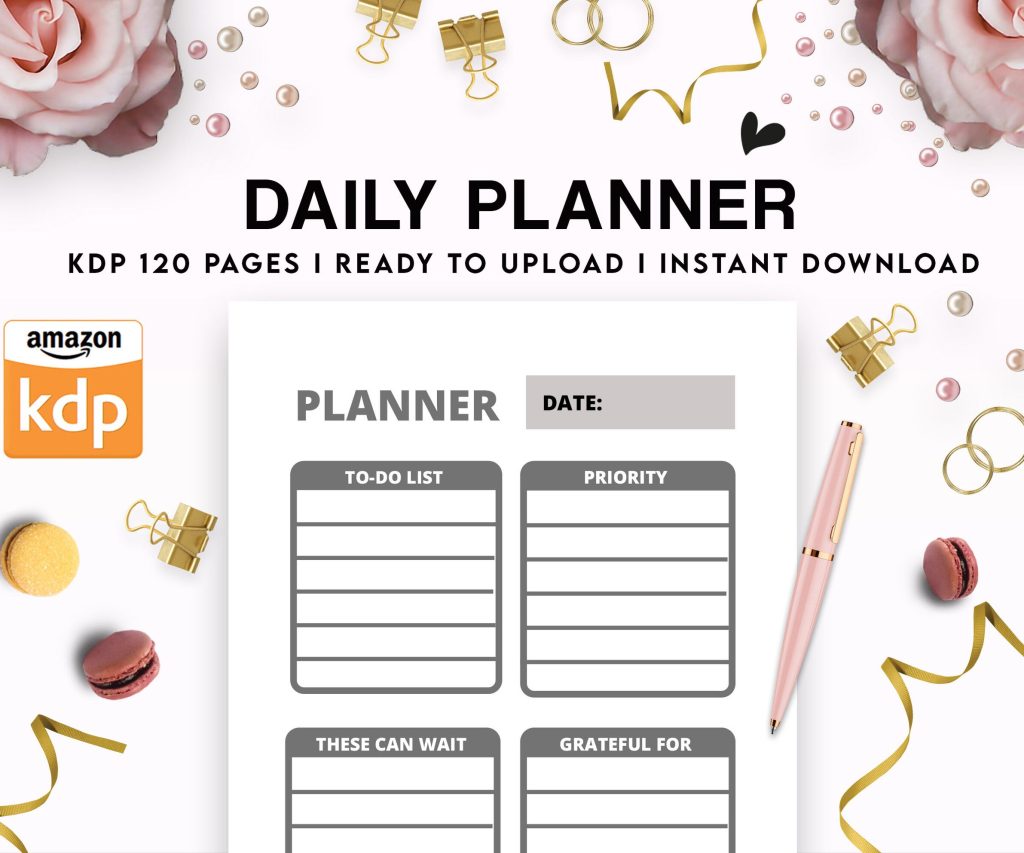 Daily Planner Diary : Diary Planners for Everyday Productivity, 120 pages, 6×9 Size | Amazon KDP Interior
1 × $0.00
Daily Planner Diary : Diary Planners for Everyday Productivity, 120 pages, 6×9 Size | Amazon KDP Interior
1 × $0.00
Subtotal: $0.00
 Daily Planner Diary : Diary Planners for Everyday Productivity, 120 pages, 6×9 Size | Amazon KDP Interior
1 × $0.00
Daily Planner Diary : Diary Planners for Everyday Productivity, 120 pages, 6×9 Size | Amazon KDP Interior
1 × $0.00 Subtotal: $0.00
Okay so interior templates are honestly where most people screw up their KDP books and I see it all the time. You can have the best cover in the world but if someone opens your book and sees weird margins or text that’s too close to the binding, they’re returning it.
So first thing – don’t use KDP’s built-in templates blindly. Yeah they exist and they’re technically “safe” but they’re also super basic and everyone uses them. I mean they work if you’re in a rush but you’re gonna look like every other notebook on the platform.
The main types you need to know about are lined journals, dot grid, planners, coloring books, and log books. Each one has different requirements and honestly different profit margins too which is something people don’t talk about enough.
For lined journals the spacing matters way more than you think. I tested this last month actually – made three identical gratitude journals with different line spacing. The one with 0.35 inch spacing sold way better than 0.25 or 0.5 inch. People want enough room to write but not so much that it feels like a kid’s notebook. Also your lines need to be light gray not black because black lines look cheap and make the page feel crowded.
Margins are where everyone messes up. KDP requires 0.375 inches for books under 150 pages and 0.75 inches for thicker books on the inside margin (that’s the side near the binding). But here’s what they don’t tell you – you should actually go a bit bigger like 0.5 and 0.875 because people hate writing in the gutter of a book. I learned this the hard way when I got like 10 reviews complaining about it on a meal planner I made in 2019.
Oh and another thing – bleed settings. If your book has any design elements that go to the edge of the page you need to set up bleed which is an extra 0.125 inches on all sides. Most low content books don’t need this but coloring books definitely do. I was watching The Last of Us while setting up a coloring book template last week and totally forgot to add bleed on the first version… had to reupload everything.
For creating templates you’ve basically got three options – Canva, Adobe InDesign, or pre-made templates from places like Creative Fabrica or BookBolt.
Canva is the easiest if you’re starting out. They have KDP-specific dimensions built in which is nice. But the free version is pretty limited and you’re gonna need Canva Pro ($13/month) to get transparent backgrounds and better design elements. The thing with Canva is everyone uses it so your interiors might look similar to other books unless you customize heavily.
InDesign is what I use now for anything serious. It’s got a learning curve for sure but once you get master pages set up you can pump out professional interiors way faster. The subscription is like $23/month which sounds like a lot but if you’re publishing regularly it pays for itself. You can set up paragraph styles, character styles, and reuse them across multiple projects. This is gonna sound weird but I have a whole folder of InDesign templates organized by trim size and it’s probably saved me 100+ hours this year.
Pre-made templates are the fastest option. You can grab them for like $5-15 and just customize them. BookBolt has a template creator tool that’s actually pretty solid – it costs $9.95/month I think? They handle all the margin and bleed calculations automatically. Creative Fabrica has tons of templates if you get their subscription which is $6/month or something.
Wait I forgot to mention trim sizes. The most common ones are 6×9, 8.5×11, and 5×8. Each one has different use cases:
6×9 is your standard journal size. Good for gratitude journals, writing notebooks, travel journals. It’s cheap to produce and customers are used to this size.
8.5×11 is letter size – perfect for planners, coloring books, activity books, workbooks. Higher production cost but you can charge more.
5×8 is smaller, portable. Good for pocket journals, small planners, budget trackers.
For coloring books specifically you want thicker paper. Always select white paper not cream because colors pop better on white. And this is important – your line weight for the designs should be between 2-3pt. Too thin and it’s hard to see, too thick and it looks like a kid’s coloring book. I usually go with 2.5pt.
Oh and funny story – I made a mandala coloring book last year with lines that were too thin (1.5pt) and got a review saying “I’m 67 years old and can’t see these lines” which like… fair point. Updated the interior and sales improved.
Planner templates are more complex because you need consistency across all pages. If you’re doing a daily planner you need the same layout repeated 365 times (or 366 for leap years, don’t forget that). This is where InDesign master pages really shine. You set up the layout once and apply it to however many pages you need.
For planners include:
– Date fields (either filled in or blank for undated)
– Time slots if it’s a daily planner (usually 6am-9pm)
– To-do list section
– Notes area
– Maybe a water tracker or habit tracker
The spacing between time slots should be about 0.6-0.7 inches. Gives enough room to write but fits everything on one page.
Dot grid journals are having a moment right now. The dots should be 0.2 inches apart in a grid pattern and light gray (I use hex code #CCCCCC usually). Don’t make them too dark or they overwhelm the page. Dot grid works for bullet journals, sketch books, note-taking.
For log books like reading logs, fitness logs, whatever – tables are your friend. Create clear columns with headers. Make sure the rows are tall enough for actual writing. I see so many log books with tiny rows that nobody can use. Minimum 0.4 inches per row, honestly 0.5 is better.
Page numbers are optional for most low content books but they make it look more professional. Put them in the footer, centered or on the outside edge. Use a simple font like Arial or Times New Roman.
Speaking of fonts – don’t get fancy with your interior text. Stick to basic readable fonts. For lined journals you don’t really have text except maybe headers. For planners and logs use Arial, Helvetica, Calibri, Times New Roman. Size 10-12pt is standard. Headers can be 14-16pt.
My cat just knocked over my coffee while I’m writing this but anyway…
Interior page count matters for pricing. KDP charges based on page count so a 120-page journal costs more to print than a 100-page one. But here’s the thing – customers often want MORE pages. They see a 200-page journal as better value than a 100-page one even if the price is higher. You gotta find the sweet spot for your niche.
For testing templates before uploading, always order a proof copy. It’s like $5-8 depending on size and totally worth it. I’ve caught so many issues by holding the physical book – margins too tight, colors printing darker than expected, pages too thin for the content type. KDP’s digital previewer is okay but it doesn’t show you how the actual book feels.
Color vs black and white interiors – this affects cost a lot. Black and white is cheaper to print but color can justify higher prices. Coloring books obviously need to be black and white for the line art. But planner covers (not the exterior cover, I mean decorative interior pages) look better with some color elements. You can do like a mostly black and white interior with color accents on section dividers.
Bleed again because people always mess this up – if you have a border or background that goes to the page edge, you NEED bleed. Set your document size to trim size plus 0.25 inches (0.125 on each side). So a 6×9 book becomes 6.25×9.25 with bleed. Then make sure your design extends to the edge of that larger size. KDP will trim it down to 6×9 but you won’t get white edges if the print shifts slightly.
For creating variations of templates efficiently, use layers in whatever program you’re using. I have a master template with different layers for headers, lines, dates, etc. Turn layers on and off to create different versions. Made like 15 different planner styles from one master file this way.
Oh wait another thing about margins – leave extra space at the top and bottom too. Not just the binding side. At least 0.5 inches from top and bottom edges. Text that’s too close to the edge looks unprofessional and might get cut off if the trimming isn’t perfect.
KDP’s content guidelines say no blank books but “low content” is fine as long as there’s something on the pages. So a lined journal is fine, a totally blank notebook isn’t. Just make sure your interior has lines, dots, grids, or some kind of structure.
For productivity and workflow, I batch create templates. Like I’ll spend a weekend making 10 different journal templates in different styles, then I can customize them quickly when I find good niches. Way more efficient than starting from scratch every time.
Quality check before uploading:
– Open every page and check margins
– Make sure page numbers are consistent if using them
– Check that repeating elements (like daily planner pages) are actually identical
– Verify your trim size matches what you’re uploading to
– Confirm bleed is set up right if needed
– Make sure there’s no copyrighted content if you used any graphics
The preview file KDP generates after upload – actually download it and flip through it. Don’t just glance at it in the browser. I’ve caught issues in the PDF that didn’t show up in the online previewer.
Honestly the biggest mistake I see is people rushing the interior. They spend hours on the cover then slap together a basic interior in 20 minutes. The interior is what people actually USE though. A customer might buy based on the cover but they’ll leave a bad review if the interior sucks.
Last thing – keep your source files organized. Name them clearly with the book title and date. I have folders organized by year and then by book type. Future you will thank present you when you need to update a template or create a similar book and can’t remember where you saved stuff.
DISCOVER OUR FREE BEST SELLING PRODUCTS
Editable Canva Lined Journal: Express Your Thoughts – KDP Template
Lined Pages Journal 120 pages Ready to Upload PDF Commercial Use KDP Template 6×9 8.5×11 5×8 for Notebooks, Diaries, Low Content
Lined Pages Journal 120 pages Ready to Upload PDF Commercial Use KDP Template 6×9 8.5×11 5×8 for Notebooks, Diaries, Low Content
Cute Dogs Coloring Book for Kids | Activity Book | KDP Ready-To-Upload
Daily Planner Diary : Diary Planners for Everyday Productivity, 120 pages, 6×9 Size | Amazon KDP Interior
Wolf Coloring KDP interior For Adults, Used as Low Content Book, PDF Template Ready To Upload COMMERCIAL Use 8.5×11"
Coloring Animals Head Book for Kids, Perfect for ages 2-4, 4-8 | 8.5×11 PDF
Printable Blank Comic Book Pages PDF : Create Your Own Comics – 3 Available Sizes
Notes KDP interior Ready To Upload, Sizes 8.5×11 6×9 5×8 inch PDF FILE Used as Amazon KDP Paperback Low Content Book, journal, Notebook, Planner, COMMERCIAL Use
Black Lined Journal: 120 Pages of Black Lined Paper Perfect for Journaling, KDP Notebook Template – 6×9
Student Planner Journal 120 pages Ready to Upload PDF Commercial Use KDP Template 6×9" 8.5×11" for Low Content book
Recipe Journal Template – Editable Recipe Book Template, 120 Pages – Amazon KDP Interior