Okay so pricing on KDP is honestly where most people just throw money away and don’t even realize it. I was literally reviewing one of my student’s accounts last week while my cat kept walking across the keyboard, and they had this coloring book priced at $3.99 when it should’ve been at least $6.97. Left like $800 on the table over six months because they were scared to charge more.
Here’s the thing with KDP pricing – Amazon gives you two royalty options and most beginners pick wrong. You got 35% and 60% royalty rates, but it’s not as simple as “always pick 60%.” The 60% option only works for books priced between $2.99 and $9.99, and Amazon takes delivery costs out of that. For paperbacks it’s different – you get 60% of royalties minus printing costs, which vary by page count.
Let me break down what I actually do. For low-content books like journals, planners, notebooks – I’m pricing those between $6.97 and $9.97 depending on page count. A 120-page journal? That’s sitting at $7.97 minimum. The printing cost on that is roughly $2.80, so you’re looking at about $2.60 royalty per sale at that price. If you drop it to $5.99 thinking you’ll get more sales, you’re only making like $1.20 per book. You’d need to sell more than double just to break even.
Wait I forgot to mention – there’s this weird sweet spot around $7.97 that I’ve tested across probably 40+ books now. It’s high enough that you’re making decent royalties but not so high that browsers bounce immediately. Amazon customers are kinda trained to expect low-content books in that $6-$9 range.
The Math Nobody Wants To Do But You Gotta
So printing costs scale with pages. Amazon charges a fixed fee (like $0.85 for US marketplace) plus per-page costs. Black and white interior is $0.012 per page. Color is $0.06 per page which is why color books are brutal for margins.
Example: 100-page black and white notebook
– Fixed cost: $0.85
– Page cost: 100 × $0.012 = $1.20
– Total printing: $2.05
If you price at $6.97:
– Amazon’s cut at 60%: $6.97 × 0.40 = $2.79
– Your royalty: $6.97 – $2.79 – $2.05 = $2.13
If you price at $9.97:
– Amazon’s cut: $9.97 × 0.40 = $3.99
– Your royalty: $9.97 – $3.99 – $2.05 = $3.93
That’s almost double the royalty for a $3 price increase. And here’s what’s wild – my sales velocity only dropped maybe 15-20% when I tested this across a batch of planners last year. So I’m making way more overall even with fewer sales.
Ebook Pricing Is A Whole Different Game
Ebooks don’t have printing costs obviously but they have delivery fees. Amazon charges $0.15 per MB for delivery under the 70% royalty option (they call it 60% for paperbacks, 70% for ebooks, same concept different terminology because Amazon loves being confusing).
Most low-content ebooks are tiny files though. Like a PDF journal template might be 2-3 MB tops, so delivery cost is $0.30-$0.45. Not a huge deal.
For ebooks I’m usually pricing between $2.99 and $4.99. The $2.99 minimum lets you access that 70% royalty tier. Anything under $2.99 and you’re stuck at 35% which is pretty terrible unless you’re doing some specific promo strategy.
Oh and another thing – geographic royalty rates are different. You get 70% in US, UK, Germany, and a few other markets. But places like Brazil or India? You’re back to 35%. This matters if you’re enrolled in KDP Select and doing expanded distribution.
Competitive Pricing Research That Actually Works
I spent like three hours yesterday just browsing the top 100 in Journals category because I was procrastinating on actual work. But it’s useful procrastination because you see real pricing patterns.
What I do: Search for books similar to what you’re publishing. Not just similar topic but similar PAGE COUNT. A 200-page wedding planner can charge more than a 100-page one, duh, but people forget to filter by this when researching.
Look at the top 20 bestsellers in your niche. Put their prices in a spreadsheet. Find the average. That’s your baseline. Now here’s the move – price about 10-15% higher than average if your cover and interior are legitimately better quality. If they’re just okay, match the average or go slightly under.
This is gonna sound weird but I also check what price points have the MOST books clustered. If everyone’s at $7.97 and $8.97, there might be an opportunity at $6.97 or $9.47. Sometimes the gaps exist because they’re bad price points, sometimes nobody’s testing them.
Seasonal Pricing Adjustments
I change prices throughout the year on specific books. My Christmas planners go UP in price from October through mid-December. Started at $8.97 in October, moved to $9.97 in November, peaked at $11.97 first week of December, then dropped to $7.97 after Christmas to clear inventory (even though there’s no inventory, it’s POD, but the psychology still works).
Wedding planners get more expensive in spring. Fitness journals spike in January. You can adjust prices anytime in KDP, takes like 72 hours to update across all marketplaces.
Wait I forgot to mention the pricing dashboard in KDP is kinda clunky. You gotta go to each book individually, can’t bulk update. There’s third-party tools like BookBolt that let you track prices easier but I just use a spreadsheet because I’m cheap.
The Expanded Distribution Trap
Okay so expanded distribution sounds great – your book in libraries, bookstores, whatever. But it forces you into a 60% royalty rate and sets minimum pricing higher. For a 120-page book, your minimum price might jump to like $9.47 instead of $6.97.
I tested this across 15 books. The extra sales from expanded distribution were basically zero. Maybe one or two sales per month per book. Not worth the forced higher pricing that hurt my Amazon sales. I turned it off on everything except my actual high-quality books that might legitimately get library orders.
Pricing Psychology Stuff That Works
Charm pricing is real. $7.97 converts better than $8.00. I know it’s stupid, we all know it’s a psychological trick, but it works. I tested this specifically on a gratitude journal – same book, A/B tested at $7.99 vs $8.00 over two months. The $7.99 version sold 23% more copies.
Also multiple of 97 cents just LOOKS better on Amazon somehow? Like $6.97, $7.97, $8.97, $9.97. I don’t have hard data on why but it’s what all the top sellers use so I just follow the pattern.
Avoid pricing right at the psychological barriers. Don’t price at $9.99 or $10.00. That $10 mark makes people pause. Either stay at $9.97 or jump to $10.97. The extra dollar at that point doesn’t hurt conversions much but $9.97 to $10.00 is a mental barrier.
When To Price Low (Actually Strategic Times)
Launching a new book? I sometimes start at $5.97 for the first week to generate velocity and reviews. Amazon’s algorithm loves early sales. Once I hit 10-15 reviews, price goes up to the real target.
Books in super saturated niches might need lower pricing just to get visibility. If there’s 5000 other gratitude journals and yours isn’t obviously better, pricing at $6.47 instead of $7.97 might be the only way to get initial traction.
Series pricing is interesting. I’ve got this set of meal planners – there’s six different ones. The first one is priced at $6.97, the rest are $8.97. People buy the cheaper one, like it, come back for others at higher price. Works surprisingly well.
Oh and if you’re running Amazon ads (which is a whole other thing), sometimes pricing lower makes your ACOS better because conversion rate goes up. But you’re making less per sale so it’s a balance. I generally prefer higher prices even if ads are less efficient because the total profit is higher.
International Marketplace Pricing
You can set different prices for different Amazon marketplaces. US price doesn’t automatically convert to UK price – you set them separately.
What I do: Price about 10% higher in UK and EU markets. Customers there seem less price sensitive for some reason? Also accounts for potential returns being more annoying to deal with internationally.
Australia and Canada I usually just let Amazon auto-convert from US pricing. Not enough volume there for me to manually optimize usually.
Japan marketplace is weird – pricing psychology is completely different. I honestly don’t focus there much because it’s too small a market for low-content unless you’re in specific niches.
Monitoring And Adjusting Over Time
I check my pricing every quarter. Pull sales data, look at royalties per book, calculate which books are underperforming. If something’s making less than $1.50 per sale after printing costs, I either raise the price or kill the book.
There’s this one notebook I published in 2019 that I kept at $6.97 for like two years. Finally raised it to $8.97 in 2021, sales dropped maybe 10%, but profit per book went from $1.80 to $3.20. Should’ve done it way sooner.
Amazon also changes their printing costs occasionally. When they do (usually announced in KDP dashboard), you gotta recalculate margins. Last increase was small but on high-page-count books it added up.
This is gonna sound weird but I also just… trust my gut sometimes? If a book at $7.97 feels too cheap when I look at competitors, I bump it to $8.97 even without extensive testing. You develop instinct after publishing enough books.
The main thing is don’t be scared to charge what your book is worth. Most new publishers underprice by like 30-40% because they’re worried nobody will buy. But Amazon customers expect to pay reasonable prices for quality products. A well-made 150-page planner at $9.97 isn’t expensive – it’s fair.
Anyway that’s most of what I’ve figured out over the years. Pricing isn’t set-it-and-forget-it, it’s something you tweak and test. But getting it right makes a massive difference in your monthly royalties.

 Wolf Coloring KDP interior For Adults, Used as Low Content Book, PDF Template Ready To Upload COMMERCIAL Use 8.5x11"
1 × $0.00
Wolf Coloring KDP interior For Adults, Used as Low Content Book, PDF Template Ready To Upload COMMERCIAL Use 8.5x11"
1 × $0.00 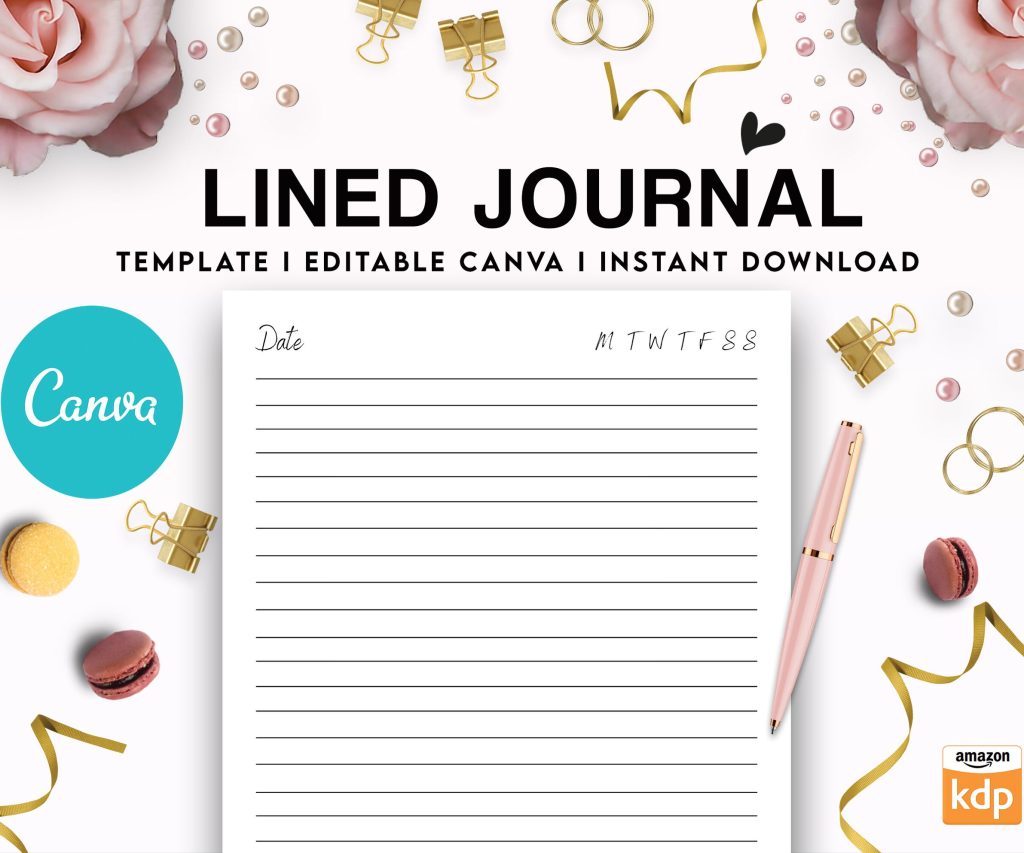 Editable Canva Lined Journal: Express Your Thoughts - KDP Template
1 × $0.00
Editable Canva Lined Journal: Express Your Thoughts - KDP Template
1 × $0.00 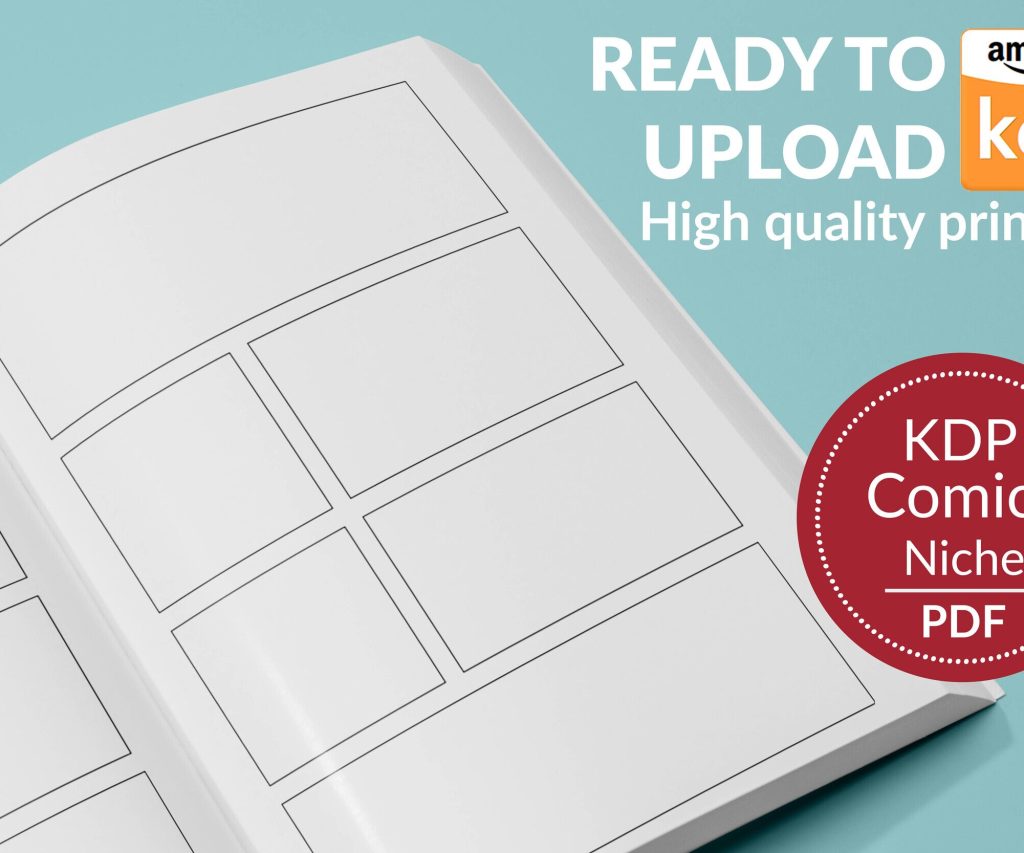 Printable Blank Comic Book Pages PDF : Create Your Own Comics - 3 Available Sizes
1 × $0.00
Printable Blank Comic Book Pages PDF : Create Your Own Comics - 3 Available Sizes
1 × $0.00 
DISCOVER OUR FREE BEST SELLING PRODUCTS
Editable Canva Lined Journal: Express Your Thoughts – KDP Template
Lined Pages Journal 120 pages Ready to Upload PDF Commercial Use KDP Template 6×9 8.5×11 5×8 for Notebooks, Diaries, Low Content
Lined Pages Journal 120 pages Ready to Upload PDF Commercial Use KDP Template 6×9 8.5×11 5×8 for Notebooks, Diaries, Low Content
Cute Dogs Coloring Book for Kids | Activity Book | KDP Ready-To-Upload
Daily Planner Diary : Diary Planners for Everyday Productivity, 120 pages, 6×9 Size | Amazon KDP Interior
Wolf Coloring KDP interior For Adults, Used as Low Content Book, PDF Template Ready To Upload COMMERCIAL Use 8.5×11"
Coloring Animals Head Book for Kids, Perfect for ages 2-4, 4-8 | 8.5×11 PDF
Printable Blank Comic Book Pages PDF : Create Your Own Comics – 3 Available Sizes
Notes KDP interior Ready To Upload, Sizes 8.5×11 6×9 5×8 inch PDF FILE Used as Amazon KDP Paperback Low Content Book, journal, Notebook, Planner, COMMERCIAL Use
Black Lined Journal: 120 Pages of Black Lined Paper Perfect for Journaling, KDP Notebook Template – 6×9
Student Planner Journal 120 pages Ready to Upload PDF Commercial Use KDP Template 6×9" 8.5×11" for Low Content book
Recipe Journal Template – Editable Recipe Book Template, 120 Pages – Amazon KDP Interior