Okay so here’s the deal with KDP independence and royalties because I literally just walked someone through this yesterday and their mind was blown about how the payment structure actually works.
The Two Royalty Options Nobody Explains Properly
Amazon gives you two choices: 35% or 70% royalty. Sounds simple right? It’s not. The 70% option has requirements that’ll bite you if you don’t pay attention. Your book has to be priced between $2.99 and $9.99 for most markets. Anything below $2.99 or above $9.99 automatically gets 35%. But wait there’s more—they also charge delivery costs on the 70% option based on your file size.
I learned this the hard way with a 50MB cookbook I published in 2019. The delivery fees ate like $2.50 per sale at the 70% rate. Would’ve made more money at 35% with a higher list price. Do the math before you pick.
Delivery Costs Are Sneaky
Amazon charges $0.15 per MB for delivery on 70% royalty books. So if your ebook is 10MB you’re paying $1.50 in delivery fees per sale. On a $9.99 book at 70% royalty you’d get $6.99 minus that $1.50 = $5.49 actual payout. Compare that to 35% on a $14.99 book which is $5.25 with zero delivery fees. Sometimes 35% wins.
My rule: keep ebooks under 5MB if possible when using 70% royalty. Compress images aggressively. I use TinyPNG before dropping images into my manuscripts.
KDP Select vs Wide Distribution
This is where independence really comes into play. KDP Select locks you into Amazon exclusively for 90 days at a time but you get perks like Kindle Unlimited royalties and free promo days. Going wide means you can sell on Apple Books, Kobo, Google Play, wherever.
I’ve done both extensively and here’s my actual breakdown from last year’s numbers. My KDP Select books earned about 60% of their income from KU page reads. The other 40% from direct sales. My wide books earned maybe 15% more total because of the additional platforms but required way more admin work uploading to different stores.
For most people starting out? Stay in Select for your first 2-3 books. The KU money is real and you don’t have to manage multiple platforms. Once you’ve got a catalog of 5+ books consider testing wide with your worst performer to see if it does better.
KENP Pages Explained Because It’s Confusing
Kindle Edition Normalized Pages. That’s what Amazon pays you for when someone reads your book in Kindle Unlimited. They normalize all books to a standard page count so a page in your book equals a page in everyone else’s book theoretically. You get paid from a global fund that changes monthly.
Right now it’s hovering around $0.004 per page read. So if your book is 250 KENP and someone reads it completely you make about $1.00. The page count is determined by Amazon’s algorithm based on font size, formatting, all that stuff. You can see your KENP count in your KDP dashboard after publishing.
Oh and another thing—page reads count even if someone borrows and reads one page. You don’t need complete reads to earn. I’ve got books where the average reader only gets through 30% but I’m still making money from those partial reads.
Paperback Royalties Are Different and Kinda Worse
Print books have fixed printing costs that Amazon deducts before calculating your royalty. You get 60% of list price minus printing costs. A 200-page paperback costs about $3.65 to print. If you price it at $12.99 you’d get 60% of $12.99 ($7.79) minus $3.65 = $4.14 per sale.
The printing cost scales with page count obviously. Every 24 pages adds roughly $0.60 to printing. This is why you see so many KDP books priced weirdly—authors are backing into prices that give them round-number royalties after printing costs.
Wait I forgot to mention—expanded distribution (bookstores and libraries) takes the royalty down to 40% and increases printing costs by about 20%. I rarely use it because the math doesn’t work unless you’re pricing above $20.
The Independence Part That Actually Matters
Here’s what nobody tells you about KDP independence. You own your content completely. Amazon doesn’t own your book they just distribute it. You can pull it anytime take it elsewhere republish it whatever. This isn’t like traditional publishing where they own rights for 7+ years.
But—and this is important—you’re also completely responsible for everything. Cover design, formatting, marketing, keywords, categories, pricing strategy. Amazon provides the platform but you’re running a actual business. I spend probably 60% of my time on marketing and admin, 40% on creating content.
The independence is real though. I’ve pivoted entire series based on sales data. Killed books that weren’t performing. Raised and lowered prices weekly during testing. Tried different covers without asking anyone’s permission. That flexibility is worth more than any advance a publisher could offer.
Your Monthly Payment Schedule
Amazon pays approximately 60 days after the end of the month. Sales from January get paid around end of March. They need to account for returns which can happen up to 7 days after purchase for ebooks, longer for paperbacks.
You need to hit minimum thresholds: $100 for direct deposit in the US, $100 for check, varies by country. If you don’t hit the threshold that month it rolls over. I usually hit it but my first 6 months I’d have these $47 months that just sat there accumulating.
Payment goes through direct deposit if you set it up. Takes 3-5 business days to hit your account. I’ve never had a payment issue in 7 years which honestly is pretty remarkable for a tech company.
Pricing Strategy for Maximum Royalty
This is gonna sound weird but I actually have a spreadsheet where I model different price points against expected sales volume. For a new ebook I usually launch at $4.99 which gives me $3.50 per sale at 70% (assuming minimal file size). That’s the sweet spot where impulse buyers will grab it but I’m not leaving money on the table.
After the first month I look at conversion rates. If I’m getting lots of page visits but no sales I’ll test $3.99 or even $2.99. If I’m selling well I might test $5.99 or $6.99 to see if revenue goes up even if units go down.
My cat just knocked over my coffee I’ll be right back.
Okay so where was I. Pricing. Right. For paperbacks I work backwards from printing costs. I decide what I want to make per sale (usually $5-7) then add printing costs then divide by 0.6 to get the list price. Sometimes this puts me at weird prices like $13.47 and I’ll round to $12.99 or $14.99 depending on which gives better math.
The Countdown Deal Trick
If you’re in KDP Select you can run Countdown Deals where you temporarily lower your price but still earn 70% royalty even if the sale price drops below $2.99. So you could do a 99-cent sale and still get 70% of that 99 cents instead of 35%.
I run these quarterly on my backlist. They spike sales and also improve visibility in the store. The algorithm likes sudden sales velocity. Just make sure to promote the deal because Amazon won’t really push it for you.
International Royalties Get Complicated
Amazon has separate marketplaces for US, UK, Germany, France, Spain, Italy, Netherlands, Japan, Canada, Mexico, Australia, India, and Brazil. You can enroll your book in all of them through one dashboard which is convenient. But royalty rates vary.
The 70% option isn’t available in all markets. India for example caps at 35% I think? Or maybe it’s 60%. I should check that. Japan has different pricing requirements. Some markets have lower delivery costs some higher.
My approach: enroll everywhere and see what happens. About 15% of my income comes from non-US markets. UK is biggest after US, then Germany, then Canada. The rest are negligible but it’s passive so whatever.
You do have to handle tax stuff though. Amazon withholds 30% for non-US authors unless you file a W-8BEN. US authors need to provide tax info through the dashboard. I’m not a tax professional so definitely talk to an accountant about this part especially if you’re making real money.
The Real Numbers From My Account
I’m just gonna pull up my dashboard real quick and give you actual numbers because theory is useless. Last month I made $8,347 from KDP across 47 active titles. That breaks down to:
- $4,200 from Kindle Unlimited page reads
- $2,890 from ebook sales
- $1,257 from paperback sales
My best-performing book made $1,840 by itself. It’s a 150-page workbook priced at $6.99 enrolled in Select. Gets about 450,000 page reads per month plus 80-90 direct sales. My worst active performer made $12. It’s a experimental poetry thing I published in 2020 that I keep meaning to unpublish but haven’t gotten around to.
The middle 30 books average maybe $150-200 each per month. Not life-changing individually but collectively they’re paying my mortgage.
Stuff That Kills Your Royalties
Returns. Oh my god returns. If someone buys your ebook and returns it within 7 days Amazon claws back your royalty. This happens more than you’d think. I average about 3-5% return rate across my catalog. Some books higher especially if the description is misleading or the preview doesn’t match the content.
Price matching is another thing. If your book is available cheaper somewhere else Amazon might match that price automatically and you earn royalty on the lower price. This is why going wide can backfire if you’re not careful with pricing across platforms.
Violations and strikes. If Amazon thinks your book violates content guidelines they can remove it and you lose all future royalties obviously. I’ve never had this happen but I’m careful about staying within their rules. No explicit content in certain categories, no misleading metadata, no copyrighted material without permission.
The Compound Effect Nobody Talks About
Here’s the thing about KDP independence and royalties that took me years to understand. Each book you publish adds to your total passive income. Book 1 might make $200/month. Book 2 adds another $150. Book 3 adds $300. Suddenly you’re at $650/month and you published those 6 months ago.
Keep publishing and those royalties stack. I’m at 47 books now and most months I’m clearing $6k-10k depending on seasonality. That’s not from one hit book it’s from dozens of moderate performers compounding over time.
The independence means I can pursue this strategy without asking anyone’s permission. Traditional publishers want you to publish maybe one book per year. I published 12 last year across different pen names and niches. Some flopped. Some did okay. Two became consistent earners. That’s a winning ratio.
Tools That Help Maximize Royalties
I use Publisher Rocket for keyword research before publishing. It’s like $97 one-time and helps me find categories and keywords where I can actually rank. Better rankings mean more organic traffic mean more sales mean more royalties. Simple math.
For covers I either use Canva Pro or hire from Fiverr depending on the project. A good cover increases click-through rate which increases conversion which increases royalties. I’ve seen 3x sales jumps from cover redesigns alone.
BookBolt is helpful for low-content books if you’re into that. It has calculators that show you expected royalties based on different price points and page counts. Saves time versus doing the math manually.
Oh and another thing—I track everything in a Google Sheet. Every book, every month’s royalties, trends over time, seasonal patterns. This data helps me decide what to publish next and where to focus effort.
Anyway that’s basically the full picture of KDP royalties and independence from someone who’s actually doing it full-time. The system isn’t perfect but it’s the best option available for self-publishers right now. You’ve gotta treat it like a real business though not a lottery ticket. Consistent publishing, good market research, professional presentation, and patience. The royalties compound if you stick with it.

 To do list Journal 120 pages Ready to Upload PDF Commercial Use KDP Template 6x9" 8.5x11" for Low Content book
1 × $0.00
To do list Journal 120 pages Ready to Upload PDF Commercial Use KDP Template 6x9" 8.5x11" for Low Content book
1 × $0.00 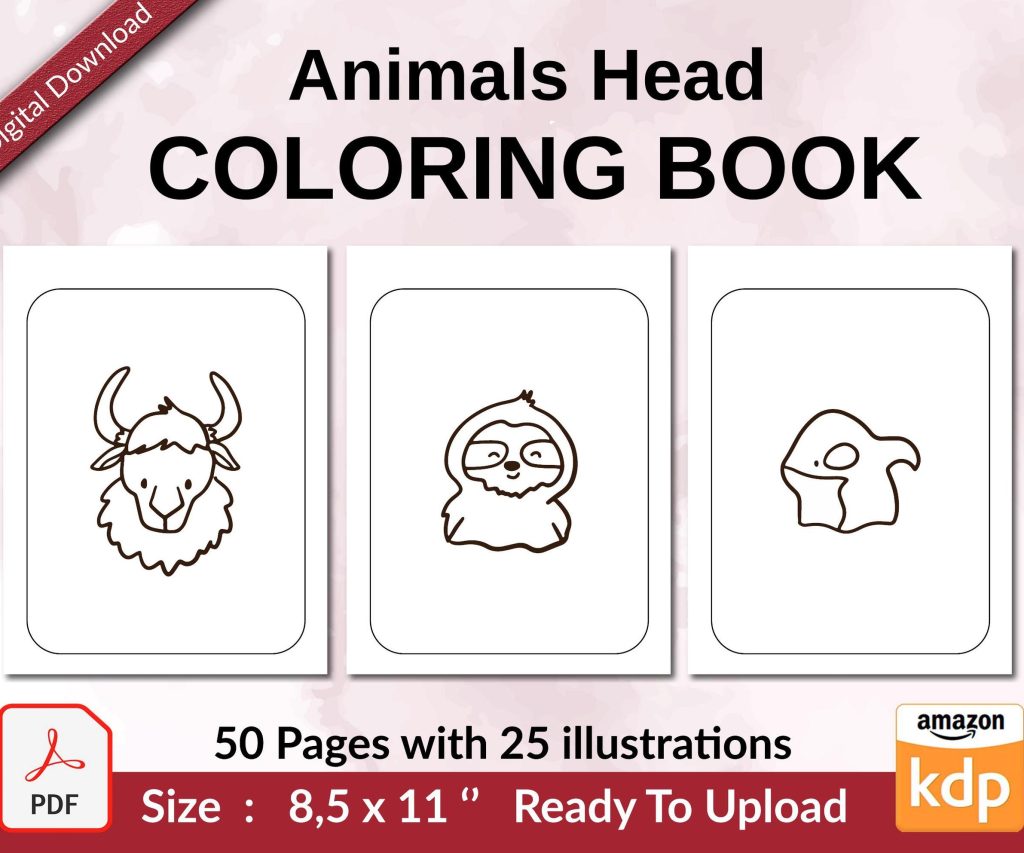 Coloring Animals Head Book for Kids, Perfect for ages 2-4, 4-8 | 8.5x11 PDF
1 × $0.00
Coloring Animals Head Book for Kids, Perfect for ages 2-4, 4-8 | 8.5x11 PDF
1 × $0.00 
DISCOVER OUR FREE BEST SELLING PRODUCTS
Editable Canva Lined Journal: Express Your Thoughts – KDP Template
Lined Pages Journal 120 pages Ready to Upload PDF Commercial Use KDP Template 6×9 8.5×11 5×8 for Notebooks, Diaries, Low Content
Lined Pages Journal 120 pages Ready to Upload PDF Commercial Use KDP Template 6×9 8.5×11 5×8 for Notebooks, Diaries, Low Content
Cute Dogs Coloring Book for Kids | Activity Book | KDP Ready-To-Upload
Daily Planner Diary : Diary Planners for Everyday Productivity, 120 pages, 6×9 Size | Amazon KDP Interior
Wolf Coloring KDP interior For Adults, Used as Low Content Book, PDF Template Ready To Upload COMMERCIAL Use 8.5×11"
Coloring Animals Head Book for Kids, Perfect for ages 2-4, 4-8 | 8.5×11 PDF
Printable Blank Comic Book Pages PDF : Create Your Own Comics – 3 Available Sizes
Notes KDP interior Ready To Upload, Sizes 8.5×11 6×9 5×8 inch PDF FILE Used as Amazon KDP Paperback Low Content Book, journal, Notebook, Planner, COMMERCIAL Use
Black Lined Journal: 120 Pages of Black Lined Paper Perfect for Journaling, KDP Notebook Template – 6×9
Student Planner Journal 120 pages Ready to Upload PDF Commercial Use KDP Template 6×9" 8.5×11" for Low Content book
Recipe Journal Template – Editable Recipe Book Template, 120 Pages – Amazon KDP Interior