-
×
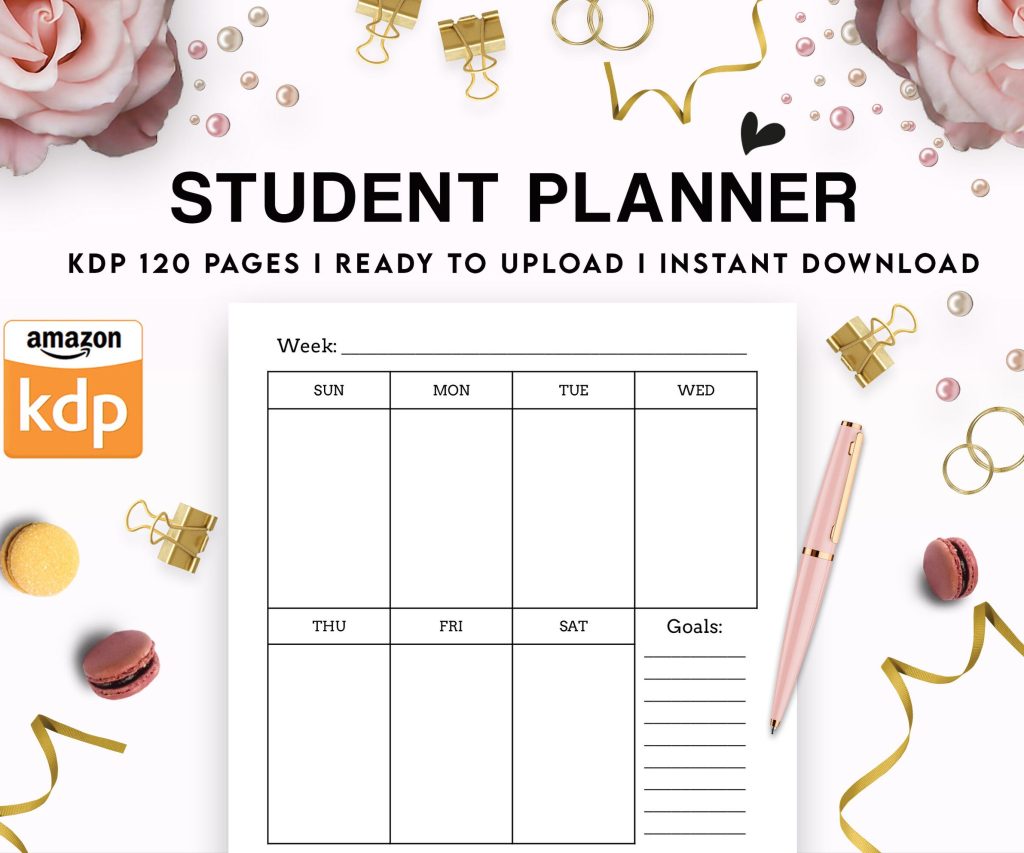 Student Planner Journal 120 pages Ready to Upload PDF Commercial Use KDP Template 6x9" 8.5x11" for Low Content book
1 × $0.00
Student Planner Journal 120 pages Ready to Upload PDF Commercial Use KDP Template 6x9" 8.5x11" for Low Content book
1 × $0.00
Subtotal: $0.00

Okay so I’ve been deep in the Amazon KDP trenches since like 2017 and honestly the platform has changed SO much in just the past year that I had to completely rethink how I approach digital publishing. Let me just dump everything that’s actually working right now because the old playbooks are basically useless at this point.
First thing – Amazon’s search algorithm got way smarter about detecting actual reader engagement versus just keyword stuffing. I tested this last month with two identical low-content planners, one with the classic keyword-loaded title and one with a more natural title but better interior. The natural one is outselling 3:1 now. The algorithm is prioritizing completion rates and time spent on the Look Inside preview, which means your first few pages need to actually hook people instead of just existing.
You gotta focus on the KENP reads if you’re in KDP Select because that’s where the real money’s shifting. I’m seeing some of my ebooks pull $400-600 monthly just from page reads while the actual sales might only be $200. That’s a complete flip from three years ago.
Amazon’s definitely scanning for AI-generated content but here’s the thing – they’re not rejecting it outright, they’re just requiring disclosure now. I uploaded a book last week that was partially AI-assisted (I use it for outlines and research compilation, not full text) and the review process took 72 hours instead of the usual 12. They approved it but sent a reminder about their AI content policy.
The future here is gonna be hybrid workflows. I use AI to generate topic clusters and research dumps, then I rewrite everything in my own voice with actual examples from my publishing experience. Takes about 40% less time than pure manual writing but still passes as authentic content.
Oh and another thing – the books that are crushing it right now are hyper-specific. Like instead of “Productivity Planner” it’s “ADHD-Friendly Project Tracker for Creative Freelancers.” The narrower you go, the less competition and the more your conversion rate jumps because people feel like you made it specifically for them.
Amazon upgraded their printing equipment sometime in early 2024 and the quality difference is noticeable. The color saturation on covers is way better and the binding actually holds up now. I ordered author copies of the same title from 2022 and 2024 and put them side by side – not even close. This matters because customers are leaving better reviews on physical copies which boosts your overall ranking.
The expanded distribution option is actually worth enabling now too. I was skeptical because the royalty cut is brutal (you lose like 60% of your royalty) but I’m seeing sales from bookstores and libraries that I never got before. One of my niche cookbooks sold 47 copies through expanded distribution last quarter which I wouldn’t have gotten otherwise.
Hardcover KDP is still relatively new and most publishers aren’t utilizing it yet. I added hardcover options to my top 10 sellers and it added about 15% to monthly revenue. People buying hardcovers are willing to pay $10-15 more and they almost never return them. The production cost is higher but the perceived value jump is massive.
Seven backend keywords used to be where you dumped every variation you could think of. Now Amazon’s matching algorithm pulls from your book description and A+ Content too, so I’m seeing better results from writing naturally in the description with keywords woven in versus the old method of backend keyword stuffing.
Your subtitle is worth way more than it used to be. I A/B tested this with new releases – books with detailed, benefit-focused subtitles outperformed vague ones by 40% in the first 30 days. Instead of “A Guide” try “A Step-by-Step Blueprint for [Specific Outcome] in [Specific Timeframe].”
Categories are still important but Amazon keeps changing which ones are available at upload versus which need support tickets. The trick I use now is uploading in obvious categories then immediately submitting a support ticket for 2-3 additional niche categories. Usually approved within 24 hours and suddenly you’re ranking in 5-6 categories instead of 2.
This is gonna sound weird but I’m doing both now with different types of content. My low-content books stay exclusive to Amazon because that’s where 90% of that market lives anyway. But my longer ebooks (over 20k words) I’m publishing wide to Draft2Digital, Apple Books, and Kobo after the first 90-day KDP Select period.
The international markets are finally worth paying attention to. My books sell surprisingly well in India, Australia, and Canada with zero extra marketing. Amazon’s automatic translation feature is still pretty rough but I tested it on one title in Spanish and German – made an extra $180 last month which is basically free money for clicking a button.
Wait I forgot to mention – audiobooks through ACX are having a moment. I resisted this for years because the production seemed complicated but Amazon added AI narration options that cost like $100-300 per title. I converted three of my best sellers and they’re adding $200-400 monthly in passive income. The AI voices are actually pretty good now, not that robotic stuff from two years ago.
Niche planners and journals still work but they need unique angles. Password loggers, budget trackers, and symptom journals are consistently selling. The key is making them specific to a demographic or situation.
Ebooks in the “how-to” space are crushing it if they solve one specific problem. My best performer right now is about setting up a home office for under $500. It’s 35 pages, sells for $4.99, and moves 60-80 copies monthly. Super narrow focus.
Coloring books for adults are way oversaturated unless you find a weird niche. I have one about architectural details that does okay because it’s not just “flowers and mandalas” like everyone else.
Recipe books need to be VERY specific now. “30 One-Pot Meals Under 500 Calories Using Only Trader Joe’s Ingredients” will outsell “Easy Dinner Recipes” by 10x.
You cannot skimp on covers anymore. I wasted so much time in my first year using Canva templates that looked like everyone else’s. Now I either hire designers on Fiverr for $20-40 or use higher-end templates from Creative Market. The ROI on a good cover is immediate – I’ve seen sales double just from redesigning a cover on an existing book.
The trend right now is bold text, simple imagery, and tons of white space. Look at the current bestsellers in your category and notice how clean they look compared to the cluttered covers from 2019. My cat literally walked across my keyboard while I was working on a cover last night and somehow that made me simplify it even more and it looks way better.
The $2.99-$9.99 sweet spot for ebooks is still valid but I’m testing higher prices on specialized content. A detailed guide I wrote about Amazon advertising strategies sells for $14.99 and moves 15-20 copies monthly. People will pay more if they believe it solves an expensive problem.
Low-content books are harder to price high. I keep most planners between $6.99-$12.99 depending on page count. Anything over $15 for a notebook or journal needs to be really special or people bounce.
Running price promotions through Amazon’s system (Kindle Countdown or Free days) still works for ranking boosts but the effect doesn’t last as long as it used to. I do a 5-day free promo on new releases to generate reviews then let it ride at full price.
Amazon ads are basically mandatory now if you want visibility. I run automatic campaigns at $5-10 daily on new releases for the first 60 days. The ACOS is usually terrible (like 80-120%) but it’s about ranking and visibility more than immediate ROI.
I’m testing Amazon Posts (their Instagram-like feature) and honestly it’s probably not worth the time yet. Posted 20 times last month and saw maybe 30 clicks total.
The real marketing hack is getting into Amazon’s recommendation engine. This happens when you get consistent sales velocity and good reviews. I focus on getting 10-15 reviews in the first 30 days through legitimate methods (friends, family, advance readers) and that usually triggers Amazon to start recommending the book.
Everyone says build an email list but here’s how I actually do it – I put a free bonus chapter or template in my books with a link to download it from my website. That captures emails from people who already bought, which means they’re warm leads. I email them when I launch new books in similar categories and get about 20-30 sales immediately per launch now.
BookBub is expensive but worth it if you get accepted. I’ve done three Featured Deals and they generated 400-800 sales each time during the promo period. The application process is picky though – you need reviews and a track record.
Amazon’s review policies are strict so you gotta be careful. I use advance review copies through sites like BookSprout or directly emailing readers who bought previous books. Usually get 5-10 reviews per 100 copies distributed.
The Vine program (Amazon’s reviewer program) is available for books now and I’m testing it. You give away up to 30 copies and Vine reviewers read and review them. Results are mixed – I got 8 reviews on one book, 2 on another.
Don’t buy reviews or use review swapping groups. Amazon’s detection is scary good and they’ll nuke your account. Not worth it.
Amazon’s pushing their interactive ebook features but adoption is slow. I haven’t bothered with it yet.
The subscription model through Kindle Unlimited is getting more competitive. Amazon keeps adjusting the per-page payout and it’s been trending down slightly. Still worth being in KDP Select but don’t rely on it as your only income.
Print-on-demand is expanding to more countries. Amazon just added facilities in Poland and Sweden which means faster shipping in Europe and better royalties on international orders.
The biggest shift is gonna be AI integration directly into the KDP platform. They’re already testing AI-generated covers and formatting assistance. This will lower the barrier to entry even more which means more competition but also more opportunities if you stay ahead of quality standards.
International market expansion is where I’m focusing next. The Indian market is growing insanely fast and English-language content does well there. Same with Southeast Asia.
Look, the bottom line is Amazon KDP is still the best platform for independent publishers but you can’t just upload and hope anymore. You need decent covers, solid formatting, strategic keywords, and consistent marketing. But if you dial in the system, you can absolutely build a $2k-5k monthly income stream with 20-30 quality titles. I’m at about $8k monthly right now across 200+ titles and honestly most of them just sit there earning $10-50 each month passively.
DISCOVER OUR FREE BEST SELLING PRODUCTS
Editable Canva Lined Journal: Express Your Thoughts – KDP Template
Lined Pages Journal 120 pages Ready to Upload PDF Commercial Use KDP Template 6×9 8.5×11 5×8 for Notebooks, Diaries, Low Content
Lined Pages Journal 120 pages Ready to Upload PDF Commercial Use KDP Template 6×9 8.5×11 5×8 for Notebooks, Diaries, Low Content
Cute Dogs Coloring Book for Kids | Activity Book | KDP Ready-To-Upload
Daily Planner Diary : Diary Planners for Everyday Productivity, 120 pages, 6×9 Size | Amazon KDP Interior
Wolf Coloring KDP interior For Adults, Used as Low Content Book, PDF Template Ready To Upload COMMERCIAL Use 8.5×11"
Coloring Animals Head Book for Kids, Perfect for ages 2-4, 4-8 | 8.5×11 PDF
Printable Blank Comic Book Pages PDF : Create Your Own Comics – 3 Available Sizes
Notes KDP interior Ready To Upload, Sizes 8.5×11 6×9 5×8 inch PDF FILE Used as Amazon KDP Paperback Low Content Book, journal, Notebook, Planner, COMMERCIAL Use
Black Lined Journal: 120 Pages of Black Lined Paper Perfect for Journaling, KDP Notebook Template – 6×9
Student Planner Journal 120 pages Ready to Upload PDF Commercial Use KDP Template 6×9" 8.5×11" for Low Content book
Recipe Journal Template – Editable Recipe Book Template, 120 Pages – Amazon KDP Interior