-
×
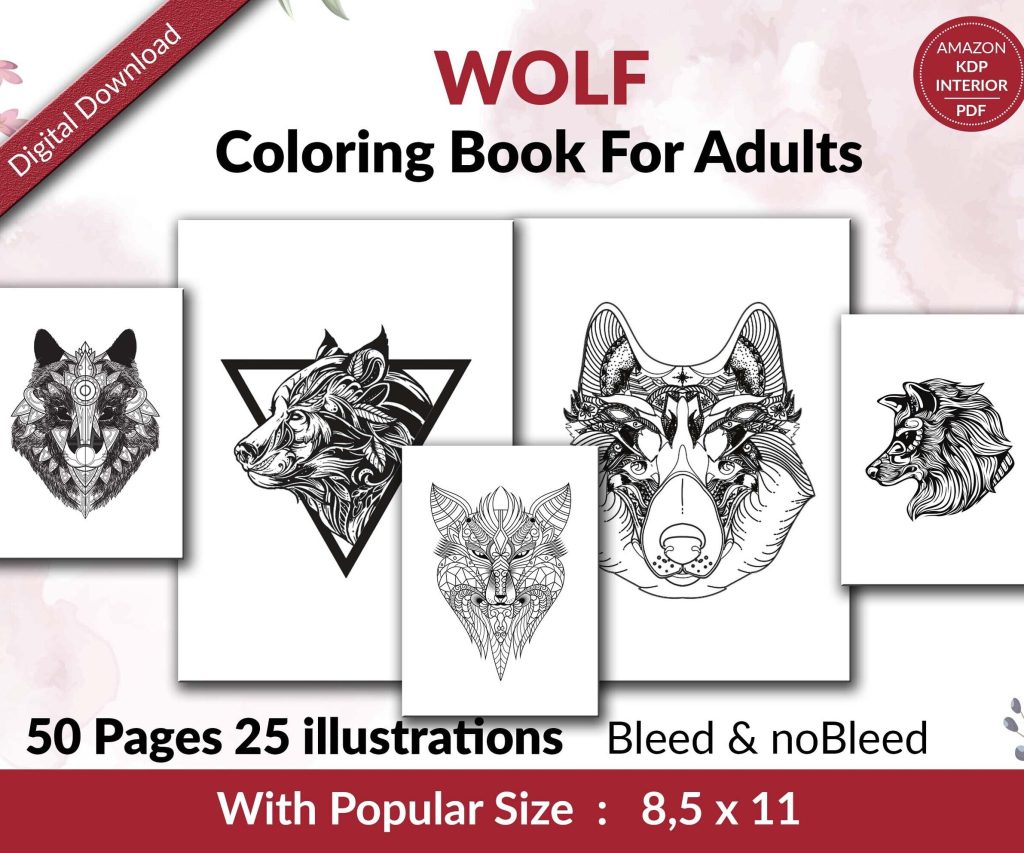 Wolf Coloring KDP interior For Adults, Used as Low Content Book, PDF Template Ready To Upload COMMERCIAL Use 8.5x11"
1 × $0.00
Wolf Coloring KDP interior For Adults, Used as Low Content Book, PDF Template Ready To Upload COMMERCIAL Use 8.5x11"
1 × $0.00
Subtotal: $0.00

Okay so I just launched three books last month with literally zero ad spend and here’s what actually worked…
You don’t need to drop $300 on a designer. I’m gonna be real with you – Canva’s free version is enough if you’re not being lazy about it. The trick is you gotta study what’s already ranking in your niche for like 20 minutes before you even open Canva.
Go to Amazon, find your category, look at the top 20 books. Screenshot them. Now here’s what nobody tells you – you’re looking for patterns in fonts, color schemes, and layout. Romance books? They all have that same script font treatment. Self-help? Bold sans-serif with lots of white space.
I use Canva’s free templates but then I customize them so they don’t look like everyone else’s Canva book. Change the fonts (Google Fonts is free and has like thousands of options), adjust the colors to match what’s working in your category, and for the love of god don’t use their stock photos that scream “free template.”
Pixabay and Pexels have free commercial-use images. Sometimes they’re generic but if you layer them right or use overlays, nobody can tell.
This is where I see people just… give up? They write two sentences and wonder why nobody buys. Your book description is free real estate for selling.
Here’s my formula that’s made me way more money than it should’ve:
I literally have this saved in a Google Doc and just swap out the relevant parts for each book. Takes maybe 15 minutes per book now.
Amazon lets you use basic HTML in descriptions. Most authors just paste plain text and it looks boring as hell. Use bold tags for important phrases, add some line breaks, make it scannable. There’s free HTML generators for Amazon descriptions if you don’t wanna code it yourself.
Okay so this is gonna sound weird but I literally spent three hours one night (my cat kept walking on my keyboard so it took longer than it should’ve) just researching category combinations on Amazon.
You get to pick two categories when you publish. Most people pick the obvious ones and then compete with 50,000 other books. Instead, go deep into subcategories. Like really deep.
Use Publisher Rocket if you can afford the one-time fee, but if you’re going totally free, you gotta manually research. Search for books similar to yours, scroll down to “Product Details” and see what categories they’re in. Write them ALL down.
Look for categories where the #1 bestseller has a rank of like 100,000 or higher. That means it’s not super competitive and you can actually hit bestseller status there, which gives you the orange flag, which makes more people click.
Wait I forgot to mention – you can also email KDP support after publishing and ask them to add you to additional categories. They’ll do it. I usually ask for 8-10 total categories and they place me in most of them. That’s free extra visibility.
Everyone’s gonna tell you to buy keyword tools. I use them now but when I started? Amazon’s search bar was my keyword tool.
Start typing your topic into Amazon’s search bar and look at what autocompletes. Those are real searches people are doing. Write them down. Then search for a broad term in your niche and look at what Amazon suggests in the “Related searches” section.
Also check the “Customers who bought this also bought” section on competitor books. See what other books are there and what keywords they’re using in their titles.
You get seven keyword phrases in KDP (not seven words – seven PHRASES). Use all the space. Don’t repeat words between your title and keywords though, waste of space.
I look at bestsellers in my niche and read their one-star and two-star reviews. People complain about what the book DIDN’T cover. Then I make sure my book covers that thing and I put those terms in my keywords and description. You’re literally finding gaps in the market for free.
Okay so funny story, I had a client cancel last minute once and I spent that freed up time testing different launch approaches. Here’s what moved the needle without spending money:
Price your ebook at 99 cents for the first week. I know, I know, everyone says to charge more. But that low price does two things – lowers the barrier for impulse buyers and you need those initial sales to trigger Amazon’s algorithm.
Actually, you can price it free but you gotta do KDP Select for that (the 90-day exclusivity thing). If you go that route, use your free promo days strategically. Don’t blow all five days at once.
Find subreddits related to your book topic. Don’t just spam your link – that gets you banned. But participate in discussions, be helpful, and when it’s relevant (and the sub allows it), mention your book. I’ve gotten hundreds of downloads this way.
There’s subreddits specifically for free ebooks. r/FreeEBOOKS, r/KindleFreebies, etc. Post there when you run a free promo. Follow their rules exactly or mods will delete your post.
Join Facebook groups in your niche. Not author groups (well, some author groups for learning), but groups where your READERS hang out. If you wrote a book about meal planning, join meal planning groups.
Same deal as Reddit – don’t be spammy. Answer questions, share value. Most groups have promotional days (usually Fridays) where you can share your book. Mark those on your calendar.
There’s also book promotion groups where authors share each other’s books. It’s kinda hit or miss but it’s free traffic. Groups like “Freebooksy and Bargain Booksy Group” have like 100k+ members.
Set up your Author Central account (it’s free, separate from KDP). Add a bio, photo, link your blog or website if you have one. But here’s the thing people miss – you can add editorial reviews to your books through Author Central.
Don’t have professional reviews? Ask beta readers for quotes. Ask friends who read the book. Copy positive feedback from anywhere (obviously don’t lie, but use real feedback). These show up on your book page and add credibility.
You can also add videos to your Author Central page. Film yourself on your phone talking about your book or your writing process. Doesn’t need to be fancy. This makes your author page look more legit.
If you have any kind of blog or website, connect the RSS feed to your Author Central profile. Your blog posts will show up on your Amazon author page. Free content marketing basically.
Okay so you’re probably thinking “but I need to pay for an email service” – yes, BUT Mailerlite has a free tier up to 1,000 subscribers. That’s plenty when you’re starting.
Put a link in the back of your book (and front matter) offering a free bonus resource in exchange for their email. Could be a checklist, a template, an extra chapter, whatever makes sense for your book.
Use a free landing page builder like Carrd (free for one page) or even just a Google Form that feeds into your email service. I used Google Forms for my first six months because I’m cheap and it worked fine.
Now you have readers you can email when you launch your next book. Free marketing for every future book. This is the long game but it’s the smartest thing you can do.
You can’t pay for reviews but you can ask for them in smart ways. Put a polite request at the end of your book. Keep it short – “If you enjoyed this book, I’d be grateful if you’d leave a review on Amazon.”
Email your list (the one you just started building) and ask. Family and friends can review IF they actually read it and they’re not in your household (Amazon’s rules are specific about this).
Post in those Facebook groups asking for review swaps. Other authors will read your book in exchange for reading theirs. Some people hate this approach but when you’re starting with zero reviews, it helps.
There’s also sites like Booksprout and BookSirens that connect authors with readers who review. They have free tiers with limits but you can get some legit reviews this way.
If you have your own ISBN (not Amazon’s free one), you can add A+ Content to your book listing. It’s free and lets you add formatted text, images, comparison charts, all that stuff below your description.
Most people don’t use this because they use Amazon’s ISBN. But if you buy your own ISBN (okay that costs money) or if you publish through Draft2Digital and distribute to Amazon (their ISBNs qualify), you can access A+ Content.
It makes your listing look way more professional and gives you more space to sell your book. I’ve seen it increase conversion rates by like 20-30%.
Even if you only have one book, create a series for it on Amazon. Sounds dumb but hear me out. When readers finish a book, Amazon shows them other books in the series. If you plan to write more books even in the same genre or topic, link them as a series.
You set this up in KDP under “Series” field. Give it a name that makes sense. This creates free cross-promotion between your books.
You don’t need to be on every platform. Pick one (maybe two max) where your readers actually hang out. For me, it’s Twitter and Instagram, but that’s because I write non-fiction that skews younger.
Share useful content related to your book topic. Not just “buy my book” posts. Like if you wrote a productivity book, share productivity tips. Quote your own book sometimes. Show behind-the-scenes of your writing process.
Use hashtags strategically. Research what hashtags your target readers follow. On Instagram I use like 20-30 hashtags per post (a mix of popular and niche ones).
Engage with other people’s content in your niche. Comment genuinely on posts, share other people’s stuff. Some of those people will check out your profile and find your book.
If you can stomach making TikTok videos (I barely can), there’s a massive book community there. You don’t need fancy equipment. People literally film books with their phone and get thousands of views. Use trending sounds, show your book in creative ways, participate in challenges.
I’m not great at this myself but I’ve seen authors blow up their book sales from a single viral TikTok. It’s free to try and the potential upside is huge.
Make sure your “Look Inside” content is actually compelling. Amazon automatically includes the first 10% of your book, but you can influence what shows up by making your front matter engaging.
Don’t waste the first pages with a long table of contents or dedications. Get to the good stuff quick. Your opening needs to hook browsers into buying.
I literally rewrote the opening chapter of one of my books specifically to make the Look Inside better, and my conversion rate went up. People were clicking through to that preview and then buying more often.
Here’s something nobody wants to hear but it’s true – Amazon’s algorithm needs data. Your book needs sales and page reads and reviews before Amazon starts showing it to more people.
This means your launch week is critical. All those free tactics above? Do them all at once during launch week. Get as many eyeballs and sales as possible in those first 30 days.
After that initial push, Amazon will either pick up your book and show it to more people (because the algorithm sees it’s performing) or you’ll need to keep manually promoting it.
I usually give a book 90 days of consistent free promotion before I decide if it’s gonna work or if I need to pivot the approach. Some books take off, others don’t, and sometimes it’s random as hell.
Oh and another thing – page reads through KDP Select count for your ranking. So even free promos can help because people downloading and reading (if you’re in KU) boosts your visibility.
Update your book keywords and description every few months based on what’s working. Amazon lets you change this stuff anytime. I test different descriptions, different keyword combinations, see what moves the needle. It’s all free to experiment with.
DISCOVER OUR FREE BEST SELLING PRODUCTS
Editable Canva Lined Journal: Express Your Thoughts – KDP Template
Lined Pages Journal 120 pages Ready to Upload PDF Commercial Use KDP Template 6×9 8.5×11 5×8 for Notebooks, Diaries, Low Content
Lined Pages Journal 120 pages Ready to Upload PDF Commercial Use KDP Template 6×9 8.5×11 5×8 for Notebooks, Diaries, Low Content
Cute Dogs Coloring Book for Kids | Activity Book | KDP Ready-To-Upload
Daily Planner Diary : Diary Planners for Everyday Productivity, 120 pages, 6×9 Size | Amazon KDP Interior
Wolf Coloring KDP interior For Adults, Used as Low Content Book, PDF Template Ready To Upload COMMERCIAL Use 8.5×11"
Coloring Animals Head Book for Kids, Perfect for ages 2-4, 4-8 | 8.5×11 PDF
Printable Blank Comic Book Pages PDF : Create Your Own Comics – 3 Available Sizes
Notes KDP interior Ready To Upload, Sizes 8.5×11 6×9 5×8 inch PDF FILE Used as Amazon KDP Paperback Low Content Book, journal, Notebook, Planner, COMMERCIAL Use
Black Lined Journal: 120 Pages of Black Lined Paper Perfect for Journaling, KDP Notebook Template – 6×9
Student Planner Journal 120 pages Ready to Upload PDF Commercial Use KDP Template 6×9" 8.5×11" for Low Content book
Recipe Journal Template – Editable Recipe Book Template, 120 Pages – Amazon KDP Interior