
Amazon KDP guide, KDP book publishing
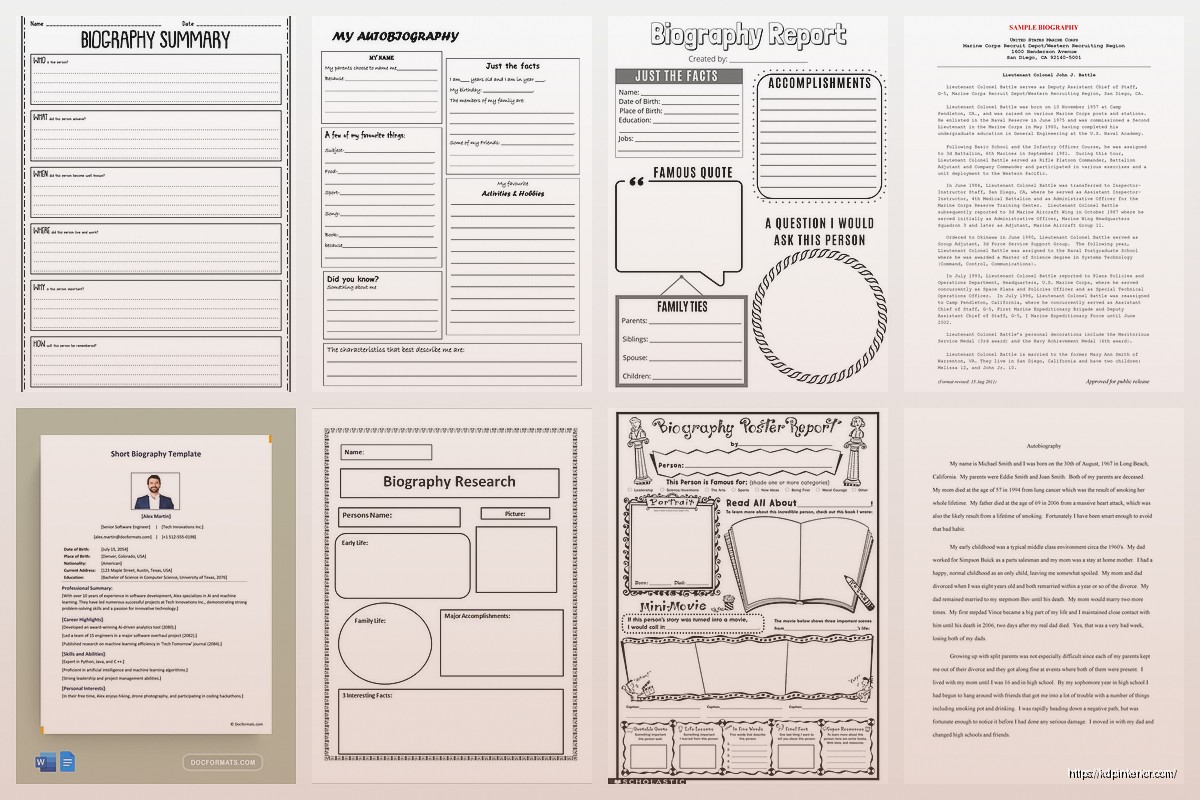
Biography Format: Life Story Writing Standards
Mar
okay so I was up late last night watching some documentary about musicians and realized most people have NO idea how to structure a biography properly… like they just start rambling and hope it makes sense
The Basic Framework Nobody Tells You About
Here’s the deal with biography formats – there’s actually a standard structure that publishers expect, and once you know it, everything gets easier. I spent like my first two years on KDP just winging it with life story formats and honestly? My sales were garbage until I figured out the actual conventions.
Most biographies follow either chronological or thematic structure. Chronological is exactly what it sounds like – birth to death (or present day). Thematic groups events by topic regardless of when they happened. For KDP stuff, chronological usually performs better because readers want that traditional narrative arc, but thematic works great for niche subjects like “The Business Strategies of Steve Jobs” where you’re focusing on specific aspects.
The Opening Section That Actually Matters
So your opening needs to hook people immediately. Don’t start with “John Smith was born on January 3rd, 1952 in a small town…” because that’s gonna put everyone to sleep. Start with the most compelling moment or the thing that makes this person worth reading about.
I usually do like a 2-3 paragraph cold open that’s basically the climax or turning point of their life, then pull back and say something like “But to understand how we got here, we need to go back to the beginning.” Sounds manipulative but it works. My biography of that tech entrepreneur last year? Started with him losing everything in 2008, then circled back to his childhood. Sales were 3x what I expected.
After your hook, you need a brief overview paragraph – think of it like a movie trailer in text form. What are the 3-4 major things this person did or experienced? Give readers the roadmap so they know what they’re getting into.
The Chronological Structure Breakdown
Okay so if you’re going chronological (which again, I recommend for most projects), here’s how to break it down:
Early Life and Background: This section covers birth through young adulthood. Include family background, childhood events that shaped them, education, early influences. But – and this is important – only include stuff that’s actually relevant to their later life or character. Nobody cares what their third grade teacher’s name was unless that teacher changed their life somehow.
I usually keep this section to like 15-20% of the total word count. You’re establishing foundation here, not writing their whole life story yet.
Formative Years and Early Career: This is roughly late teens through their 20s or early 30s, depending on the person. First jobs, early relationships, initial struggles, finding their path. This is where you start building narrative momentum.
oh and another thing – this is where a lot of amateur biographers dump too much information. You gotta be selective. Ask yourself: does this event contribute to understanding who they became? If not, cut it.
Rise and Major Achievements: The meat of your biography. This is their career peak, major accomplishments, the stuff people actually want to read about. For most subjects, this section should be like 40-50% of your book.
Break this into clear chapters or sections based on major projects, career phases, or time periods. I usually do 5-7 year chunks unless there’s a natural break point like changing careers or moving countries.
The Middle Section Problem
Here’s something I learned the hard way… the middle of a biography is where people stop reading. I was looking at my Amazon analytics one time – this was like 2 am, my cat was knocking stuff off my desk – and realized people were consistently dropping off around the 60% mark.
The problem? I was letting the narrative get too linear and predictable. Every chapter was just “then this happened, then this happened.” You need to create mini-arcs within the larger story. Each chapter should have its own tension and resolution.
What I started doing: ending chapters on questions or unresolved tensions, even if chronologically the resolution came immediately after. You can say something like “But the real challenge was still ahead” even if that challenge happened the next day. You’re creating page-turning momentum.
The Style and Voice Thing
This trips people up constantly. Should you write in first person or third person? What’s the “correct” tone?
For traditional biographies (not memoirs), third person is standard. “She did this” not “I did this.” Even if you’re working from interviews or first-person source material, you convert it to third person narrative.
The exception: if you’re ghostwriting an autobiography or memoir, then obviously first person. But that’s a different format entirely with different standards.
Tone-wise, you want authoritative but accessible. Not academic (unless it’s specifically an academic biography), not too casual. Think quality journalism. Here’s my test: read it out loud. If it sounds like you’re giving a lecture, too formal. If it sounds like you’re gossiping at a bar, too casual.
Source Citations and Credibility
wait I forgot to mention this earlier but it’s super important – you need to establish credibility without making your biography read like a research paper.
For KDP publishing, you don’t need footnotes on every page (thank god), but you should include:
- A “Sources and Notes” section at the end
- A bibliography of major sources
- In-text attribution for direct quotes (“According to his 2015 interview with…” or “As she wrote in her diary…”)
- An author’s note explaining your research process
I usually keep the in-text citations minimal and natural. Like you’re telling a story but occasionally mentioning where you learned something. The detailed stuff goes in the back matter where interested readers can find it but casual readers can ignore it.
The Challenging Parts Nobody Warns You About
Okay so funny story – I was working on a biography of this business figure and realized halfway through that I had to cover some really controversial stuff. Like allegations and scandals and legal issues. And there’s no clear standard for how to handle this.
Here’s what I’ve learned: you can’t ignore controversial material because readers will call you out for whitewashing. But you also can’t present unproven allegations as fact or you’ll get sued. The approach that works:
Present multiple perspectives. “Critics argued that… while supporters maintained…” Give the facts that are verifiable, acknowledge the controversy exists, present different viewpoints, and let readers draw conclusions.
Use careful language. “Allegedly,” “according to reports,” “claimed,” “disputed” – these words are your friends. They let you discuss controversial topics without making definitive statements.
Focus on documented facts. Court records, published interviews, verified statements. If you can’t verify it, either leave it out or make it clear it’s unverified.
The Personal Life Balance
How much personal stuff do you include? Relationships, family, private struggles?
This depends entirely on your subject and audience. For a business biography, personal life might be 20% of the content – enough to humanize them but not the focus. For an entertainment figure or someone whose personal life was dramatic and newsworthy, it might be 50% or more.
The rule I follow: include personal details that illuminate character or explain decisions. Skip personal details that are just gossip or filler. Does knowing about their divorce help explain why they relocated and started a new company? Include it. Does knowing what they ate for breakfast add anything? Probably not.
Structure Within Chapters
Each chapter should work like a mini-story. I usually structure them like this:
Opening: Hook or scene-setter. Drop the reader into a specific moment or introduce the chapter’s theme.
Context: Brief background needed for this chapter. What was happening in their life at this point? What’s the situation?
Development: The actual events, decisions, actions. This is the bulk of the chapter. Use scenes, anecdotes, quotes, and narrative summary. Vary your pacing.
Resolution/Transition: Wrap up this chapter’s arc and set up what’s coming next. Don’t just stop abruptly.
I aim for chapters between 2,500-4,000 words usually. Short enough to feel digestible, long enough to develop ideas properly.
The Scene vs Summary Balance
this is gonna sound weird but think of your biography like it’s part novel, part journalism. You need both dramatic scenes and efficient summary.
Scenes are when you slow down and show a specific moment in detail. Dialogue, sensory details, real-time action. Use these for pivotal moments, turning points, character-revealing incidents. Maybe 30-40% of your biography should be scenic.
Summary is when you efficiently cover information. “Over the next three years, she built the company from five employees to fifty.” Use this for transitions, background info, less critical events. This should be 60-70% of your content.
The mistake people make is writing everything as summary (boring) or everything as scenes (exhausting and slow). You gotta alternate. Scene, summary, scene, summary. Creates rhythm.
Back Matter That Actually Matters
Don’t skip the back matter. This is what separates amateur biographies from professional ones:
- Timeline: Chronological list of major events and dates. Super helpful for readers.
- Sources and Notes: Where you got your information. Be thorough here.
- Bibliography: Books, articles, interviews, archives you consulted.
- Acknowledgments: Thank people who helped. Makes you look professional.
- Index: For print versions especially. People actually use these.
- Photo Section: If you have rights to photos, include them. Boosts perceived value.
I usually spend like a full day just on back matter. It’s tedious but it matters for credibility and it helps with Amazon’s algorithm because it increases page count (yeah that still matters for royalties on paperbacks).
The Revision Process
Okay so you’ve written your first draft. Now what?
First pass: structure and content. Does the narrative flow? Are there gaps in the story? Did you miss major events? Is the pacing off? I usually realize in this pass that I’ve spent way too much time on boring stuff and not enough on the interesting parts.
Second pass: fact-checking. Go through and verify every date, name, quote, statistic. This is painful but necessary. I caught myself mixing up dates on a project last month and it would’ve been super embarrassing if that had published.
Third pass: language and style. Tighten prose, fix awkward sentences, improve word choice. Read it out loud – you’ll catch so many problems this way.
Fourth pass: consistency. Make sure you’re spelling names the same way throughout, using consistent formatting for dates and titles, maintaining the same tone and voice.
Get beta readers if possible. Someone who knows the subject and someone who doesn’t. They’ll catch different things.
Common Format Mistakes to Avoid
Look, I’ve made all these mistakes so you don’t have to:
- Starting too early in their life and spending forever on childhood
- Including every single event chronologically instead of being selective
- Losing narrative thread by jumping around too much
- Writing in passive voice constantly (“it was done by him” instead of “he did it”)
- Forgetting to explain context that modern readers might not know
- Ending abruptly without proper conclusion
- Not having a clear theme or through-line beyond “here’s what happened”
That last one is big. Every good biography has a theme or question it’s exploring. “How did this person overcome adversity?” or “What drove this person’s ambition?” or “How did they change their field?” Figure out your theme early and let it guide your selection of material.
The Ending Structure
Your conclusion needs to do several things: wrap up the narrative, reflect on their legacy or impact, and give readers a sense of closure.
I usually do a final chapter covering their later years or current status, then a brief epilogue that steps back and assesses their life and impact. Don’t just stop at “and then they died” or “and they’re still working today.” Give readers something to think about.
What did this person’s life mean? What can we learn from it? How did they change things? What’s their lasting impact?
But don’t get too philosophical or preachy. Keep it grounded in their actual story and achievements. A couple paragraphs is usually enough.
DISCOVER OUR FREE BEST SELLING PRODUCTS
Editable Canva Lined Journal: Express Your Thoughts – KDP Template
Lined Pages Journal 120 pages Ready to Upload PDF Commercial Use KDP Template 6×9 8.5×11 5×8 for Notebooks, Diaries, Low Content
Lined Pages Journal 120 pages Ready to Upload PDF Commercial Use KDP Template 6×9 8.5×11 5×8 for Notebooks, Diaries, Low Content
Cute Dogs Coloring Book for Kids | Activity Book | KDP Ready-To-Upload
Daily Planner Diary : Diary Planners for Everyday Productivity, 120 pages, 6×9 Size | Amazon KDP Interior
Wolf Coloring KDP interior For Adults, Used as Low Content Book, PDF Template Ready To Upload COMMERCIAL Use 8.5×11"
Coloring Animals Head Book for Kids, Perfect for ages 2-4, 4-8 | 8.5×11 PDF
Printable Blank Comic Book Pages PDF : Create Your Own Comics – 3 Available Sizes
Notes KDP interior Ready To Upload, Sizes 8.5×11 6×9 5×8 inch PDF FILE Used as Amazon KDP Paperback Low Content Book, journal, Notebook, Planner, COMMERCIAL Use
Black Lined Journal: 120 Pages of Black Lined Paper Perfect for Journaling, KDP Notebook Template – 6×9
Student Planner Journal 120 pages Ready to Upload PDF Commercial Use KDP Template 6×9" 8.5×11" for Low Content book
Recipe Journal Template – Editable Recipe Book Template, 120 Pages – Amazon KDP Interior