
-
×
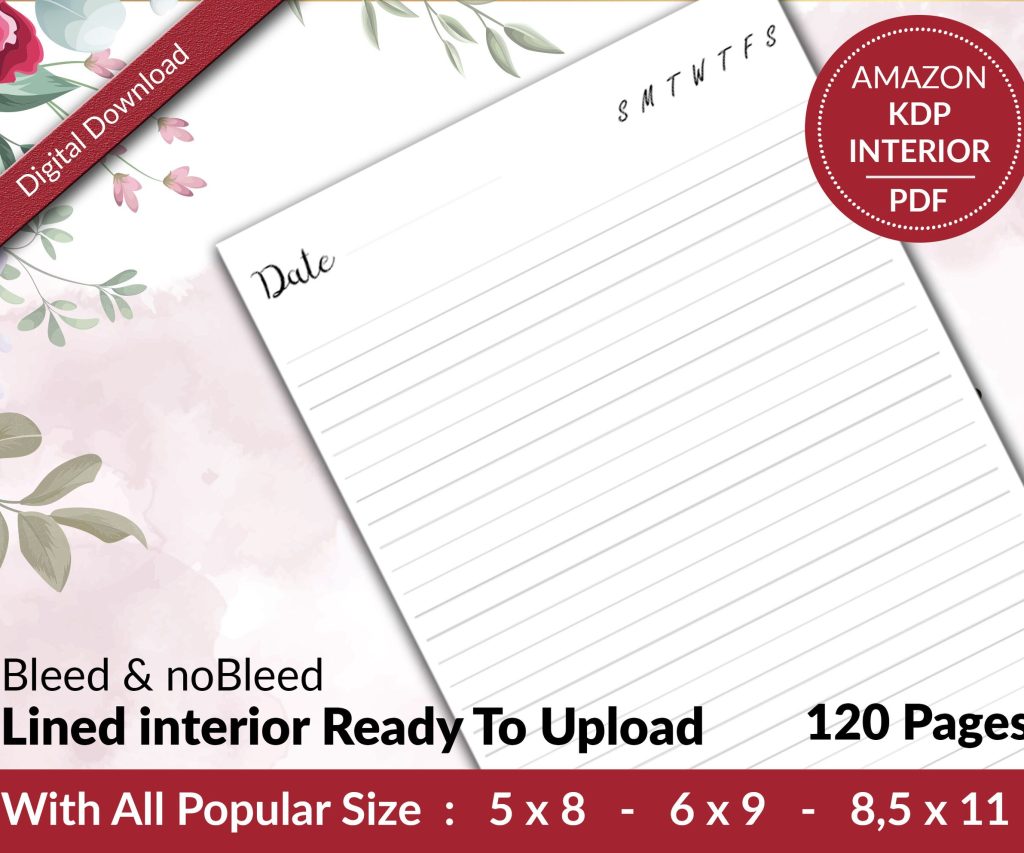 Lined Pages Journal 120 pages Ready to Upload PDF Commercial Use KDP Template 6x9 8.5x11 5x8 for Notebooks, Diaries, Low Content
1 × $0.00
Lined Pages Journal 120 pages Ready to Upload PDF Commercial Use KDP Template 6x9 8.5x11 5x8 for Notebooks, Diaries, Low Content
1 × $0.00
Subtotal: $0.00
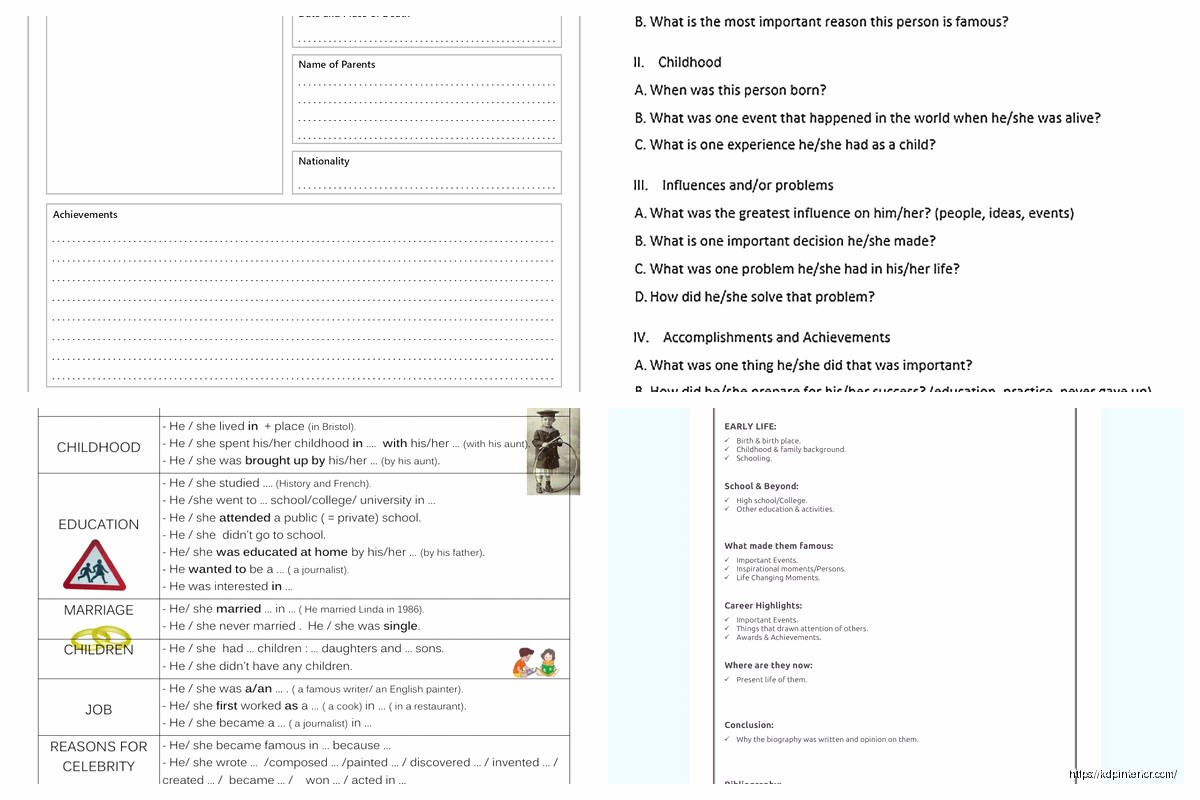
Okay so I just finished helping someone restructure their family biography last week and honestly the whole thing about biography outlines is way simpler than people make it sound. You basically need like 5-6 main sections and then you just fill in the gaps, but let me walk you through how I actually do this when I’m mapping out a life story.
So first thing – forget those super complicated templates with like 47 subsections. Nobody needs that. I learned this after watching my own biography project sit half-finished for three months because the outline was too intimidating. Here’s what actually works:
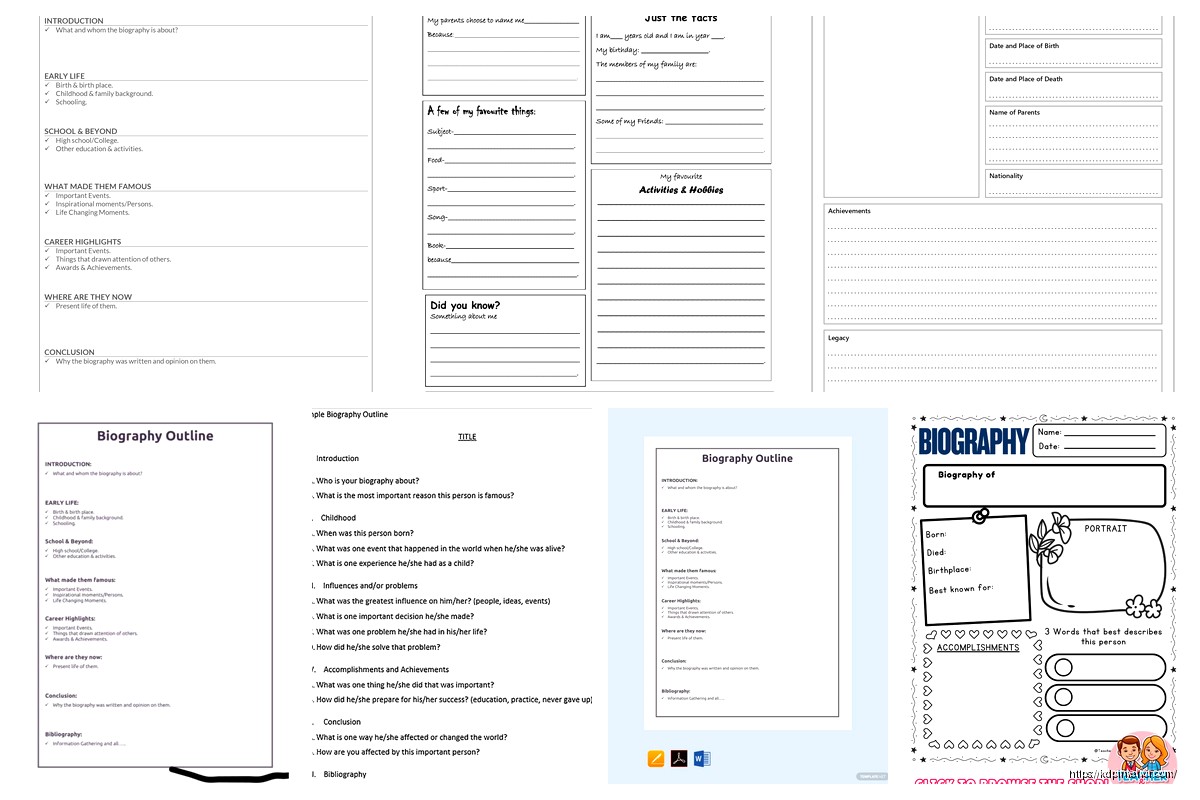
You want these core sections and that’s it. Early Life (birth through like early 20s), Formative Years (the stuff that shaped who they became), Major Life Events (the big turning points), Career or Life’s Work (whatever they spent most of their energy on), Relationships and Family (because no life story is complete without this), and then Later Years and Legacy.
That’s your skeleton. Everything else just hangs off those bones.
Start with the basics but don’t make it boring. You need:
The trick here is you’re not writing a police report. Like when I did my grandfather’s story, I didn’t just say “born 1932 in Ohio” – I connected it to what was happening then, the Depression era stuff, how his dad lost the farm. That context makes it actually readable.
Oh and another thing – childhood homes matter more than you think. Where someone grew up, whether they moved around a lot, urban vs rural… this stuff shapes everything that comes after.
This is roughly teens through twenties but it’s flexible. Some people have formative experiences at 35, whatever. The point is to capture the period where they were becoming who they’d be as an adult.
Include things like:
I always tell people this section is where you wanna dig into the “why” not just the “what.” Don’t just say they went to State University – talk about why they chose it, what they studied, who they met there. My cat just knocked over my coffee but anyway…
Wait I forgot to mention – this is also where you capture those sliding door moments. You know, the almost-decisions. The job they didn’t take, the city they almost moved to. Those near-misses tell you a lot about someone’s path.
This section is gonna vary wildly depending on who you’re writing about but here’s what to look for:
Marriage or significant relationships – when, who, circumstances. Even if it didn’t last, if it mattered it goes here.
Career defining moments – got the big job, started the business, made partner, got fired, changed industries completely
Children – births, adoptions, how many, spacing
Deaths or losses – parents dying, siblings, friends, mentors
Major moves or relocations – especially if they changed everything
Health crises or accidents – anything that altered the life trajectory
Financial changes – windfalls, bankruptcies, major successes or failures
The way I organize this… okay so I actually use a timeline first. Just chronological bullet points of every major thing. Then I look for clusters – like oh, between 1985-1990 five huge things happened, that’s gonna be one subsection. Versus 1991-2000 was pretty stable, maybe that’s just a paragraph.
Even if the person wasn’t career-focused in a traditional way, everyone has a “life’s work” – could be raising kids, could be community activism, could be building a company. This section captures that.
Break it down chronologically or thematically depending on what makes sense:
For traditional careers: early jobs, career progression, major achievements, setbacks, industry changes they navigated, retirement or transition out
For non-traditional paths: what they devoted their time to, impact they had, skills they developed, recognition they received or didn’t receive
This is gonna sound weird but I think this section is where you show the person’s work ethic and values more than anything. How they approached their life’s work tells you almost everything about their character.
I spent like two hours last Tuesday trying to figure out how to structure this section for someone who had three completely different careers and finally I just… made three subsections. Sometimes the obvious answer is the right one.
Real quick – make sure you’re including the flops and false starts. The business that failed. The degree program they dropped out of. The job they got fired from. These aren’t negative, they’re human. Every biography I’ve done where we sanitized all the failures ended up reading flat and boring.
This overlaps with other sections but deserves its own focus. You’re capturing:
The mistake people make here is either going too shallow (just listing names and dates) or too gossipy (turning it into drama). You want the middle ground – honest about relationships without being sensational.
When I worked on that family biography I mentioned, the daughter wanted to skip over her dad’s difficult relationship with his brother entirely and I had to kinda push back because that tension explained SO much about other decisions he made. You don’t have to air all the dirty laundry but you gotta be truthful.
This is the wind-down section but it shouldn’t feel sad necessarily. You’re covering:
Retirement or career transition – what they did with their time after the main working years
Health changes – aging, illnesses, how they handled it
Hobbies or new interests – lots of people find whole new passions later in life
Grandchildren or younger generation relationships
Reflection and wisdom – what they thought about their own life looking back
Final years and death (if applicable and appropriate)
Legacy and impact – what they left behind, who they influenced, what continues
Oh and another thing – if you’re writing about someone still alive, this section becomes more about current life and future hopes. Adjust accordingly.
Okay so here’s how I actually build the outline in practice, not just theory:
First I do a brain dump. Just write down literally everything I know or have been told about the person. No organization, no chronology, just everything on paper or in a doc. This usually takes me like an hour of just typing stream of consciousness.
Then I organize chronologically. Put everything in order by year as best I can. This shows you the natural flow of the life and where the clusters of activity are.
Next I identify the major themes. Every life has like 3-5 big themes that run through it. Could be resilience, could be family loyalty, could be ambition, could be creativity. Once you spot these themes you can make sure they’re woven throughout.
After that I plug everything into those main sections I mentioned at the beginning. Some stuff will fit obviously, some stuff you’ll have to make judgment calls about.
Finally – and this is important – I mark what’s missing. Where are the gaps in my knowledge? What questions do I still need answered? Every outline has holes at first.
Within each main section you’re gonna want subsections. I usually aim for 3-5 subsections per major section. Like under Career, you might have: Early Jobs and Learning (first 10 years), Building the Business (middle period), Leadership and Expansion (later success years), Transition and Mentoring (final working years).
The subsection titles should tell a mini-story on their own. Someone should be able to read just your outline headers and get the basic arc.
Too much equal weight on everything. Not every year needs the same space. Some decades are just less eventful and that’s fine.
Chronological rigidity. Sometimes you gotta break chronology to keep related stuff together. If someone had a 30-year teaching career, you might cover that whole career in one section even though other stuff was happening simultaneously.
Skipping the mundane. Daily life matters. What did they do for fun? What were their habits? What did a typical Tuesday look like? This texture makes biographies feel real.
No narrative arc. Even though it’s an outline, you should sense a story shape. Beginning, complications, resolution of some kind.
I’m pretty low-tech honestly. I use Google Docs for most outlines because the heading structure feature is perfect for this. You can collapse and expand sections which is super helpful when you’re dealing with a long life.
Some people swear by Scrivener and if you’re doing a book-length biography that’s probably worth it. I tried it once and gave up after like three days because the learning curve was annoying but that’s just me.
Timeline software can be useful for the initial chronology phase. I’ve used Aeon Timeline before and it’s pretty good for visualizing how everything fits together temporally.
Your outline is only as good as your information obviously. I always recommend multiple sources:
One thing I learned kinda late is that different people remember the same event totally differently. When you interview multiple people about the same life, you’re gonna get contradictions. That’s normal. You just make judgment calls about what version seems most accurate or you note that memories vary.
Depends what you’re doing with it. If this is just for family records, moderate detail is fine. If you’re gonna write a full manuscript, you want pretty granular detail in the outline because it’ll save you so much time later.
My rule of thumb is the outline should be about 10-15% of your target final length. So if you’re aiming for a 50,000 word biography, your outline should be like 5,000-7,500 words. That’s detailed enough to guide you but not so detailed you’re basically writing twice.
For each subsection I try to have at least 3-5 specific points or scenes I know I’ll include. That way when I sit down to write I’m not staring at a blank page wondering what goes here.
Not every life fits the same pattern obviously. Someone who died young needs a different structure than someone who lived to 95. An artist’s biography might be more theme-based than chronological. A soldier’s life story might be organized around deployments and conflicts.
The framework I gave you is flexible. Keep the spirit of it but adjust sections as needed. I did a biography of a woman who was primarily known for her volunteer work and we basically made “Community Service and Impact” its own major section instead of tucking it under career.
Just make sure whatever structure you choose serves the actual story you’re telling not some template you found online.
Alright so that’s basically how I approach biography outlines. It’s not rocket science but it does take some thought about what structure best serves the particular life you’re documenting. Start with those main sections, fill in details as you gather them, and don’t be afraid to reorganize as you go. The outline should help you not constrain you.
DISCOVER OUR FREE BEST SELLING PRODUCTS
Editable Canva Lined Journal: Express Your Thoughts – KDP Template
Lined Pages Journal 120 pages Ready to Upload PDF Commercial Use KDP Template 6×9 8.5×11 5×8 for Notebooks, Diaries, Low Content
Lined Pages Journal 120 pages Ready to Upload PDF Commercial Use KDP Template 6×9 8.5×11 5×8 for Notebooks, Diaries, Low Content
Cute Dogs Coloring Book for Kids | Activity Book | KDP Ready-To-Upload
Daily Planner Diary : Diary Planners for Everyday Productivity, 120 pages, 6×9 Size | Amazon KDP Interior
Wolf Coloring KDP interior For Adults, Used as Low Content Book, PDF Template Ready To Upload COMMERCIAL Use 8.5×11"
Coloring Animals Head Book for Kids, Perfect for ages 2-4, 4-8 | 8.5×11 PDF
Printable Blank Comic Book Pages PDF : Create Your Own Comics – 3 Available Sizes
Notes KDP interior Ready To Upload, Sizes 8.5×11 6×9 5×8 inch PDF FILE Used as Amazon KDP Paperback Low Content Book, journal, Notebook, Planner, COMMERCIAL Use
Black Lined Journal: 120 Pages of Black Lined Paper Perfect for Journaling, KDP Notebook Template – 6×9
Student Planner Journal 120 pages Ready to Upload PDF Commercial Use KDP Template 6×9" 8.5×11" for Low Content book
Recipe Journal Template – Editable Recipe Book Template, 120 Pages – Amazon KDP Interior