
Amazon KDP guide, KDP book publishing
Book Report Format: Academic Writing Standards
Mar
okay so here’s the thing about book report formats that nobody really tells you straight
I was literally helping a client last week format their student workbook and we got into this whole conversation about book reports because their kid needed help and honestly… most people overcomplicate this stuff. Let me just walk you through what actually works because I’ve dealt with enough academic formatting for low-content books and educational materials to know what teachers and professors actually want to see.
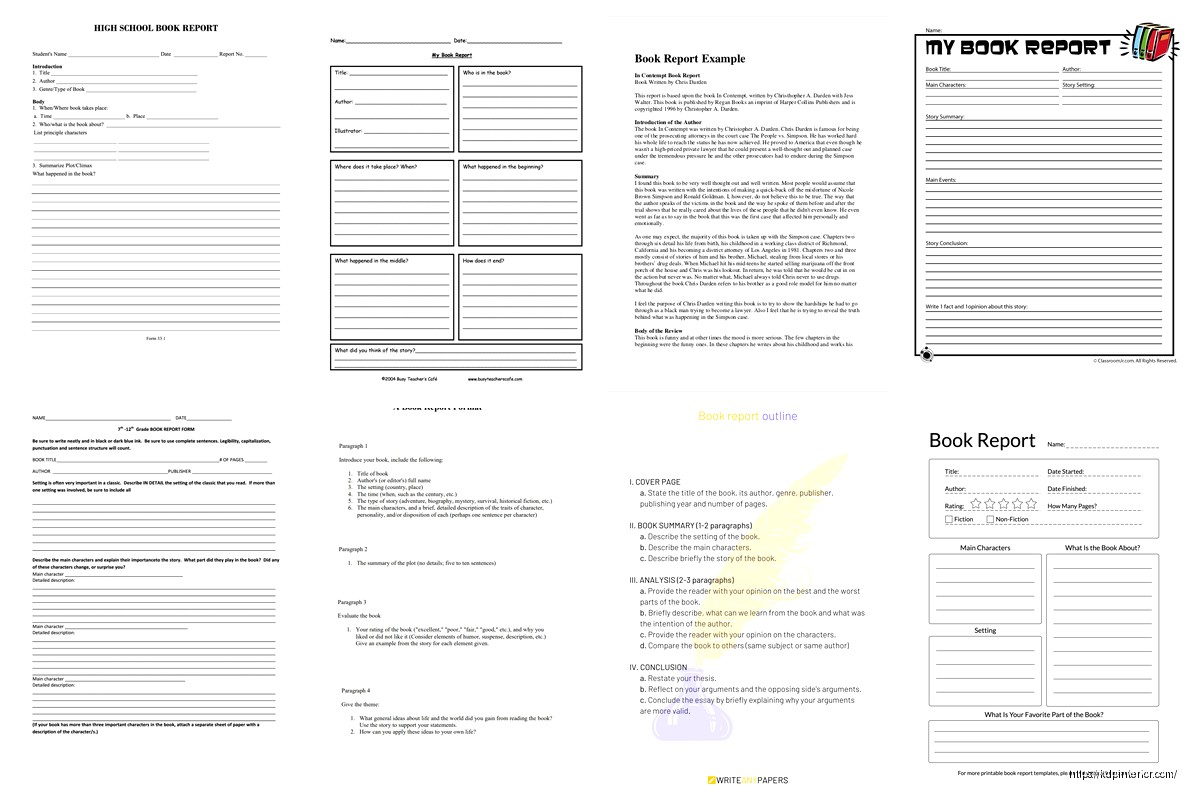
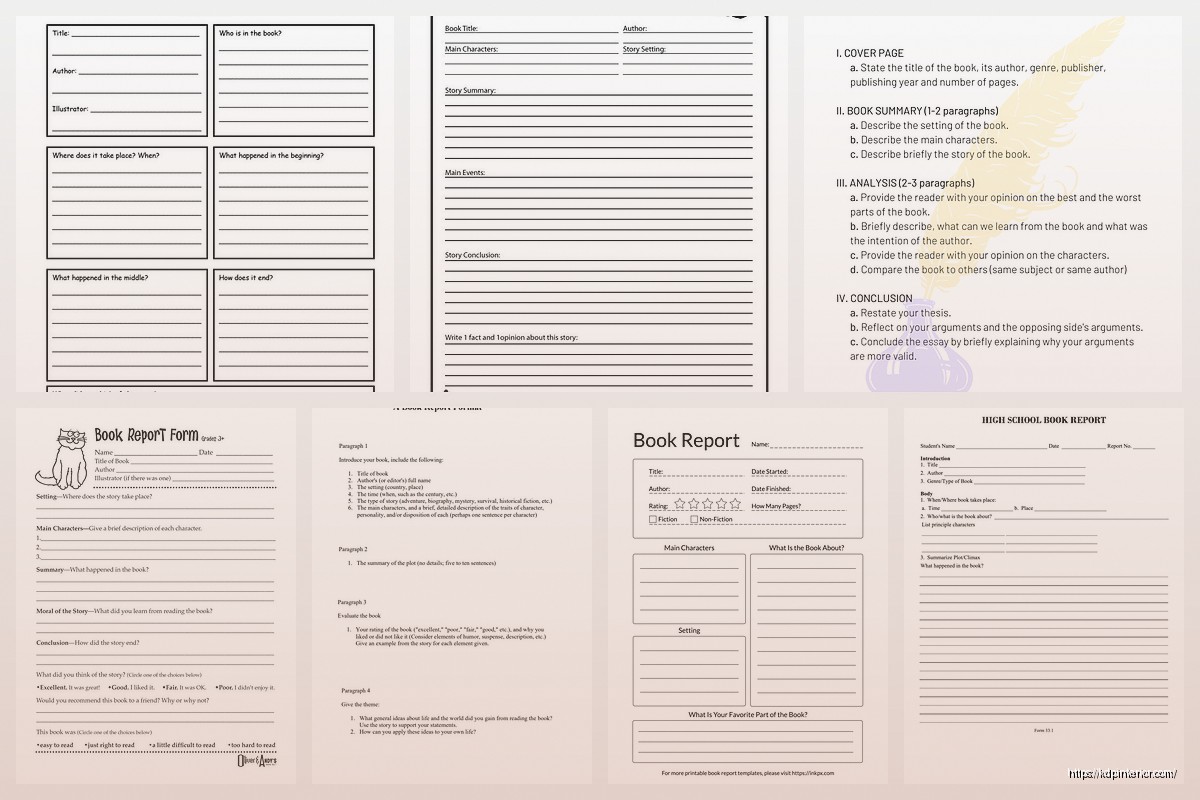
the basic structure everyone expects
So every book report needs these core sections and I’m gonna be real with you, if you nail these parts you’re already ahead of like 70% of students. Here’s what I mean:
- Header information (your name, date, class, teacher’s name)
- Title of the book and author – seems obvious but you’d be surprised
- Introduction paragraph that gives context
- Summary section
- Analysis or your personal take
- Conclusion wrapping it up
The header thing is super straightforward but people mess it up constantly. Top left corner, single spaced, each piece of info on its own line. Your name first, then instructor’s name, then course number or name, then the date. Use whatever date format your school prefers but in the US it’s usually Month Day, Year format.
title formatting because apparently this is where everyone gets confused
Okay so after your header you skip a line and center your title. And here’s where it gets specific – if you’re following MLA (which is like 80% of high school and college humanities classes), you don’t underline your title, don’t bold it, don’t italicize it unless there’s a book title WITHIN your title.
Example: if you’re writing about “The Great Gatsby” your report title might be something like “Social Class and the American Dream in The Great Gatsby” – see how The Great Gatsby is italicized there but the rest isn’t? That’s the move.
For APA it’s basically the same deal but you’ll have a running head situation going on which… we’ll get to that in a minute because it’s its own thing.
the intro paragraph that doesn’t suck
So I was watching this documentary about publishing last night while formatting a client’s planner pages and it reminded me – your intro needs to hook the reader (your teacher) but also give them the roadmap. You’re basically saying “here’s what book I read, here’s what it’s about in one sentence, and here’s what I’m gonna tell you about it.”
Don’t start with like “In today’s society” or “Throughout history” or any of that filler garbage. Just jump in. “F. Scott Fitzgerald’s The Great Gatsby explores the corruption of the American Dream through the tragic story of Jay Gatsby.” Boom. Done. Now add 2-3 more sentences giving context – when it was published, what genre, maybe why it’s significant.
Your thesis statement goes at the end of this intro paragraph. That’s your main argument or the main point you’re making about the book. For a basic book report it might be something like “Through his use of symbolism and characterization, Fitzgerald demonstrates how wealth and social status ultimately lead to moral emptiness.”
the summary section which is harder than it looks
Here’s where people either write way too much or way too little. I literally spent three hours last Tuesday comparing different workbook formats when my afternoon client meeting got canceled, and I started thinking about how summary writing is kinda like creating book descriptions for KDP – you gotta capture the essence without giving everything away or boring people to death.
For a book report summary you want about 1-2 paragraphs MAX unless your assignment specifically says otherwise. Hit the main plot points:
- Who are the main characters
- What’s the central conflict or problem
- What happens (major events only)
- How does it resolve
DO NOT write a chapter-by-chapter breakdown unless specifically asked. That’s deadly boring and misses the point. You’re showing you understood the book’s overall arc, not proving you read every page.
Oh and another thing – write in present tense when discussing the book’s events. “Gatsby throws elaborate parties” not “Gatsby threw elaborate parties.” This is a weird convention but it’s standard across academic writing. The book’s events are always happening in the “literary present.”
analysis is where you actually add value
This is gonna sound weird but the analysis section is where you pretend you’re having a smart conversation about the book with someone who’s also read it. You’re not summarizing anymore – you’re digging into the HOW and WHY.
Think about:
- Themes – what big ideas is the author exploring
- Characters – how do they develop and change
- Writing style – is it descriptive, sparse, poetic, whatever
- Symbolism – objects or colors or whatever that represent bigger concepts
- Setting – how does time and place matter
- Author’s purpose – what were they trying to accomplish
You don’t have to hit ALL of these but pick 2-3 that seem most important for your specific book. Back up everything with specific examples from the text. Like don’t just say “Fitzgerald uses symbolism effectively” – say “The green light at the end of Daisy’s dock symbolizes Gatsby’s unreachable dreams and the impossible nature of his quest to recapture the past.”
formatting standards that professors actually care about
Okay so let me break down MLA vs APA because these are the two big ones and people mix them up constantly.
MLA format details
Most literature and humanities classes want MLA. Here’s what that means practically:
- Times New Roman, 12-point font
- Double-spaced EVERYTHING including the header
- 1-inch margins all around
- Last name and page number in upper right corner of every page
- Indent first line of each paragraph half an inch
- No extra spaces between paragraphs
For citations within your text (in-text citations), you use parenthetical references. So if you’re quoting the book directly you’d write something like: Fitzgerald describes Gatsby’s smile as having “a quality of eternal reassurance” (48). That number is the page number where you found the quote.
If you already mentioned the author’s name in your sentence, you just put the page number: Fitzgerald describes the smile as having “a quality of eternal reassurance” (48).
At the end of your report you need a Works Cited page (that’s what MLA calls it, not Bibliography). It starts on a new page, centered title “Works Cited” at the top, then your book entry formatted like this:
Fitzgerald, F. Scott. The Great Gatsby. Scribner, 2004.
Author last name, first name. Book Title in Italics. Publisher, Year.
APA format if that’s what they want instead
Social sciences usually want APA. Psychology, sociology, education classes, that kind of thing. It’s similar but with some key differences that’ll mark you down if you mix them up:
- Same font and spacing as MLA
- Same margins
- Title page is required (MLA doesn’t usually need one)
- Running head in the header – shortened version of your title in all caps on the left, page number on the right
- Abstract might be required (check your assignment)
- Paragraph indents same as MLA
In-text citations include the year: (Fitzgerald, 2004, p. 48) or Fitzgerald (2004) describes the smile as having “a quality of eternal reassurance” (p. 48).
The reference page (not Works Cited) at the end formats books like this:
Fitzgerald, F. S. (2004). The Great Gatsby. Scribner.
wait I forgot to mention – APA uses sentence case for book titles, meaning only the first word and proper nouns are capitalized. MLA uses title case where you capitalize all major words.
the stuff people forget that actually matters
My cat just knocked over my coffee but whatever, I’m on a roll here. Let me give you the things that seem small but teachers notice:
verb tense consistency
I mentioned this before but it’s important enough to emphasize. When discussing the book’s events or the author’s choices, use literary present tense. “The author creates tension” not “created.” But if you’re discussing historical context or the author’s life, past tense is fine. “Fitzgerald wrote this during the Jazz Age” is correct.
avoiding plot summary in your analysis
This is the #1 mistake I see when I’m reviewing educational content for clients. People think they’re analyzing but they’re just retelling the story with a few “this shows that” phrases thrown in. Real analysis explains significance, connects ideas, interprets meaning. It’s the difference between “Gatsby throws parties to attract Daisy” (summary) and “Gatsby’s elaborate parties represent his desperate attempt to manufacture an identity worthy of Daisy’s social class, revealing the novel’s critique of social mobility” (analysis).
integrating quotes properly
Don’t just plop quotes into your paper randomly. They need to flow with your own sentences. Bad example: “The green light is important. ‘Gatsby believed in the green light, the orgastic future’ (180).” That’s choppy and awkward.
Better: Fitzgerald emphasizes the symbolic importance of the green light in the novel’s final passages, noting that “Gatsby believed in the green light, the orgastic future” (180), suggesting that hope persists despite inevitable disappointment.
See how the quote is woven INTO a complete thought? That’s what you want.
paragraph structure because apparently we need to review this
Each body paragraph should follow a basic pattern:
- Topic sentence stating the main idea of this paragraph
- Evidence from the text (quotes, specific examples, references to scenes)
- Analysis explaining what this evidence shows or proves
- Transition to next idea or paragraph
Don’t write one-sentence paragraphs unless you’re doing it for emphasis and you really know what you’re doing. Academic writing wants developed paragraphs – usually 5-8 sentences minimum.
personal response sections if required
Some teachers want you to include your personal reaction or opinion. This is different from analysis – analysis looks at what the author did and why, personal response is about your subjective experience as a reader.
But here’s the thing, even personal response needs to be thoughtful and backed up with reasons. Don’t just say “I liked it” or “It was boring.” Explain WHY. “I found the symbolism heavy-handed because the green light is referenced so frequently that it loses impact” is a personal opinion but it’s supported with reasoning.
You can use “I” in these sections – actually you should. “I connected with Nick’s sense of being an outsider” or “I struggled to sympathize with any of the characters because their problems seemed trivial.” Just keep it analytical even when it’s personal.
the conclusion paragraph nobody wants to write
Okay so conclusions are weird because you’ve already said everything important, right? The point isn’t to introduce new ideas – it’s to wrap up what you’ve discussed and leave the reader (your teacher) with a final thought.
Quick formula that works:
- Restate your thesis in different words
- Briefly summarize your main points (like one sentence)
- End with a broader thought about the book’s significance or relevance
Don’t start with “In conclusion” – that’s amateur hour. Just transition naturally. “Ultimately, Fitzgerald’s novel reveals…” or “The Great Gatsby continues to resonate with readers because…” Something like that.
specific formatting things people mess up
Let me just dump a bunch of common mistakes I see all the time when reviewing educational materials and workbooks for KDP:
book titles and formatting marks
Full-length books get italicized: The Great Gatsby, To Kill a Mockingbird, 1984
Short stories, poems, articles get quotation marks: “The Lottery,” “The Road Not Taken,” “How to Write a Book Report”
Don’t underline book titles unless you’re handwriting something. Underlining was from typewriter days when you couldn’t italicize. If you’re typing (which you are), use italics.
numbers and figures
MLA says spell out numbers that can be written in one or two words: twenty-five, one hundred, three thousand. Use numerals for everything else: 152, 3,500.
APA is pickier – spell out numbers zero through nine, use numerals for 10 and above. Unless you’re starting a sentence, then always spell it out.
contractions and informal language
Don’t use contractions in academic writing. Write “do not” instead of “don’t,” “cannot” instead of “can’t.” I know it sounds stuffy but that’s the convention.
Also avoid super informal language like “a lot,” “kind of,” “totally,” “really.” Use “many,” “somewhat,” “completely,” “very” if you need to, but honestly specific language is better than intensifiers anyway.
second person
Don’t use “you” in formal book reports. Stick with third person (“the reader,” “one,” “people”) or first person if personal response is part of the assignment. “You can see that Gatsby is desperate” should be “Readers can see” or “It becomes clear that.”
different types of book reports because there’s variations
Not every book report is the same and knowing what type you’re writing helps you focus your energy on the right things.
plot summary report
This is the most basic type, usually assigned in middle school. It’s mostly just proving you read and understood the book. Still include your intro with title and author, still have a thesis (even if it’s just “this book tells the story of…”), still analyze a bit, but the bulk is summary. Keep it chronological and clear.
character analysis report
Focus on one or two main characters. Discuss their traits, motivations, how they change throughout the story (character arc), their relationships with other characters, and what they represent thematically. Use specific examples of their actions and dialogue to support your points.
theme analysis report
Pick one major theme – love, death, coming of age, corruption, identity, whatever – and trace how the author develops it throughout the book. Show how different elements (characters, plot events, symbols, setting) all contribute to exploring this theme.
comparative report
Sometimes you’re comparing two books or comparing a book to its film adaptation. Structure this either point-by-point (discuss one aspect of both books, then another aspect of both books) or block method (discuss everything about book A, then everything about book B, then compare). Point-by-point usually works better for keeping the comparison clear.
research and citations if you’re going deeper
Some book reports, especially in college, require you to incorporate outside sources – literary criticism, author interviews, historical context, whatever.
When you’re bringing in outside sources, you need to:
- Introduce the source (“According to literary critic Jane Smith…”)
- Present the information (quote or paraphrase)
- Cite it properly (in-text citation)
- Explain how it supports your argument
- Include it in your Works Cited/References page
Don’t let outside sources take over your paper. They should support YOUR analysis, not replace it. A good rule is no more than 20-30% of your paper should be quotes and paraphrases from sources.
finding credible sources
Use your school’s library database – JSTOR, Project MUSE, Academic Search Complete, whatever they subscribe to. These have peer-reviewed scholarly articles.
Google Scholar is free and can be helpful for finding academic sources.
Avoid random websites, SparkNotes, Shmoop for citations. You can use them to understand the book better but don’t cite them in an academic paper. Your teacher wants scholarly sources.
practical tips from someone who formats stuff all day
Okay so I literally format 200+ documents a year for KDP and client projects, here’s some practical stuff that makes your life easier:
use your word processor’s tools
Don’t manually type your name and page number on every page. Use headers and footers. In Word or Google Docs, go to Insert > Header & Footer and set it up once. It’ll automatically appear on every page.
Use the ruler tool to set your half-inch paragraph indent. Don’t hit tab or spacebar multiple times – that’s inconsistent and looks sloppy. Set a first-line indent under Paragraph settings.
Use the line spacing options to set double spacing. Don’t just hit Enter twice between lines – that’s not the same thing.
DISCOVER OUR FREE BEST SELLING PRODUCTS
Editable Canva Lined Journal: Express Your Thoughts – KDP Template
Lined Pages Journal 120 pages Ready to Upload PDF Commercial Use KDP Template 6×9 8.5×11 5×8 for Notebooks, Diaries, Low Content
Lined Pages Journal 120 pages Ready to Upload PDF Commercial Use KDP Template 6×9 8.5×11 5×8 for Notebooks, Diaries, Low Content
Cute Dogs Coloring Book for Kids | Activity Book | KDP Ready-To-Upload
Daily Planner Diary : Diary Planners for Everyday Productivity, 120 pages, 6×9 Size | Amazon KDP Interior
Wolf Coloring KDP interior For Adults, Used as Low Content Book, PDF Template Ready To Upload COMMERCIAL Use 8.5×11"
Coloring Animals Head Book for Kids, Perfect for ages 2-4, 4-8 | 8.5×11 PDF
Printable Blank Comic Book Pages PDF : Create Your Own Comics – 3 Available Sizes
Notes KDP interior Ready To Upload, Sizes 8.5×11 6×9 5×8 inch PDF FILE Used as Amazon KDP Paperback Low Content Book, journal, Notebook, Planner, COMMERCIAL Use
Black Lined Journal: 120 Pages of Black Lined Paper Perfect for Journaling, KDP Notebook Template – 6×9
Student Planner Journal 120 pages Ready to Upload PDF Commercial Use KDP Template 6×9" 8.5×11" for Low Content book
Recipe Journal Template – Editable Recipe Book Template, 120 Pages – Amazon KDP Interior