okay so I’ve been working with character templates for like three years now and honestly they’re one of those things that sounds super boring until you realize how much time they save you…
The basic deal is this – you need a system that captures everything about your character without making you feel like you’re filling out a DMV form. I’ve tested probably 30 different templates and most of them are garbage because they ask stuff like “what’s your character’s favorite color” when what you actually need is their core wound and how they react under pressure.
The Core Information You Actually Need
So start with the basics but make them work harder. Name obviously, age, physical description – but here’s where people mess up. Don’t just write “tall with brown hair.” Write “slouches to seem shorter, dyes hair brown every six weeks because the gray reminds her of her mother.” See the difference? You’re building in behavior and backstory at the same time.
I use a section called “First Impression vs Reality” and it’s honestly been a game changer. What does someone think when they first meet this character versus what’s actually true? This gives you instant conflict and depth. Like I had a character last year who seemed super confident and put-together but was actually having panic attacks in bathroom stalls. That gap between perception and truth is where interesting stuff lives.
The Psychological Framework
This is gonna sound weird but I structure the emotional core around three things: what they want, what they need, and what they’re afraid of. And these three things should be in conflict with each other. Always.
What they want is the surface goal – the thing they think will make them happy. Promotion at work, getting the guy, winning the competition, whatever.
What they need is the actual thing that will make them whole – usually something like learning to trust people, accepting themselves, letting go of control.
What they’re afraid of is the thing preventing them from getting what they need. And it should make getting what they want feel safer than addressing the real issue.
I keep this at the top of every character template now because if I can’t fill out all three in a way that creates tension, the character probably isn’t ready yet.
oh and another thing – add a section for “default reactions.” How do they respond when angry? When scared? When embarrassed? I learned this the hard way when I was 60k words into a manuscript and realized my character was reacting differently to stress in every scene. No consistency. Having these defaults written down keeps you honest.
Backstory That Actually Matters
Most character templates have you write like a full biography and honestly? Waste of time. What you need is the 3-5 moments that shaped who they are NOW.
I use this format:
- The moment (what happened)
- The decision (what they chose to do)
- The belief (what they decided was true about the world/themselves)
- The pattern (how this shows up in their current behavior)
So like instead of “had a difficult childhood,” you’d write: “Mom forgot to pick her up from school at age 8, sat on the curb until dark, decided she could only rely on herself, now refuses to ask for help even in crisis situations.”
That’s usable information. That tells you how to write scenes.
Family Dynamics Section
Don’t just list family members. Map the relationships. I literally draw a little diagram sometimes – my cat knocked over my coffee on one last week and I had to redraw the whole thing. But it helps to see who has power, who’s aligned with who, where the tension lives.
For each important family member note:
- What the character wants from them
- What they actually get
- The unspoken rule of their relationship
That last one is key. Like “we never talk about Dad’s drinking” or “she’s the successful one and I’m the screw-up” or “he needs me to need him.” These unspoken rules drive so much behavior.
Voice and Dialogue Markers
This section saves me constantly. I write down:
- Specific phrases they use a lot
- Words they would never say
- How they deflect uncomfortable questions
- Their tell when they’re lying
- Sentence length tendency (short and clipped vs rambling)
I also keep a running doc of good dialogue lines I’ve written for them because sometimes you nail the voice in one scene and then lose it. Having examples you can reference helps you get back into their head.
wait I forgot to mention – add a “contradictions” section. Real people are contradictory. Your character should be too. Like someone who’s super organized at work but their apartment is a disaster. Or someone who’s brutally honest except about the one thing that matters most. These contradictions make characters feel real instead of like a collection of traits.
Relationship Templates
okay so this is separate from the main character template but equally important – you need a template for every major relationship in your story. I learned this from romance writing but it applies to everything.
For each significant relationship track:
- How they met and first impressions
- What each person gets from the relationship
- The primary conflict between them
- What would have to change for the relationship to evolve
- Their communication pattern (who initiates, who withdraws, etc)
I was watching this show the other night – doesn’t matter which one – but the relationships felt super flat and I realized it’s because the characters only interacted around plot stuff. There was no relationship-specific dynamic. This template prevents that.
Physical Mannerisms and Habits
Give every character 3-5 specific physical things they do. Not just “plays with hair” but “tugs left earlobe when calculating whether to lie” or “taps thumb against fingers in sequence when anxious – thumb to pinkie and back.”
The more specific, the better. And tie them to emotional states when possible. This gives you an easy way to show internal state without telling.
I also note:
- How they move through space (rushed, careful, sprawling)
- Personal space preferences
- What they do with their hands
- Posture defaults
The Sensory Profile
This one’s gonna sound extra but it works – note which sense your character defaults to. Are they visual, auditory, kinesthetic, smell-oriented? This affects how you write their POV.
A visual character notices what things look like, describes the world in images. An auditory character picks up on tone of voice, background sounds, the quality of silence. A kinesthetic character notices texture, temperature, physical sensation.
You don’t have to be rigid about it but having a primary sense makes the POV more distinct.
Values and Moral Framework
What does your character think makes someone good or bad? What would they judge someone else for? What would they forgive?
I structure this as:
- Their stated values (what they say they believe)
- Their actual values (what their actions prove they believe)
- The gap between these and why it exists
Also note their moral flexibility – where will they compromise and where is the hard line? Under what circumstances does the hard line move?
Skills, Knowledge, and Competencies
What are they actually good at? What do they think they’re good at but aren’t? What secret skill do they have that others don’t know about?
And this matters for plot reasons – you gotta know what your character can and can’t do so you don’t have them suddenly expert at something when it’s convenient. I did this once with a character who somehow knew how to pick locks despite never having any reason to learn that skill. Readers called me on it.
Also note learning style – how do they acquire new information? Trial and error? Watching others? Reading instructions? Asking questions? This affects how they’d approach obstacles.
Practical Template Structure
Here’s how I actually organize the document because structure matters when you’re 40k words in and need to quickly reference something:
Page 1: Quick Reference
Name, age, physical description, one-sentence essence of character, core want/need/fear
Page 2: Psychological Core
Backstory moments, beliefs, default reactions, contradictions
Page 3: External Presentation
Physical mannerisms, voice markers, first impression vs reality
Page 4: Relationships
Family dynamics, relationship templates for major connections
Page 5: Practical Details
Skills, knowledge, daily routines, preferences
I keep these in Scrivener usually but Google Docs works fine too. The key is having it searchable and accessible while you’re drafting.
The Evolution Section
This is the part most templates miss – you need space to track how the character changes. I add notes as I write:
- What they’ve learned so far
- What beliefs have shifted
- New behaviors they’re trying
- Backsliding moments
Character development isn’t linear and your template should reflect that. Sometimes they make progress then regress. That’s realistic.
Secondary Character Templates
You don’t need the full detailed template for every single character but secondary characters need something. I use a condensed version with just:
- Name and basic description
- Role in story
- One defining trait
- Their agenda (what they want from the protagonist)
- One memorable detail
This prevents the problem where all your minor characters blur together into generic place-holders.
The goal with all of this isn’t to follow some perfect system – it’s to know your characters well enough that they surprise you. Like you’re writing a scene and they do something you didn’t plan but it makes total sense given who they are. That’s when you know the template did its job.
I probably update these templates as much during drafting as before. They’re living documents. Don’t treat them like homework you finish once and never touch again.

 Coloring Animals Head Book for Kids, Perfect for ages 2-4, 4-8 | 8.5x11 PDF
1 × $0.00
Coloring Animals Head Book for Kids, Perfect for ages 2-4, 4-8 | 8.5x11 PDF
1 × $0.00  Printable Blank Comic Book Pages PDF : Create Your Own Comics - 3 Available Sizes
1 × $0.00
Printable Blank Comic Book Pages PDF : Create Your Own Comics - 3 Available Sizes
1 × $0.00 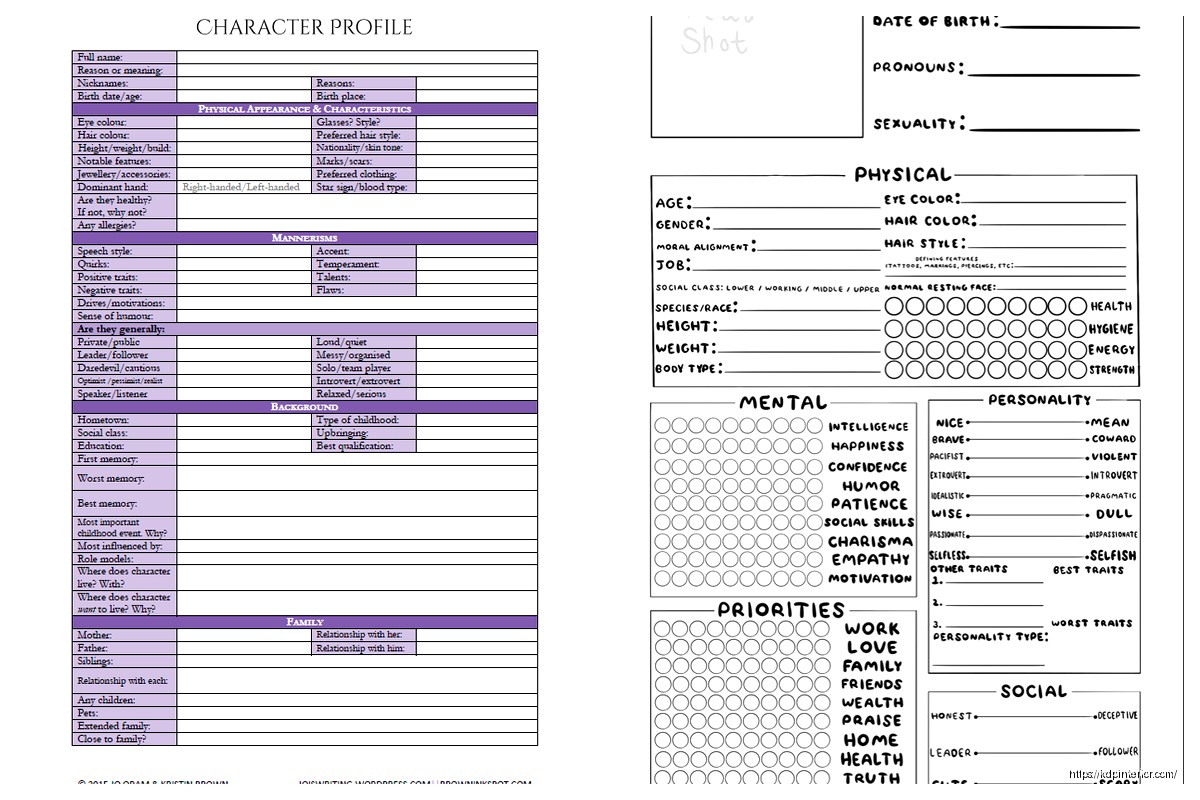
DISCOVER OUR FREE BEST SELLING PRODUCTS
Editable Canva Lined Journal: Express Your Thoughts – KDP Template
Lined Pages Journal 120 pages Ready to Upload PDF Commercial Use KDP Template 6×9 8.5×11 5×8 for Notebooks, Diaries, Low Content
Lined Pages Journal 120 pages Ready to Upload PDF Commercial Use KDP Template 6×9 8.5×11 5×8 for Notebooks, Diaries, Low Content
Cute Dogs Coloring Book for Kids | Activity Book | KDP Ready-To-Upload
Daily Planner Diary : Diary Planners for Everyday Productivity, 120 pages, 6×9 Size | Amazon KDP Interior
Wolf Coloring KDP interior For Adults, Used as Low Content Book, PDF Template Ready To Upload COMMERCIAL Use 8.5×11"
Coloring Animals Head Book for Kids, Perfect for ages 2-4, 4-8 | 8.5×11 PDF
Printable Blank Comic Book Pages PDF : Create Your Own Comics – 3 Available Sizes
Notes KDP interior Ready To Upload, Sizes 8.5×11 6×9 5×8 inch PDF FILE Used as Amazon KDP Paperback Low Content Book, journal, Notebook, Planner, COMMERCIAL Use
Black Lined Journal: 120 Pages of Black Lined Paper Perfect for Journaling, KDP Notebook Template – 6×9
Student Planner Journal 120 pages Ready to Upload PDF Commercial Use KDP Template 6×9" 8.5×11" for Low Content book
Recipe Journal Template – Editable Recipe Book Template, 120 Pages – Amazon KDP Interior