
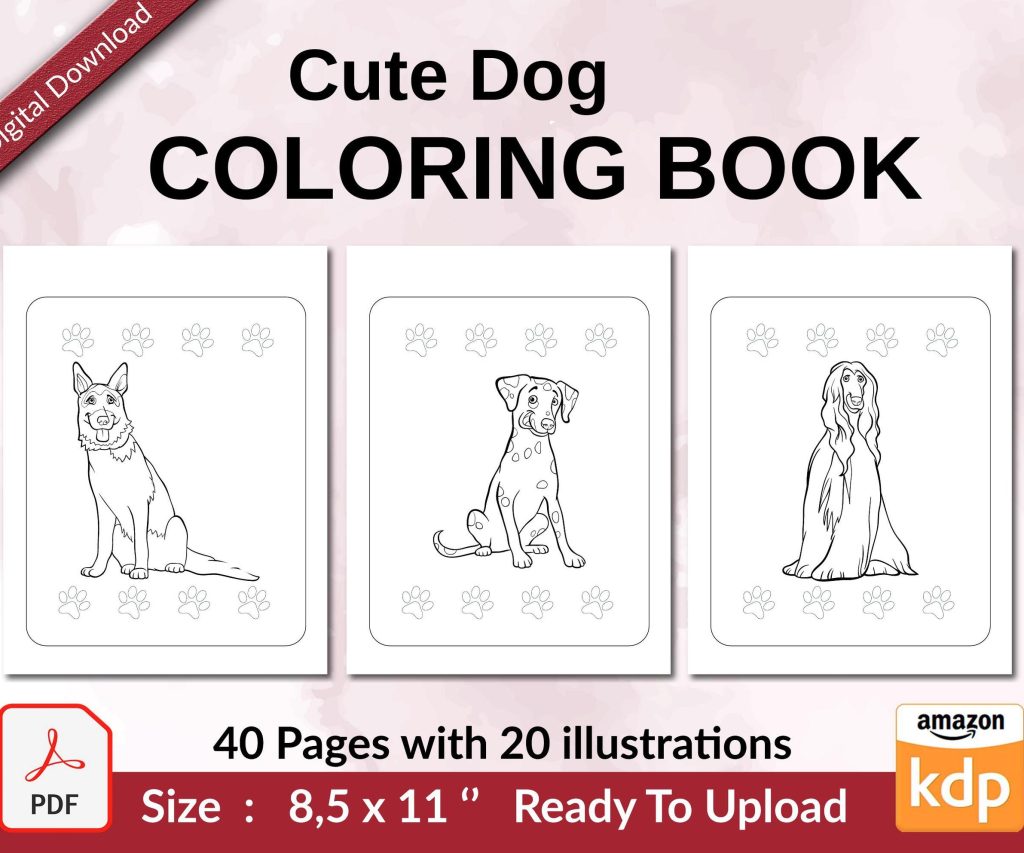
 Cute Dogs Coloring Book for Kids | Activity Book | KDP Ready-To-Upload
 Subtotal: $0.00
Amazon KDP guide, KDP book publishing
KDP Amazon Template: Complete Template Collection

28
Mar
Mar
Okay so I just spent like three weeks testing every KDP template type I could get my hands on and here’s what actually matters when you’re building out a collection.
The Templates That Actually Sell
Right so first thing – you gotta understand that “template collection” doesn’t mean throw every random design into one package. I made that mistake back in 2019 and lost like two months of work because nothing connected properly.
The collections that work are the ones where everything ties together. Like if you’re doing planners, you need the daily pages, weekly spreads, monthly calendars, goal trackers, all that stuff. But they need to look like they belong in the same book. Same fonts, same color scheme or at least the same vibe.
Low Content Templates You Need
- Planner interiors – daily, weekly, monthly formats
- Journal pages – lined, dotted, blank combinations
- Logbook templates – fitness, reading, habit tracking
- Coloring book pages if you’re into that market
- Calendars – this one’s seasonal but huge in Q4
The planner stuff is where I make most of my consistent income honestly. People buy planners year-round now, not just December anymore. I tested this last March and sold 47 copies of a basic daily planner when I expected maybe 10.
Setting Up Your Template Files
So here’s where it gets technical but not like super complicated. You want your master templates set up in whatever software you use – I bounce between Canva Pro and Adobe InDesign depending on the project.
For KDP specifically, your trim sizes matter way more than people think. The standard 6×9 is safe but kinda boring. I’ve had better luck with 8.5×11 for planners and workbooks because people want the space. But then your printing costs go up so you gotta price accordingly.
File Specs That Won’t Get Rejected
KDP is picky about this stuff and their error messages are useless half the time. Here’s what actually works:
PDF format – always flatten your files before uploading. I learned this the hard way when a 200-page journal got rejected three times because I left layers active.
Bleed settings – 0.125 inches on all sides if you have any elements touching the edges. If everything’s contained within the margins you can skip bleed but why risk it.
Color mode – RGB for ebooks, CMYK for print but honestly KDP converts RGB to CMYK anyway so I usually just stick with RGB and let them handle it.
My cat just knocked over my coffee while I’m writing this which is perfect timing because I need a break anyway.
Template Organization Systems
Okay so this is gonna sound weird but the way you organize your template files on your computer will save or destroy your productivity. I’ve got mine set up like this:
Master folder for each niche, then subfolders for interiors, covers, marketing images, and upload-ready files. Every template gets a version number because you WILL make changes and forget which file was the final one.
I also keep a spreadsheet – yeah I know that sounds boring but listen. Track every template you create with columns for: niche, trim size, page count, date created, where you sourced graphics from, and which books you’ve used it in. This saved me during a copyright scare last year when I needed to prove where a design element came from.
Building Interior Collections
The interior is where you actually add value. Anyone can slap together a cover but a good interior template collection takes planning.
Page Variety
Don’t just repeat the same page 100 times. Even in a simple lined journal, you want some variation. I usually do:
- Title/owner info page
- Instructions or how-to-use page
- Main content pages with subtle variations every 20-30 pages
- Section dividers if it makes sense
- Maybe some bonus pages at the end
The variations don’t have to be huge. Like in a gratitude journal I did last month, I kept the same basic layout but changed the prompt questions every few pages. People notice that stuff and it makes the book feel more premium.
Cover Template Strategy
Oh and another thing – cover templates are where you can actually charge more if you’re selling these templates to other publishers. But for your own use, you want a system that lets you pump out professional covers fast.
I use Canva templates that I’ve customized with placeholder text and image boxes. Then I can swap in new photos or graphics in like 10 minutes per cover. The key is having a consistent style across your catalog so people recognize your brand.
Cover Elements That Convert
After testing probably 80 different cover designs, here’s what actually gets clicks: clean typography, high contrast colors, and images that instantly communicate what the book is. Avoid trying to be too clever or artistic unless you’re in a niche where that’s expected.
For planners and journals, simple and clean beats elaborate every time. I tested this with two identical planner interiors but different covers – the minimalist design outsold the decorated one 3 to 1.
Template Sources and Creation
So where do you actually get these templates? You’ve got a few options and they all have tradeoffs.
Create from scratch – this is what I do now but it took forever to learn. You need design software and honestly some basic graphic design sense. YouTube university is your friend here.
Buy PLR templates – Private Label Rights stuff can be good but you HAVE to customize it because 500 other people bought the same pack. I use PLR as a starting point then modify at least 40% of it.
Hire designers – Fiverr and Upwork work but communicate exactly what you need. Send examples, specify trim sizes, explain the whole bleed thing upfront.
Wait I forgot to mention – Creative Fabrica has some solid template bundles if you have their subscription. I think I pay like $10/month or something and download whatever I need. Just make sure you check the license for commercial use.
Automation and Batch Creation
This is where you actually scale up from making one book at a time to having a real catalog.
In Canva, use their bulk create feature if you have Pro. You can connect a spreadsheet and automatically generate multiple versions of the same template with different text or colors. I used this to create 15 different niche-specific planners in one afternoon.
InDesign has data merge which does basically the same thing but with more control. The learning curve is steeper though – took me a weekend of cursing at my screen to figure it out.
My Batch Process
When I’m creating a new template collection, I block out like 3-4 days and just grind through it:
- Day 1: Research and planning, create master templates
- Day 2: Build out all interior variations
- Day 3: Design covers and prepare files
- Day 4: Upload and optimize listings
This probably sounds intense but you gotta batch this stuff or you’ll never finish. I tried doing one book at a time and it took me like two weeks per book because I kept getting distracted.
Niche-Specific Template Needs
Different niches need different template approaches and this matters more than you’d think.
Fitness logbooks need tables and tracking grids. I use a lot of structured layouts with boxes for dates, weights, reps, all that.
Gratitude journals work better with more white space and prompts. Less structured, more flowing.
Budget planners require number-focused layouts and calculation areas. These are annoying to design but they sell consistently.
I’m watching this documentary about octopuses right now and it’s wild how smart they are but anyway.
Template Testing Before Launch
Do NOT skip this part. Print at least one copy of your template before you publish it to the world.
I order author copies through KDP for like $3-5 depending on page count. Check that everything lines up, the bleed worked correctly, text isn’t too close to the spine, all that. I’ve caught so many issues this way that would’ve resulted in bad reviews.
Also test your templates digitally if you’re doing printables or ebooks. Open them on different devices. My mom has a Kindle from like 2015 and I test ebooks on it because if it works there, it’ll work anywhere.
Pricing Your Template Collections
If you’re selling templates to other publishers, you can charge based on:
- Number of templates in the pack
- Commercial usage rights
- Exclusivity (way more expensive)
- Format options included
I’ve seen template packs go anywhere from $15 for basic stuff to $200+ for comprehensive collections with full commercial rights.
For your own KDP books using these templates, your pricing depends on production costs plus desired profit. I aim for at least $3 profit per sale after Amazon’s cut and printing costs.
The Royalty Math
KDP paperbacks give you 60% of list price minus printing costs. So a 120-page 6×9 book costs about $2.50 to print. If you price it at $8.99, you get $5.39 minus $2.50 = $2.89 profit per sale.
Do this math before you finalize your templates because page count directly affects your profit margins. Sometimes cutting 10-20 pages makes the economics work way better.
Legal Stuff Nobody Talks About
Okay so this is boring but important – make sure you have the rights to every element in your templates. Fonts, graphics, photos, everything.
I only use fonts with commercial licenses now after getting a scary email in 2020. Creative Fabrica, Font Bundles, and Google Fonts are my go-to sources. Just read the licenses because some don’t allow use in end products.
For graphics and photos, Unsplash and Pixabay are free options but I prefer paid stocks from Creative Fabrica or Creative Market because less competition using the same images.
Version Control and Updates
You’re gonna want to update your templates over time. Maybe you find a better layout, or customer feedback suggests changes, or you just get better at design.
Keep every version saved with clear naming. I do something like “DailyPlanner_v1_Final.pdf” then “DailyPlanner_v2_UpdatedGrids.pdf” so I can always go back if needed.
When you update a live book on KDP, it takes like 72 hours to go live and people who bought the old version don’t automatically get the new one. Just something to know.
The key with template collections is having systems that let you create quality stuff quickly. It took me probably two years to get my workflow dialed in but now I can launch a new template-based book in a few days instead of weeks. Start with one good template, test it, then expand from there.
DISCOVER OUR FREE BEST SELLING PRODUCTS
Editable Canva Lined Journal: Express Your Thoughts – KDP Template
Lined Pages Journal 120 pages Ready to Upload PDF Commercial Use KDP Template 6×9 8.5×11 5×8 for Notebooks, Diaries, Low Content
Lined Pages Journal 120 pages Ready to Upload PDF Commercial Use KDP Template 6×9 8.5×11 5×8 for Notebooks, Diaries, Low Content
Cute Dogs Coloring Book for Kids | Activity Book | KDP Ready-To-Upload
Daily Planner Diary : Diary Planners for Everyday Productivity, 120 pages, 6×9 Size | Amazon KDP Interior
Wolf Coloring KDP interior For Adults, Used as Low Content Book, PDF Template Ready To Upload COMMERCIAL Use 8.5×11"
Coloring Animals Head Book for Kids, Perfect for ages 2-4, 4-8 | 8.5×11 PDF
Printable Blank Comic Book Pages PDF : Create Your Own Comics – 3 Available Sizes
Notes KDP interior Ready To Upload, Sizes 8.5×11 6×9 5×8 inch PDF FILE Used as Amazon KDP Paperback Low Content Book, journal, Notebook, Planner, COMMERCIAL Use
Black Lined Journal: 120 Pages of Black Lined Paper Perfect for Journaling, KDP Notebook Template – 6×9
Student Planner Journal 120 pages Ready to Upload PDF Commercial Use KDP Template 6×9" 8.5×11" for Low Content book
Recipe Journal Template – Editable Recipe Book Template, 120 Pages – Amazon KDP Interior