
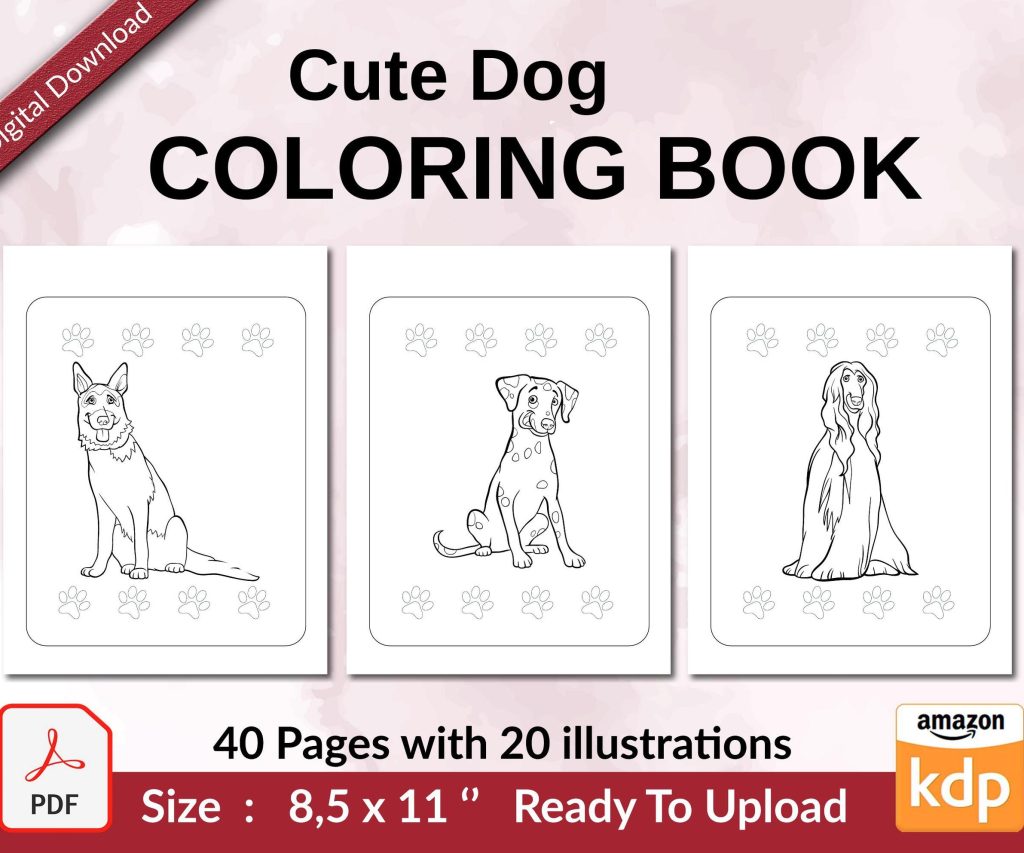
 Cute Dogs Coloring Book for Kids | Activity Book | KDP Ready-To-Upload
 Subtotal: $0.00
Amazon KDP guide, KDP book publishing
KDP Kindle Publishing: Ebook & Print Integration
07
May
May
Okay so here’s the thing about publishing both ebook and paperback on KDP – most people overthink it but there’s actually a specific order that makes everything way easier and I wish someone had told me this back in 2017 when I was fumbling around with my first planner.
Start with the ebook version first. Always. I don’t care what anyone else says about doing print first, the ebook is your testing ground because you can update it instantly if something’s wrong. Upload your manuscript as a .doc or .docx file, set your pricing, and get that sucker live. Once it’s approved (usually takes like 12-24 hours), then you move to print.
The Formatting Reality Nobody Talks About
Your ebook formatting and print formatting are completely different animals. Like, not even the same species. I spent three days once trying to use the same file for both and it was a disaster – the print version had weird page breaks everywhere and the ebook looked like it got hit by a truck.
For ebooks you want a really clean file. No headers, no footers, no page numbers obviously because there aren’t fixed pages. Use chapter headings as
or
tags if you’re doing HTML, or just use Word’s heading styles. KDP’s conversion process actually works pretty well if you don’t get fancy with it.
Print is where you gotta think about trim size first. Most people do 6×9 for books, but if you’re doing something like a cookbook or workbook, 8.5×11 might make more sense. The trim size determines your whole layout – margins, gutter space, all of it.
Margins Are Gonna Drive You Crazy
So for print, KDP requires specific margins based on page count. Under 150 pages you need 0.5 inch inside margin, 150-300 pages needs 0.625, and it goes up from there. Outside margins can be 0.5 inches, top and bottom too. But here’s what nobody tells you – make your inside margin bigger than the minimum. Trust me on this. I made a 200-page journal once with exactly 0.625 and the text was too close to the spine, looked cheap.
I usually do 0.75 to 1 inch on the inside just to be safe, especially if it’s something people might actually read (not just a logbook or whatever). Oh and the gutter space matters more than you think – if someone’s actually gonna use the book, they need to be able to open it comfortably.
ISBNs and How They Connect Everything
Okay so this is actually simpler than it seems. Each format needs its own ISBN. Your ebook gets one (KDP provides it free), your paperback gets a different one (also free from KDP), and if you do hardcover that’s a third one. They’re all separate products technically, but Amazon links them together automatically most of the time.
The linking happens through your book details – title, author name, and description need to match exactly. I mean EXACTLY. I once had a book where I put “A Practical Guide” in the ebook subtitle and “A Complete Practical Guide” in the print version and they didn’t link for like two weeks until I fixed it.
When you’re setting up the print version, there’s actually a spot where you can tell KDP “hey this is related to this ebook” by entering the ASIN. Do that. It speeds up the linking process.
The Cover Situation Is Annoying
Your ebook cover is just a flat JPG or PNG, minimum 2560 pixels on the longest side. Easy. Your print cover is a whole different beast because you need a wraparound cover with front, spine, and back.
KDP has a cover calculator that tells you the exact dimensions based on your page count and paper type. White paper is thinner than cream, so cream paper makes a thicker book with a wider spine. I always use the cover template they provide – download it, stick it in Photoshop or Canva or whatever, and design within those guides.
The spine width changes with page count so you gotta wait until your interior is completely done before you finalize the cover. I learned this the hard way when I added 10 pages to a book after designing the cover and had to redo the whole thing. The text on my spine was off-center and it looked terrible.
Interior Files and Bleed Settings
Most books don’t need bleed unless you’ve got images or colored backgrounds that extend to the edge of the page. If you do need bleed, add 0.125 inches on all sides and make sure your important content stays inside the safe zone (0.125 inches from trim edge).
For black and white interiors, upload a PDF. For color, also a PDF but watch your file size – anything over 650MB won’t upload and you’ll have to compress it. I use Adobe Acrobat’s reduce file size feature, works fine.
Wait I forgot to mention – when you’re creating your print PDF, embed all fonts. This is critical. In Word, when you save as PDF, there’s an option for it. In InDesign or whatever, same thing. If fonts aren’t embedded, KDP’s system substitutes them and your book will look wrong.
The Pricing Dance Between Formats
Your ebook should almost always be cheaper than your paperback. Amazon’s algorithm kinda expects this and customers definitely expect it. I usually price ebooks between $2.99 and $9.99 depending on length, and paperbacks at least $3-5 higher.
KDP’s printing costs for paperbacks are based on page count and trim size. Black and white is way cheaper than color. A 100-page 6×9 black and white book costs like $2.50 to print, so if you price it at $9.99, you’re making about $3 profit after Amazon’s cut. The calculator shows you this before you publish.
Oh and another thing – if you enroll your ebook in KDP Select (the exclusive thing), you can’t enroll the paperback. Paperback is always non-exclusive. This actually works out fine because people sometimes want to buy your print book directly from you or whatever, and you can use print-on-demand services like IngramSpark for that.
KDP Select vs Wide Distribution
This is gonna sound weird but I usually keep my ebooks in KDP Select for the first 90 days, see how they do with Kindle Unlimited page reads, then decide. Print I always distribute wide immediately because there’s no exclusivity requirement. You can have your paperback on Amazon, Barnes & Noble, everywhere.
The page reads from KU can actually make you more money than sales sometimes, especially if you’ve got longer books. I had a 300-page guide that made like $400 one month just from page reads. But if your book doesn’t catch on in KU, going wide makes more sense.
The Actual Upload Process Step by Step
Alright so you’ve got your ebook live already. Now you’re doing print. Log into KDP, click “Create Paperback” and you’ll see an option to link it to an existing ebook. Do that, it’ll pre-fill most of your details.
Choose your trim size, interior type (black and white or color), and paper color (white or cream). Cream looks more professional for novels, white is better for workbooks and journals where people write in them. Upload your interior PDF and wait for it to process – this takes a few minutes.
The previewer is actually pretty good now. It used to be garbage but they upgraded it last year I think. Flip through every single page. Look for weird spacing, headers that shouldn’t be there, page numbers that are off. I always find at least one thing wrong on the first try.
Upload your cover. If you used their template, it should fit perfectly. If not, you might get errors about low resolution or content too close to the spine. Fix those, re-upload, preview again.
Pricing and Distribution Choices
For distribution, you can choose just Amazon or “Expanded Distribution” which puts your book in other online retailers and bookstores. The catch is expanded distribution takes a bigger cut, so your royalty drops. I usually select it anyway because why not, but don’t expect much from it honestly.
Price your book using their calculator. Make sure you’re making at least $1 per copy or it’s not worth it. I aim for $2-3 minimum per book. If your printing cost is high (color books, I’m looking at you), you might have to price it at $15-20 to make any profit.
Hit publish and wait. Print books take longer to review than ebooks – usually 24-72 hours. They’re actually printing a proof copy and checking it, which is why.
After Publishing Both Formats
Once both are live, check that they linked properly on your Amazon product page. You should see a dropdown that says “Select format” with Kindle and Paperback options. If they didn’t link automatically, contact KDP support. I’ve had to do this maybe 3 times out of 200+ books, it’s pretty rare.
Order a proof copy of your print book even though you already approved it. Seriously. Colors look different in person, paper quality matters, binding matters. I once had a book where the cover looked great on screen but the colors were super dull in print because I used RGB instead of CMYK. Had to redo it.
The proof copy costs you just the printing fee plus shipping, no royalty. Takes about a week to arrive. When you get it, flip through the whole thing, check the spine, make sure pages aren’t cut off weird.
Updates and Revisions
If you need to fix something, updating the ebook is instant – upload new file, it goes live in a few hours. Print takes longer because they have to review it again. Try to get your print version right the first time because updating is a pain.
But don’t let perfectionism stop you from publishing. I see people sit on books for months trying to make them perfect. Get them out there, you can always update later. My dog just knocked over my coffee while I was thinking about this, but yeah, seriously – done is better than perfect.
Marketing Both Formats Together
When you run Amazon ads, you can only advertise one format at a time, but pick the ebook. It’s cheaper and converts better. People who want print will see the print option on the product page anyway.
For your book description, mention that it’s available in both formats near the top. Some people are die-hard print readers and won’t even look at a book if they don’t immediately see it comes in paperback.
Kindle Countdown Deals only work for ebooks, not print. But you can run a price promotion on your ebook and it often boosts print sales too because of the increased visibility. I’ve seen this happen dozens of times – drop the ebook to $0.99 for five days, print sales go up during that same period.
The Bundling Trick Nobody Uses
You can’t officially bundle ebook and print on KDP, but you can mention in your book description “buy the print version and get the ebook free” and then include a link inside the print book to download a PDF or EPUB version from your website. Totally allowed, and it makes customers happy.
Some authors do this with bonuses too – buy print, get extra worksheets or whatever as digital downloads. It’s a good way to collect email addresses if you’re building a list.
International Marketplaces
Your ebook automatically goes to all Amazon marketplaces (UK, Germany, Japan, etc.) but print is different. You have to opt into each marketplace separately for print. I always select all of them because again, why not, but 90% of my print sales come from amazon.com.
Pricing in other currencies is automatically converted but you can set custom prices if you want. I never bother with this, the automatic conversion is fine.
One thing that’s kinda annoying – print on demand isn’t available in all countries, so some international customers might see longer shipping times or higher costs. Nothing you can do about that really, it’s just how KDP’s printing network works.
Okay so that’s basically the whole process. Start with ebook, get it live, then do print with proper formatting and margins. Use KDP’s templates and calculators, they actually work pretty well. Link the two versions through matching metadata. And order a proof copy before you tell anyone about your print book because you will find something wrong with it, trust me.
DISCOVER OUR FREE BEST SELLING PRODUCTS
Editable Canva Lined Journal: Express Your Thoughts – KDP Template
Lined Pages Journal 120 pages Ready to Upload PDF Commercial Use KDP Template 6×9 8.5×11 5×8 for Notebooks, Diaries, Low Content
Lined Pages Journal 120 pages Ready to Upload PDF Commercial Use KDP Template 6×9 8.5×11 5×8 for Notebooks, Diaries, Low Content
Cute Dogs Coloring Book for Kids | Activity Book | KDP Ready-To-Upload
Daily Planner Diary : Diary Planners for Everyday Productivity, 120 pages, 6×9 Size | Amazon KDP Interior
Wolf Coloring KDP interior For Adults, Used as Low Content Book, PDF Template Ready To Upload COMMERCIAL Use 8.5×11"
Coloring Animals Head Book for Kids, Perfect for ages 2-4, 4-8 | 8.5×11 PDF
Printable Blank Comic Book Pages PDF : Create Your Own Comics – 3 Available Sizes
Notes KDP interior Ready To Upload, Sizes 8.5×11 6×9 5×8 inch PDF FILE Used as Amazon KDP Paperback Low Content Book, journal, Notebook, Planner, COMMERCIAL Use
Black Lined Journal: 120 Pages of Black Lined Paper Perfect for Journaling, KDP Notebook Template – 6×9
Student Planner Journal 120 pages Ready to Upload PDF Commercial Use KDP Template 6×9" 8.5×11" for Low Content book
Recipe Journal Template – Editable Recipe Book Template, 120 Pages – Amazon KDP Interior