
Amazon KDP guide, KDP book publishing
KDP Merch: Print-on-Demand Beyond Books
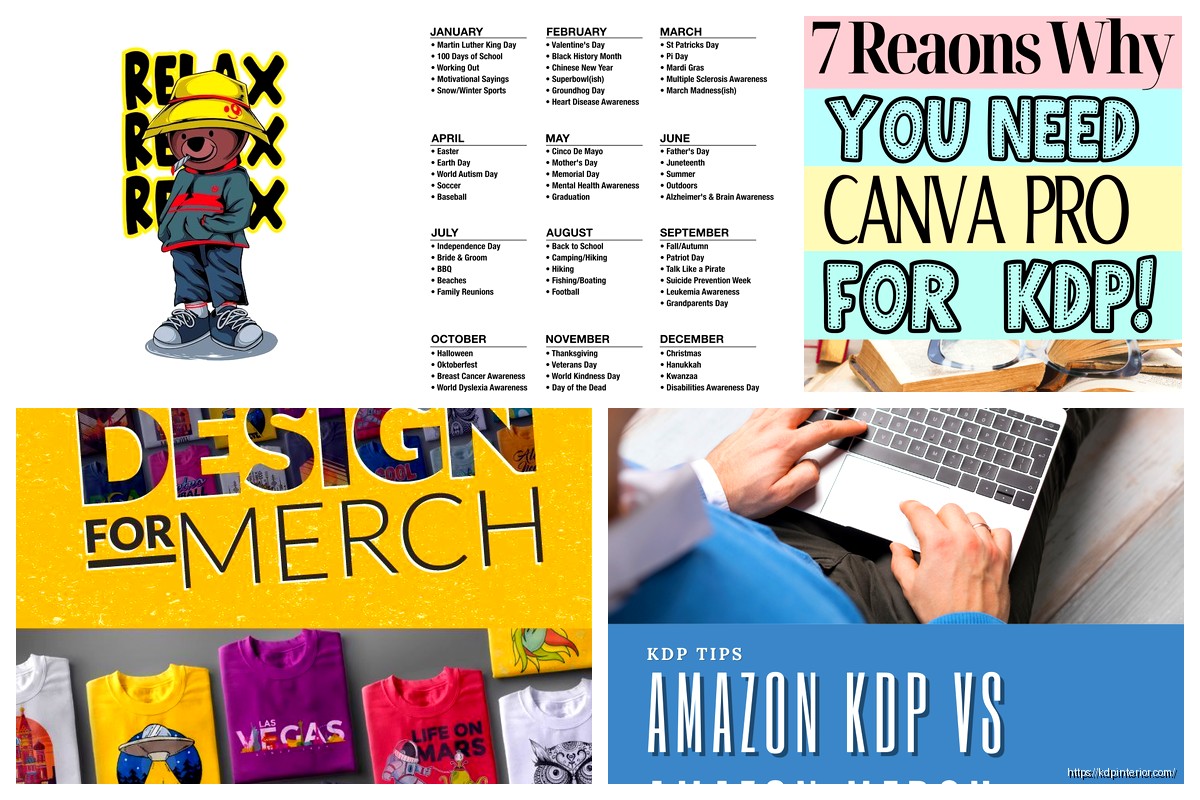
Mar
Okay so I just spent like three hours last Tuesday going through all the KDP merch options because one of my clients asked about expanding beyond books and honestly, the whole ecosystem is way bigger than most people realize.
Merch by Amazon Is Not KDP But Also Kinda Is
First thing – and this trips people up constantly – Merch by Amazon is technically a separate platform from KDP. You need a separate application, separate account, whole different dashboard. But it’s still Amazon, still print-on-demand, and if you’re already doing KDP you’ve got like 80% of the skills you need.
I applied back in 2019 and waited maybe six weeks? Now I’m hearing it’s anywhere from two weeks to four months. There’s no rhyme or reason to it. My buddy applied after me, had way more design experience, and waited three months while I got in faster with basically stick figures.
What you’re selling here is apparel mostly. T-shirts, hoodies, phone cases, PopSockets, tote bags. They keep adding stuff. Last I checked there were like 50+ products but honestly I only use maybe 10 of them because the rest don’t sell consistently enough for me to care.
The Tier System Will Drive You Nuts
So Merch by Amazon has this tier system that starts you at tier 10. That means you can upload exactly 10 designs. That’s it. You can’t upload number 11 until you’ve made 10 sales. Then you move to tier 25, then 50, 100, 500, etc.
When I started I thought this was the dumbest system ever but now I get it – it forces you to actually test designs that sell instead of uploading 5000 random ideas. My first 10 designs? Absolute garbage. Like I cringe thinking about them. But three of them sold enough to get me to tier 25.
The tier system works like this: you need X sales to level up, but also you need to not violate any trademark or content policy rules. I got stuck at tier 500 for like eight months because I accidentally used a phrase that was trademarked (it was something generic about nurses, didn’t realize a company owned it) and they throttled my account.
What Actually Sells On Merch
This is gonna sound weird but the stuff that sells is super boring. Text-based designs for specific jobs or hobbies. “Proud Dental Hygienist” with some basic graphics. “I’d Rather Be Fishing” with a fish silhouette. Nothing artistic or creative.
I spent my first month making these elaborate designs because I come from a book cover background, right? Detailed illustrations, cool typography, gradient effects. Sold maybe three shirts total. Then I made a simple text design that said “4th Grade Teacher Powered By Coffee” and it sold 47 shirts in two months.
The pattern I’ve noticed after doing this for a few years:
- Occupation-based designs (teacher, nurse, engineer, accountant)
- Hobby-specific stuff (pickleball is HUGE right now, like insanely huge)
- Pet breed designs (I made a simple “Corgi Mom” design that still gets sales weekly)
- Sarcastic office humor (this comes and goes in waves)
- Holiday + occupation combinations (Christmas nurse shirts in October/November)
The Math Is Different Than Books
With KDP books you’re maybe making $2-7 per sale depending on your pricing. With Merch the royalties are fixed based on product and price. A standard t-shirt listed at $19.99 gets you about $6.14 in royalty. Hoodies at $32.99 get you around $8.91.
So you need fewer sales to hit the same income, but also the market is way more competitive because there are literally millions of t-shirt designs on Amazon.
I usually aim for 30-50 sales per month per design if it’s a good one. Most of my designs sell maybe 2-5 times per month. The hit rate is lower than books in my experience – with books maybe 20% of what I publish does well, with Merch it’s more like 5-10% that really perform.
Redbubble Is The Easier Starting Point
Oh wait I should mention – if you don’t wanna wait for Merch by Amazon approval, Redbubble lets you start immediately. No application, no tiers, just upload and go.
I have like 340 designs on Redbubble right now and it makes me maybe $400-800 per month passively. Not huge money but it took me probably 20 hours total to upload everything over the course of a year. The royalties are lower (you set your own margin but competition keeps it at like $2-4 per shirt usually) and the traffic is nothing compared to Amazon.
But here’s the thing – Redbubble lets you put one design on like 70 different products simultaneously. Stickers, mugs, pillows, shower curtains (yes really), spiral notebooks, jigsaw puzzles. You upload once and check all the boxes for which products you want it on.
I uploaded a simple mountain landscape design two years ago, enabled it on everything, and it’s sold as: 23 stickers, 8 t-shirts, 4 mugs, 2 throw pillows, and 1 shower curtain. The shower curtain sale still makes me laugh.
My Redbubble Strategy Is Basically Volume
Since there’s no tier limits I just upload whenever I have a design idea. Usually I’m designing stuff for Merch by Amazon anyway (because that’s where the real money is) and I just upload the same design to Redbubble as a backup.
Some design types work better on Redbubble than Merch:
- Aesthetic/artistic stuff (their audience skews younger and more design-focused)
- Fandom-adjacent designs that don’t violate IP but reference popular things
- Vintage/retro graphics
- Patterns and textures (because people buy them as phone cases, laptop skins, etc.)
My cat knocked over my coffee while I was uploading to Redbubble last week and I accidentally published a design with a typo in the title that I didn’t notice for three days. It had already made two sales. Sometimes the algorithm just doesn’t care I guess.
Printful and Printify Are The Custom Integration Options
Okay so if you want more control – like if you’re building your own brand or you have an existing audience – Printful and Printify let you create your own store or integrate with Shopify, Etsy, WooCommerce, whatever.
I use Printify for my own little side store where I sell designs specifically for the publishing niche. Stuff like “Books Published: 47, Times Checked Sales Rank: 942” that only makes sense to other KDP publishers. It’s connected to a simple Shopify store and makes me maybe $200-300 a month.
The difference here is YOU handle the marketing and traffic. Amazon and Redbubble bring their own customers. Printful/Printify just handle the printing and shipping, but getting eyeballs on your products is your problem.
Printful vs Printify Real Quick
Printful: Higher quality, more expensive, they own their own facilities, customer service is better. If you’re building an actual brand and want consistency, this is the move.
Printify: Cheaper, more product options, but they’re a middleman connecting you to various print providers. Quality can be inconsistent. I’ve had orders where one shirt is great and another has slightly off-center printing.
I use Printify because I’m not building like a serious brand, I’m just selling niche designs to a small audience and the lower base costs mean better margins. But if I was doing this as my main business I’d probably pay the extra for Printful’s consistency.
Actually Designing The Stuff
You don’t need to be a designer. I’m barely a designer. I use Canva for like 70% of my Merch designs and Photoshop for the other 30% when I need more control.
For text-based designs (which again, are the bread and butter) I’m literally just:
- Opening Canva
- Creating a 4500x5400px canvas (that’s the Merch by Amazon size)
- Adding text with a font from Canva or a commercial license font I bought
- Maybe adding a simple icon or shape from Canva’s elements
- Exporting as PNG with transparent background
That’s it. A design that makes me $300 a month took 11 minutes to create.
Oh and another thing – you gotta be super careful about fonts. The default fonts in Canva are fine for commercial use through Canva, but if you’re downloading fonts from random sites you need to check the license. I use Creative Fabrica’s subscription which gives me access to thousands of fonts with commercial licenses. It’s like $99 a year or something.
The Copyright/Trademark Paranoia Is Real
This is where people get destroyed. Amazon is RUTHLESS about trademark violations on Merch. You can get your whole account terminated for repeated violations.
Things you absolutely cannot use:
- Brand names (even if it seems generic – “Jeep,” “CrossFit,” “Realtor” are all trademarked)
- Sports team names and logos
- Celebrity names
- Movie/TV show titles and character names
- Song lyrics
- Popular phrases that are trademarked (more common than you think)
I use a trademark checker tool before uploading anything. I check the actual USPTO database and also use TrademarkElite which is faster. Takes an extra 2 minutes per design but has saved me countless times.
I’ve had rejections for phrases I thought were completely generic. “Wine O’Clock” – trademarked. “Mama Bear” – trademarked in certain contexts. “Nevertheless She Persisted” – trademarked. It’s actually insane how many common phrases are locked down.
Spreadsheets Are Your Friend For Scaling This
Once you get past like 50 designs you’re gonna lose track of what’s working. I have a Google Sheet that tracks:
- Design title/description
- Upload date
- Niche/category
- Total sales
- Monthly sales (I update this quarterly because I’m lazy)
- Platform (Merch, Redbubble, Printify)
- Notes (like if I tried running ads to it, or if it’s seasonal)
This lets me see patterns. Like I noticed all my pickleball designs pop off in March-April (spring season starting) and die in November-December. Now I upload new pickleball stuff in February to catch that wave.
Or I realized my nurse designs sell consistently year-round but spike during Nurses Week in May. So I make sure to have new nurse designs ready by April.
Seasonal Stuff Is A Whole Strategy
Speaking of seasonal – this is probably 40% of my Merch revenue. Halloween, Christmas, Teacher Appreciation Week, Father’s Day, all that stuff.
The timing is crucial though. You need to upload Christmas designs by early October at the latest. Amazon’s Merch platform has a review period (usually 24-48 hours but can be longer during busy times) and then your products need time to rank in search results.
I start working on Christmas designs in August. Feels weird designing “Santa’s Favorite Nurse” when it’s 95 degrees outside but that’s the game.
Halloween is even earlier – I’m uploading Halloween stuff by July because costume planning happens way earlier than you think. Teacher appreciation week is in early May but designs need to be up by March.
My first year doing seasonal stuff I missed all the deadlines and watched other people make money on the same niches I was planning to target. Now I have a calendar with upload deadlines for every major holiday and occasion.
The Research Phase Nobody Wants To Do
Okay so funny story – I used to just wing it with design ideas. Made whatever I thought was clever or funny. My sales were absolutely mediocre. Then I spent like three hours one Sunday just searching Amazon’s t-shirt category and analyzing what was on page 1-3 for various terms.
My income doubled in the next two months.
The research process I use now:
Go to Amazon’s t-shirt category. Search for “[occupation/hobby] shirt” – like “accountant shirt” or “pickleball shirt”. Look at what’s on the first three pages. Don’t look at fancy designs. Look at what has the most reviews (that means sales). Screenshot or note the common themes.
For accountant shirts it’s mostly: tax jokes, calculator puns, “I’m an accountant what’s your superpower” type stuff, and designs about spreadsheets. Not rocket science but super specific.
Then I use Merch Informer (it’s a paid tool, like $20/month) to check search volume for keywords and see what’s trending. You don’t NEED this tool but it speeds things up significantly.
I also lurk in Facebook groups for specific niches. There’s a huge pickleball moms group where I just… read what they talk about. Phrases they use, inside jokes, common frustrations. Then I make designs around that language. It’s borderline creepy but it works.
The Listing Optimization Part That Actually Matters
Your design is like 40% of success. The other 60% is your title, bullet points, and description – basically the SEO stuff.
For Merch by Amazon your title needs to be keyword-rich but not spammy. Amazon’s algorithm is looking for relevant terms. A good title structure:
[Main Keyword] [Secondary Keyword] [Style/Type] – [Variation or Detail]Example: “Pickleball Shirt for Women Funny Dink Responsibly Player Gift T-Shirt”
It’s not pretty but it hits multiple search terms: pickleball shirt, women, funny, dink responsibly (common phrase in pickleball), player gift.
Bullet points should expand on this with more keywords but also give actual information. I see people waste bullet points with stuff like “Great gift for any occasion!” which tells Amazon’s algorithm nothing.
Better: “Perfect gift for pickleball players who love the game and have a sense of humor about dinking at the kitchen line”
You’re working in phrases like “pickleball players,” “gift for pickleball,” “dinking,” “kitchen line” (pickleball term) which are all search-relevant.
Pricing Strategy Is Simpler Than You Think
On Merch by Amazon you don’t have much pricing flexibility because customers expect certain price ranges. T-shirts are usually $19.99-$24.99. I stick with $19.99 for standard shirts because it hits the sweet spot of impulse buy pricing while still giving me $6+ royalty.
Hoodies I do $32.99-$34.99. Premium t-shirts $22.99. I basically just match what the top sellers in each category are pricing at.
On Redbubble you set your own margin on top of their base cost. I usually do 20-25% margin which puts my standard shirts at like $21-23. Not the cheapest but not expensive. The thing with Redbubble is their customers are more willing to pay for designs they really connect with, so don’t race to the bottom on price.
For my Printify/Shopify store I price higher because I’m targeting a specific niche (other publishers) who know me and value the designs. My shirts are $27.99 there. I sell fewer but make better margins.
Running Ads Is A Mixed Bag
Amazon has sponsored product ads for Merch items. I’ve tested this on and off for like two years and honestly, results are super inconsistent.
For generic designs (like basic occupation shirts) ads usually don’t work – there’s too much competition and people aren’t loyal to any specific design. They just buy whatever shows up that’s cheap enough.
For unique or specific designs – like if you have a really clever niche phrase or a design that stands out visually – ads can work. I had one design targeted at people who foster dogs (super specific niche) and a $5/day ad campaign for three weeks got it traction. Once it had sales and reviews the ad became profitable. Now it sells organically without ads.
My general rule: Don’t run ads until you’ve tested the design organically for at least a month. If it gets zero sales without ads, ads probably won’t save it. If it gets a few sales naturally, ads might push it into profitability.
Etsy POD Is Worth Mentioning But Has Its Own Drama
Etsy lets you integrate with Printify or Printful and sell POD products. I did this for about six months and made decent money ($800-1200/month) but the platform drives me crazy.
The customer expectations on Etsy are different. They expect handmade or at least “special” even though everyone knows most Etsy is dropshipped or POD now. You get way more customer service issues and returns than on Amazon.
DISCOVER OUR FREE BEST SELLING PRODUCTS
Editable Canva Lined Journal: Express Your Thoughts – KDP Template
Lined Pages Journal 120 pages Ready to Upload PDF Commercial Use KDP Template 6×9 8.5×11 5×8 for Notebooks, Diaries, Low Content
Lined Pages Journal 120 pages Ready to Upload PDF Commercial Use KDP Template 6×9 8.5×11 5×8 for Notebooks, Diaries, Low Content
Cute Dogs Coloring Book for Kids | Activity Book | KDP Ready-To-Upload
Daily Planner Diary : Diary Planners for Everyday Productivity, 120 pages, 6×9 Size | Amazon KDP Interior
Wolf Coloring KDP interior For Adults, Used as Low Content Book, PDF Template Ready To Upload COMMERCIAL Use 8.5×11"
Coloring Animals Head Book for Kids, Perfect for ages 2-4, 4-8 | 8.5×11 PDF
Printable Blank Comic Book Pages PDF : Create Your Own Comics – 3 Available Sizes
Notes KDP interior Ready To Upload, Sizes 8.5×11 6×9 5×8 inch PDF FILE Used as Amazon KDP Paperback Low Content Book, journal, Notebook, Planner, COMMERCIAL Use
Black Lined Journal: 120 Pages of Black Lined Paper Perfect for Journaling, KDP Notebook Template – 6×9
Student Planner Journal 120 pages Ready to Upload PDF Commercial Use KDP Template 6×9" 8.5×11" for Low Content book
Recipe Journal Template – Editable Recipe Book Template, 120 Pages – Amazon KDP Interior