-
×
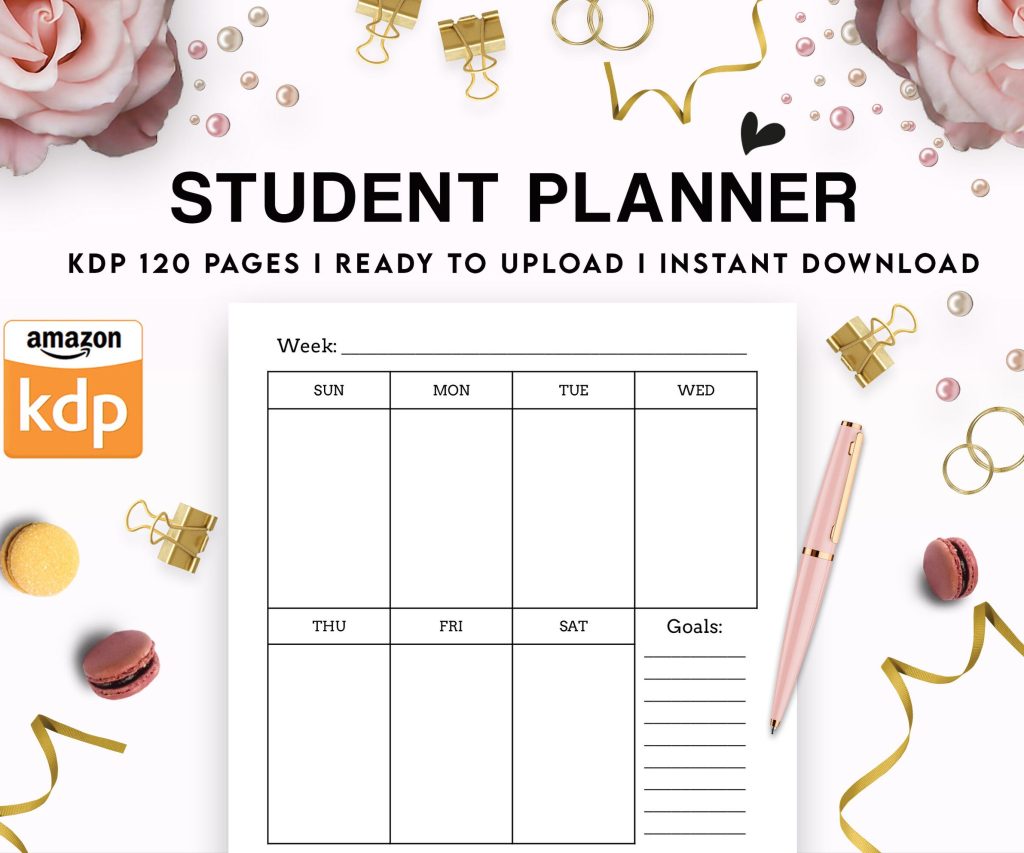 Student Planner Journal 120 pages Ready to Upload PDF Commercial Use KDP Template 6x9" 8.5x11" for Low Content book
1 × $0.00
Student Planner Journal 120 pages Ready to Upload PDF Commercial Use KDP Template 6x9" 8.5x11" for Low Content book
1 × $0.00
Subtotal: $0.00

Okay so I just spent like three hours last Tuesday messing around with different KDP template generators and honestly the automated design creation stuff has gotten way better than it was even six months ago.
So first thing, you gotta understand there’s basically two approaches here. There’s the full automation route where you’re literally just clicking buttons and templates pop out, and then there’s the semi-automated thing where you set up templates once and then modify them. I use both depending on what kinda books I’m cranking out that month.
For full automation, Tangent Templates and Book Bolt are like… they’re the big ones everyone talks about. Book Bolt has this Studio feature where you can generate interiors in bulk. You pick your niche – let’s say password logbooks or whatever – and it’ll spit out 20 variations with different cover styles and interior layouts. The thing is though, and I learned this the hard way back in 2021, you can’t just use these straight outta the box without customization or you’ll have the same book as 500 other people.
Here’s what I do now. I open Book Bolt Studio, pick a category that’s actually selling (check your research first, don’t just guess), and then I customize the heck out of the templates before I generate anything. Like, change the fonts, adjust margins, swap out any graphics if it’s that kind of book.
The interior generator lets you set parameters like:
Wait I forgot to mention – before you even touch a generator, you need to know your trim size. Amazon’s most popular for low-content is 6×9 but honestly I’ve been doing more 8.5×11 lately for activity books and planners because the perceived value is higher.
So once you’ve got your settings dialed in, the generation part is literally clicking a button. Book Bolt will render your interior as a PDF, usually takes like 30 seconds to 2 minutes depending on complexity. I usually queue up like 5-10 at a time while I’m watching something on Netflix (just finished Beef, pretty good).
But here’s where people mess up – they don’t check the output files carefully. I’ve uploaded books before where page numbers were off or the bleed extended weird on certain pages. Now I always open the PDF in Adobe Acrobat and scroll through every single page. Takes maybe 5 minutes but saves you from getting a proof copy that looks terrible.
Oh and another thing, Canva added this bulk create thing last year that’s actually pretty solid for certain types of books. If you’re doing anything with repeated layouts – like a recipe book where each page has the same structure – you can set up one master page and then use their data merge feature to populate it automatically.
The way it works is kinda weird but: you create a CSV file with all your content (recipe names, ingredient lists, whatever), upload it to Canva, and it generates individual pages for each row in your spreadsheet. I used this for a camping journal where each page had prompts and it worked great. Generated 100 pages in like… I dunno, maybe 10 minutes total including upload time.
The catch with Canva is the export settings. You gotta make sure you’re exporting as PDF Print, not PDF Standard, and you need to enable crop marks and bleed if your book has images that extend to the edge. I’ve screwed this up more times than I wanna admit.
This is gonna sound weird but the best automation is the stuff you build yourself. Like, yeah the pre-made generators are convenient, but if you’re serious about KDP you should be creating your own master templates that you can reuse.
I’ve got probably 30 different InDesign templates saved on my hard drive. Each one is for a specific book type – dot grid journals, lined notebooks, password trackers, habit trackers, whatever. The initial setup takes maybe an hour or two per template, but then I can pump out variations in literally minutes.
InDesign has this data merge panel that’s basically like Canva’s bulk create but way more powerful. You can link a CSV file to your document and it’ll automatically flow content into designated fields. I use this mainly for:
The setup process is: create your page layout with text frames where you want dynamic content, then in the data merge panel you select your CSV source file and map the columns to your text frames. Hit merge and InDesign generates all the pages automatically.
My dog just knocked over my water bottle so gimme a sec… okay back.
Cover design automation is trickier because covers need to be more unique to stand out. But there are still ways to speed it up. Creative Fabrica has these KDP cover templates that are actually customizable PSDs. You open them in Photoshop, swap out the text and maybe change some colors, export as JPG, done.
I’ve got a system where I keep a folder of like 50 different template PSDs organized by niche. When I need a new cover, I grab the closest match, modify it for 15-20 minutes, and export. Not fully automated but way faster than designing from scratch every time.
Placeit is another option – they’ve got mockup generators where you just type in your title and select style preferences and it generates cover options. The quality is hit or miss though. Sometimes you get something decent, sometimes it looks super generic.
Real quick on cover dimensions because this trips people up constantly. Amazon’s cover calculator gives you the exact pixel dimensions based on your page count and paper type. You HAVE to use those exact specs or your cover won’t wrap around the book correctly.
The spine width changes based on page count, so a 120-page book has a different spine than a 200-page book. The generators usually handle this automatically but if you’re doing custom work you gotta recalculate every time.
Once you’ve got your templates dialed in, batch processing is where the real automation magic happens. I usually work in batches of 10-20 books at a time. Like, I’ll spend one day just generating interiors, another day on covers, then a third day uploading everything to KDP.
Adobe Photoshop has actions and batch processing that can save you insane amounts of time. For example, I’ve got an action that automatically resizes my cover files, sharpens them slightly, and saves them as high-quality JPGs in the right folder. I can run that on 50 files while I go make coffee.
For interiors, if you’re using InDesign, you can create scripts (or find them online) that automate repetitive tasks. There’s one I use that automatically adds page numbers to every page in a specific style. Another one that creates a table of contents based on your chapter markers.
This is boring but important – you need a checklist for every book before you upload. Mine looks like:
I know it seems like overkill but I’ve had books rejected or gotten weird proof copies because I skipped these checks. Now it’s just part of my workflow.
People always ask me if you really need the paid tools. Honestly… it depends on your volume. If you’re publishing like 1-2 books a month, you can probably get by with Canva’s free tier and some free templates from Creative Fabrica or Etsy. But if you’re trying to do 10+ books a month like I am, the paid tools pay for themselves pretty quick.
Book Bolt is like $10/month I think? Maybe $20 for the full version. Tangent Templates has a one-time fee structure which I actually prefer. Creative Fabrica is $6/month and you get unlimited downloads which is insane value if you’re using lots of graphics and templates.
The thing nobody tells you is that the learning curve on these tools can be steep. Like, Book Bolt has a million features and buttons and at first it’s overwhelming. I probably wasted my first month with it just clicking around trying to figure out what everything did. Watch YouTube tutorials, seriously. There’s this one guy… I forget his name but he does Book Bolt walkthroughs that are super detailed.
Okay so mistakes I see people make all the time with template generators:
Using the same template as everyone else without modification – your book will look identical to dozens of others and won’t sell. Always customize at least fonts, colors, and layout spacing.
Not checking file sizes – KDP has upload limits and if your interior PDF is too large it won’t upload. Usually happens when people use high-res images unnecessarily. For black and white interiors, keep it under 200MB, preferably under 50MB.
Forgetting about margins and gutters – text too close to the binding area gets cut off or is hard to read. I keep at least 0.375 inches margin on the inside gutter, more if it’s a thick book.
Wrong color mode – interiors should be grayscale or RGB depending on if you’re doing black/white or color. Covers should be RGB. I’ve uploaded CMYK covers before and the colors came out all weird on the actual book.
Just so you can see how it all fits together, here’s what my typical template generation workflow looks like these days:
I start with niche research using Book Bolt’s Chrome extension to find what’s selling. Once I’ve got a profitable niche, I open my template library and see if I have something close. If yes, I modify it. If no, I either create a new template from scratch or buy one from Creative Fabrica and customize it heavily.
For interiors, I use InDesign with my pre-built templates and data merge if needed. Export as PDF with the right settings (PDF/X-1a:2001 if you wanna get technical). For covers, I use Photoshop with template PSDs, swap out elements, make sure dimensions match the interior page count, export as high-quality JPG.
Then I run everything through my quality checklist, upload to KDP, and move on to the next batch.
The whole process for one book takes me maybe 45 minutes to an hour now, down from like 4-5 hours when I first started. That’s the power of automation and templates – you front-load the work once and then reap the benefits forever.
One last thing – don’t get stuck in template creation paralysis. I see people spend weeks building the perfect template system and never actually publish anything. Start with basic templates, publish some books, then refine your system as you go. Progress over perfection and all that.

DISCOVER OUR FREE BEST SELLING PRODUCTS
Editable Canva Lined Journal: Express Your Thoughts – KDP Template
Lined Pages Journal 120 pages Ready to Upload PDF Commercial Use KDP Template 6×9 8.5×11 5×8 for Notebooks, Diaries, Low Content
Lined Pages Journal 120 pages Ready to Upload PDF Commercial Use KDP Template 6×9 8.5×11 5×8 for Notebooks, Diaries, Low Content
Cute Dogs Coloring Book for Kids | Activity Book | KDP Ready-To-Upload
Daily Planner Diary : Diary Planners for Everyday Productivity, 120 pages, 6×9 Size | Amazon KDP Interior
Wolf Coloring KDP interior For Adults, Used as Low Content Book, PDF Template Ready To Upload COMMERCIAL Use 8.5×11"
Coloring Animals Head Book for Kids, Perfect for ages 2-4, 4-8 | 8.5×11 PDF
Printable Blank Comic Book Pages PDF : Create Your Own Comics – 3 Available Sizes
Notes KDP interior Ready To Upload, Sizes 8.5×11 6×9 5×8 inch PDF FILE Used as Amazon KDP Paperback Low Content Book, journal, Notebook, Planner, COMMERCIAL Use
Black Lined Journal: 120 Pages of Black Lined Paper Perfect for Journaling, KDP Notebook Template – 6×9
Student Planner Journal 120 pages Ready to Upload PDF Commercial Use KDP Template 6×9" 8.5×11" for Low Content book
Recipe Journal Template – Editable Recipe Book Template, 120 Pages – Amazon KDP Interior