-
×
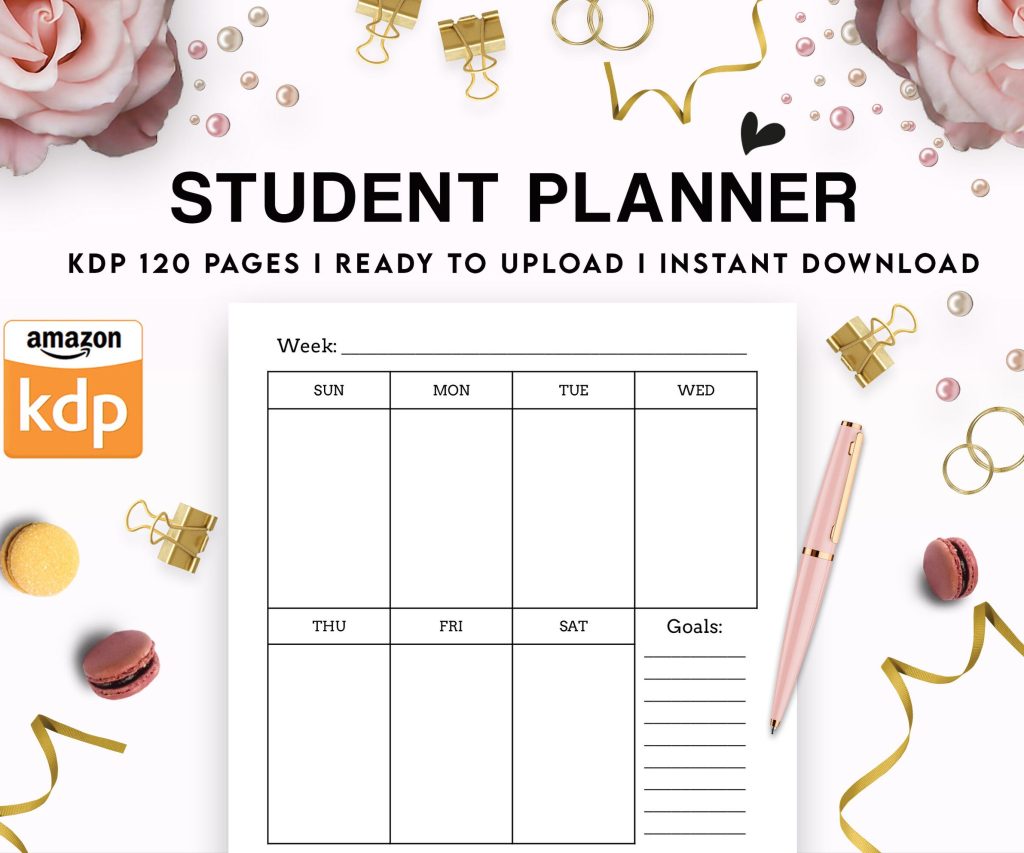 Student Planner Journal 120 pages Ready to Upload PDF Commercial Use KDP Template 6x9" 8.5x11" for Low Content book
1 × $0.00
Student Planner Journal 120 pages Ready to Upload PDF Commercial Use KDP Template 6x9" 8.5x11" for Low Content book
1 × $0.00
Subtotal: $0.00

Okay so KDP is basically Amazon’s self-publishing platform and honestly once you wrap your head around how it actually works, it’s pretty straightforward but there’s like… a whole ecosystem thing happening that nobody really explains properly.
First thing – your KDP dashboard is where everything lives. You log in at kdp.amazon.com and this is where you’re gonna spend way too much time checking your sales at 3am (we all do it, don’t worry). The dashboard shows your bookshelf which is all your published titles, your sales reports, and your payment info.
The reports section is where I basically live. You’ve got the sales dashboard that updates every like… I wanna say every hour or so? It’s not real-time but close enough. Then there’s the month-to-date unit sales, royalties earned, pages read if you’re in KU. Oh and another thing – the KENP reads (Kindle Edition Normalized Pages) that’s how they calculate what you earn from Kindle Unlimited borrows.
So you’ve got paperback and ebook options, or you can do both. Most people start with ebook because there’s literally zero upfront cost. With paperback you gotta factor in printing costs that come out of your royalty, but Amazon handles all the printing and shipping through their print-on-drive system which is honestly pretty amazing when you think about it.
For ebooks you pick between two royalty options – 35% or 70%. The 70% sounds like a no-brainer but there’s catches. Your book has to be priced between $2.99 and $9.99 to qualify for 70%, and Amazon charges a delivery fee based on file size. For a text-heavy book that’s usually like 15 cents or something, but if you’ve got a photo-heavy book it can eat into your royalty fast.
The 35% option lets you price from $0.99 to $200 (though who’s buying a $200 ebook honestly) and there’s no delivery fee. I use 35% for my $0.99 books that I’m using as loss leaders or the first book in a series.
This is where it gets interesting. KDP Select is this program where you give Amazon exclusivity for 90 days – can’t publish that same ebook anywhere else during that period. In return you get access to Kindle Unlimited and some promotional tools.
KU is huge because there’s millions of subscribers who can borrow your book for free (to them) and you get paid based on pages read from a global fund that Amazon sets each month. Right now it’s hovering around $0.004 per page read, give or take. So if someone reads your 200-page book cover to cover, you make roughly 80 cents.
Wait I forgot to mention – the page count Amazon uses isn’t your actual page count, it’s KENP which is their normalized system. A 200-page Word doc might be 250 KENP or 180 KENP depending on formatting, font size, all that stuff. You don’t find out your KENP count until after you publish which is… annoying but whatever.
Some genres do amazing in KU – romance, sci-fi, fantasy, LitRPG. Other genres like business books or technical stuff, not so much. My low-content books do okay in KU but honestly the borrows are way less than my fiction stuff.
Okay so this is gonna sound weird but your book’s metadata is almost more important than the book itself for discoverability. I’m talking about your title, subtitle, categories, and keywords.
Categories – you get to pick two categories when you publish but here’s the trick… you can email KDP support after publishing and ask them to add you to like 8 more categories. Just give them the full category path (Books > Self-Help > Motivational or whatever) and they’ll usually add you within 24 hours. More categories means more chances to hit a bestseller list, even if it’s a super niche one.
Keywords are your seven keyword phrases that tell Amazon’s algorithm what your book is about. Don’t waste these on stuff that’s already in your title or subtitle. Use all seven slots and think about what people actually search for. I use Publisher Rocket to research keywords but you can also just start typing in Amazon’s search bar and see what auto-completes.
Your title needs to either be super clear about what the book is (for non-fiction) or intriguing enough to make someone click (for fiction). The subtitle is free real estate for keywords though. Like my dog was barking at the TV while I was working on this one subtitle last month and I totally lost my train of thought but anyway…
For non-fiction I always front-load keywords into the subtitle. “Meal Prep: 30 Days of Easy Low-Carb Recipes for Busy People Who Hate Cooking” – see how many search terms are packed in there? Meal prep, low-carb recipes, easy recipes, busy people.
Fiction is different – you want something that conveys genre and mood more than stuffing keywords.
Your cover either looks professional or it doesn’t, there’s no in-between. People absolutely judge books by covers on Amazon because that tiny thumbnail is all they see when scrolling.
I use Canva for most of my low-content stuff because it’s fast and templates are decent. For my ebooks that I actually care about I hire designers on Fiverr or 99designs. Budget like $50-150 for a decent ebook cover, more for paperback if you need spine and back cover design.
The cover dimensions for ebook are pretty forgiving – Amazon recommends 2560 x 1600 pixels minimum. For paperback you gotta use their cover calculator based on your page count because the spine width changes. This is where people mess up a lot, they don’t leave enough bleed or their spine text is off-center.
Everybody asks about pricing and honestly it depends on so many factors but here’s what I’ve learned through just… testing stuff constantly.
For ebooks, $2.99 is like the sweet spot for a lot of genres to get that 70% royalty. Some genres can command $4.99 or $5.99 no problem – looking at you, romance and thriller readers who devour books fast. Non-fiction can usually go higher, I’ve got business books at $6.99 that sell fine.
Paperbacks gotta be priced higher obviously because of printing costs. Amazon shows you the minimum price you can set based on page count and whether it’s black and white or color. My 100-page journals usually end up around $6.99-$7.99 after factoring in printing and wanting at least a couple bucks profit per sale.
Oh and another thing – you can run Kindle Countdown Deals or Free Book promotions if you’re in KDP Select. Countdown Deals let you temporarily lower your price and there’s this urgency timer showing on your book page. Free promos are exactly what they sound like, make your book free for up to 5 days per 90-day enrollment period.
I use free promos to boost visibility and get reviews when launching a new book or the first in a series. You’ll get thousands of downloads (if you promote it right) but then hopefully some of those people read it, leave reviews, and buy the next book.
People forget that Amazon has like 13+ different marketplaces. Your book automatically goes live on Amazon.com, Amazon.co.uk, Amazon.de, all the European ones, Japan, Australia, etc. You set your pricing for US marketplace and can either let Amazon automatically price for other markets or set custom prices.
The royalty structure is slightly different for each marketplace but generally similar. Some markets are way more active than others – UK and Canada are solid, Germany is surprisingly good for English books in certain niches, Japan is hit or miss.
Okay so actually publishing is pretty simple once you’ve got your files ready. Click “Create New Title” and choose ebook or paperback.
For ebooks you need your manuscript file – Word doc, EPUB, or even PDF but Word or EPUB is better. Amazon converts everything to their format anyway. Upload it, preview it using their online previewer (definitely do this because formatting can get weird), and fix any issues.
For paperback you need interior PDF and cover PDF as separate files. The interior has to meet their specs – specific margins, bleed settings if you’re doing full-bleed, all that technical stuff. Their templates help but there’s a learning curve.
Fill in all your metadata – title, author name, description (this is your sales copy so make it good), categories, keywords. Choose your territories – worldwide rights or specific countries. Set your pricing and royalty option.
Then you hit publish and it goes into review. Usually takes 24-72 hours for ebook, sometimes longer for paperback. They’re checking for content issues, making sure it meets quality standards, whatever that means. I’ve had books rejected for weird reasons before – once because my book on gardening mentioned pesticides and apparently that triggered some content flag. Had to appeal it and explain it was just gardening advice, not selling chemicals or whatever they thought.
The sales dashboard updates throughout the day showing orders, KENP reads, and estimated royalties. It’s not final until the month closes but it’s pretty accurate.
Month-to-date is your running total for the current month. Previous month reports come out around the 15th of the following month, that’s when everything is finalized.
There’s also advertising reports if you’re running KDP ads (which is a whole other thing I could talk about for hours). And the also-bought report that shows what other books your customers are buying, which is goldmine info for researching your market.
You get paid about 60 days after the end of the month you earned royalties. So January earnings get paid end of March. Minimum threshold is $10 for direct deposit, $100 for check.
Amazon’s pretty strict about certain content. No public domain books unless you’re adding substantial new content. No porn (erotica is fine, there’s a difference). No books that exist solely to game the system – like keyword-stuffed nonsense with no actual value.
Low-content books like journals and planners are allowed but they’ve cracked down on super basic ones. You need unique covers, quality interiors, and actual value. I’ve had to step up my game on journals over the years as competition increased and Amazon got pickier.
They’ll ban accounts for violations so it’s not worth trying to sneak stuff through. I’ve seen people lose accounts with hundreds of books because they got too aggressive with trademark-adjacent titles or tried uploading public domain content without changes.
Wait I forgot to mention Author Central earlier – it’s a different platform (authorcentral.amazon.com) where you set up your author profile, add a bio, link your books together under your author name.
You can track your sales rank here too which is kinda addictive honestly. The rank updates hourly and you’ll find yourself refreshing way too often. Sales rank doesn’t directly equal sales but lower numbers mean more sales velocity obviously.
You should set this up even if you’re publishing under a pen name. Makes your author page look legit and lets readers follow you for new release notifications.
Look I could keep going because there’s stuff about ISBNs (Amazon gives you free ones or you can buy your own), expanded distribution for paperbacks, hardcover options they recently added, KDP Print vs IngramSpark debates… but honestly this covers the main ecosystem stuff you need to understand to actually start publishing and making money on the platform. Just gotta jump in and figure out the rest as you go.
DISCOVER OUR FREE BEST SELLING PRODUCTS
Editable Canva Lined Journal: Express Your Thoughts – KDP Template
Lined Pages Journal 120 pages Ready to Upload PDF Commercial Use KDP Template 6×9 8.5×11 5×8 for Notebooks, Diaries, Low Content
Lined Pages Journal 120 pages Ready to Upload PDF Commercial Use KDP Template 6×9 8.5×11 5×8 for Notebooks, Diaries, Low Content
Cute Dogs Coloring Book for Kids | Activity Book | KDP Ready-To-Upload
Daily Planner Diary : Diary Planners for Everyday Productivity, 120 pages, 6×9 Size | Amazon KDP Interior
Wolf Coloring KDP interior For Adults, Used as Low Content Book, PDF Template Ready To Upload COMMERCIAL Use 8.5×11"
Coloring Animals Head Book for Kids, Perfect for ages 2-4, 4-8 | 8.5×11 PDF
Printable Blank Comic Book Pages PDF : Create Your Own Comics – 3 Available Sizes
Notes KDP interior Ready To Upload, Sizes 8.5×11 6×9 5×8 inch PDF FILE Used as Amazon KDP Paperback Low Content Book, journal, Notebook, Planner, COMMERCIAL Use
Black Lined Journal: 120 Pages of Black Lined Paper Perfect for Journaling, KDP Notebook Template – 6×9
Student Planner Journal 120 pages Ready to Upload PDF Commercial Use KDP Template 6×9" 8.5×11" for Low Content book
Recipe Journal Template – Editable Recipe Book Template, 120 Pages – Amazon KDP Interior