-
×
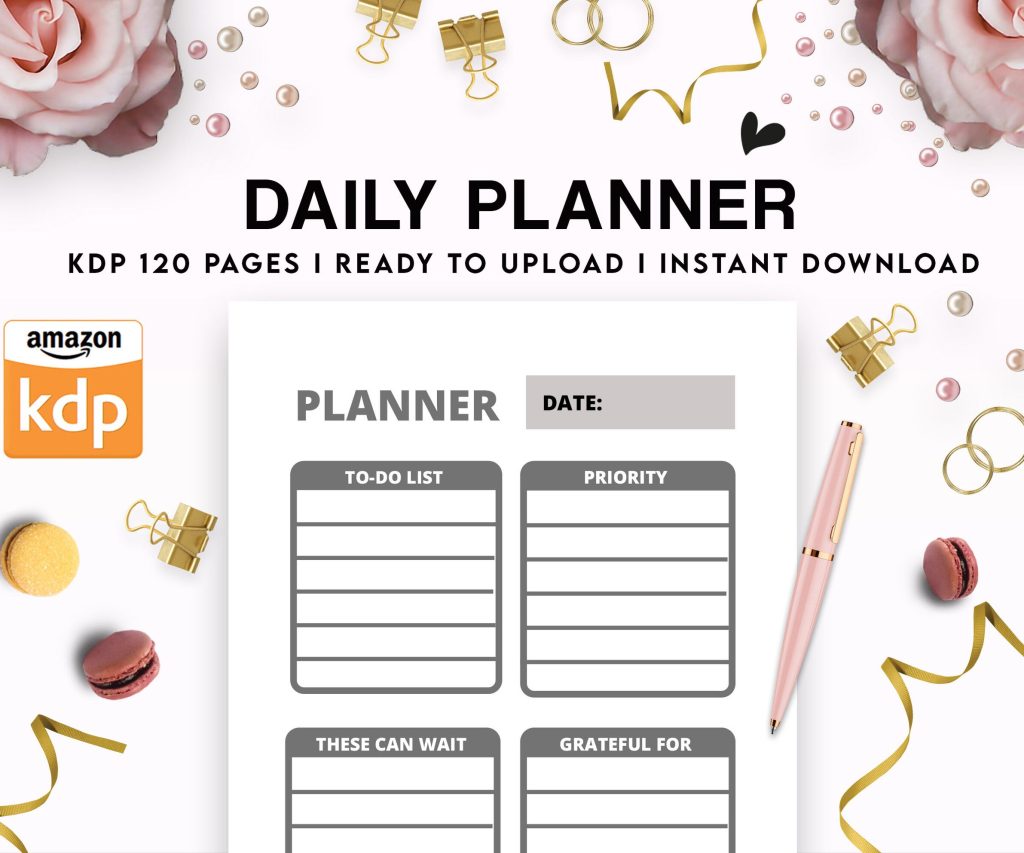 Daily Planner Diary : Diary Planners for Everyday Productivity, 120 pages, 6×9 Size | Amazon KDP Interior
1 × $0.00
Daily Planner Diary : Diary Planners for Everyday Productivity, 120 pages, 6×9 Size | Amazon KDP Interior
1 × $0.00
Subtotal: $0.00
 Daily Planner Diary : Diary Planners for Everyday Productivity, 120 pages, 6×9 Size | Amazon KDP Interior
1 × $0.00
Daily Planner Diary : Diary Planners for Everyday Productivity, 120 pages, 6×9 Size | Amazon KDP Interior
1 × $0.00 Subtotal: $0.00

Okay so I just got off a call with someone who’s been publishing on KDP for like 6 months and they’re completely confused about how KU payments actually work, and honestly I get it because Amazon doesn’t exactly make it crystal clear.
So here’s the deal with Kindle Unlimited earnings – you get paid from a global fund that Amazon sets up every month. They don’t tell you ahead of time how much it’ll be, which is annoying as hell, but it usually ranges between $20-25 million total. Your cut depends on how many pages people read in your books compared to everyone else in the program.
The formula is stupidly simple: Total KU Fund ÷ Total Pages Read by Everyone × Your Pages Read = Your Payment
But here’s where it gets messy… Amazon uses something called KENP (Kindle Edition Normalized Pages) not actual pages. So your 200-page book might be 300 KENP or 180 KENP depending on font size, formatting, images, all that stuff. You won’t know your exact KENP count until you publish, which is frustrating when you’re trying to calculate potential earnings.
I spent like three hours one night (was watching some terrible reality show, couldn’t sleep) trying to reverse-engineer how Amazon calculates KENP. Best I can figure – and this matches what other publishers see – it’s roughly 1 KENP per 5-6KB of content. But images throw it off, formatting throws it off, everything throws it off.
Your KENP count shows up in your KDP dashboard after the book goes live. For reference, my low-content books usually range from 100-150 KENP while my ebooks hit anywhere from 250-600 KENP depending on length.
This is gonna sound weird but you gotta check your rate every single month because it fluctuates. Like in December 2023 it was around $0.00425 per page, but I’ve seen it dip to $0.0040 and go up to $0.0050 depending on the month.
Why does it change? More people reading = lower per-page rate because the fund stays relatively fixed. Summer months usually see lower rates, December and January tend to be higher because people get Kindles as gifts and burn through books but the fund doesn’t proportionally increase.
I track this in a spreadsheet (yeah I’m that person) and the variance can be like 15-20% month to month. So when you’re projecting income, don’t use one rate and assume it’ll stay constant.
You can’t find it before the month ends, which is stupid. But once the month closes, go to your KDP Reports > Month-to-Date > look at your KU payment divided by KENP Read. That’s your per-page rate for that specific month. Amazon also posts the official rate on their KDP Community forums usually around the 15th of the following month.
Okay so funny story – I used to think you only got paid when someone borrowed your book AND read the whole thing. Completely wrong. You get paid for every page they actually read, even if they quit after page 5.
But here’s the catch… Amazon has a threshold. The reader needs to open your book and read at least the first page or two for it to register as a borrow. Just downloading it doesn’t count. I had a client freak out once because their borrow count was way lower than their downloads, and this was why.
Also – and wait I forgot to mention this earlier – if someone borrows your book and reads 50 pages, you get paid for 50 pages. If they come back next month and read another 50 pages, you get paid again. But if they read page 1-50, then go back and re-read pages 20-30, you don’t get paid twice for those pages. Amazon tracks the furthest page reached.
For series authors this is huge. If you’ve got a trilogy and someone borrows all three books through KU, your earnings depend entirely on whether they actually read all three. I’ve seen authors with 10-book series make absolute bank because readers binge the whole series. That’s like 3000+ KENP getting paid out from a single reader.
My low-content stuff doesn’t benefit from this obviously – someone uses a journal and that’s it, they’re not reading it cover to cover. So my KU earnings on low-content are way lower proportionally than my ebooks.
Amazon pays out KU earnings roughly 60 days after the end of the month. So January’s KU reads get paid around end of March. It’s not exactly 60 days, sometimes it’s 58, sometimes 62, they’re weirdly inconsistent about it.
The royalty shows up in your dashboard as “Kindle Edition Normalized Pages (KENP) Read” and gets lumped into your total royalty payment. If you hit the minimum threshold ($100 for direct deposit, $10 for some payment methods), it pays out automatically.
One thing that messed me up early on – there’s a lag in reporting. Like you’ll see borrows before you see pages read. Sometimes by days. So don’t panic if you see 50 borrows but only 200 pages read on the first day. The page count updates slower than the borrow count, I have no idea why Amazon does it this way.
Okay this is where it gets interesting and honestly kinda depends on your book. My dog just started barking at nothing, hold on…
Right, so a regular sale of a $2.99 ebook gets you $2.09 (70% royalty) or $0.87 (35% royalty) depending on your pricing. A KU borrow of that same book – let’s say it’s 300 KENP at $0.0045 per page – gets you $1.35.
So for shorter books, KU often pays less per reader than a sale would. But here’s the thing… way more people are willing to borrow than buy. Like exponentially more. I’d say 70-80% of my reader base uses KU.
Let me give you real data from one of my books last month. It’s a 350-KENP productivity ebook priced at $4.99:
So KU made up 57% of my income from that single book. If I pulled it from KU, sure those 312 borrows might convert to sales… but probably not. Maybe 20% would convert? So I’d get like 62 extra sales × $3.49 = $216. Still less than what KU paid.
For low-content though? Different story. A $6.99 journal with 120 KENP makes me $4.89 per sale but only like $0.51 if someone borrows and “reads” the whole thing (which they don’t really, they just flip through). So I’m way more selective about putting low-content in KU.
Here’s what nobody tells you upfront – enrolling in KU means your book is exclusive to Amazon. You can’t sell it on Apple Books, Google Play, Kobo, anywhere else. It’s KDP Select enrollment and it locks you in for 90 days at a time.
I’ve got about 60% of my catalog in KU and 40% wide (meaning on other platforms). The KU books make more money on Amazon, but the wide books have additional revenue streams that sometimes add up to more total.
If you’ve got a book that sells well on other platforms, taking it exclusive to Amazon for KU might actually cost you money. I pulled one of my books from KU last year because it was doing $200/month on Apple Books alone. The KU earnings were only like $120/month, so going wide made sense.
Also textbooks, professional development, niche technical books – these often sell better as purchases than borrows. People want to own reference material, not borrow it.
Okay so I gotta address this because I see people trying stuff that’s either useless or gonna get them banned.
Some authors try to inflate their KENP count by adding a bunch of bonus content at the end. Like a 200-page book becomes 400 pages because they stuffed in their entire backlist as “previews.” Amazon’s cracked down on this hard. They’ll collapse your KENP if they catch it, or just remove your book entirely.
There’s also this thing where people put cliffhangers every 10 pages to force page turns, or format their book with huge margins and spacing to increase KENP. Amazon’s algorithm detects weird formatting now and normalizes it. You’re just annoying readers for no actual gain.
Write engaging content that people actually read all the way through. I know that sounds stupidly simple but it’s the truth. My best-performing KU book has an 89% read-through rate (meaning people who borrow it read 89% of the pages on average). That’s because it’s structured well, edited properly, and solves a specific problem people have.
Front-load value. Put your best stuff early. If someone borrows your book and bounces after chapter one, you get paid for like 30 KENP instead of 300. Hook them immediately.
For series, end on a soft cliffhanger that makes them want the next book. Not annoying cliffhangers where you cut mid-scene, but natural stopping points that create anticipation. My client who writes romance does this perfectly and her series read-through is insane.
Wait I forgot to mention the All Stars thing. So Amazon has this additional bonus program for the top 100 most-read books in KU each month. If you crack the top 100, you get extra money on top of your regular KENP earnings.
I’ve never hit this personally – you need serious volume – but I know authors who have. The bonuses range from a few hundred bucks to like $5,000+ for the top 10. It’s based on total KENP read globally across all Amazon marketplaces.
To give you perspective on what it takes: the #100 book usually has around 5-8 million KENP read in that month. That’s roughly 15,000-25,000 borrows depending on book length and read-through. So yeah, not happening for most of us.
Oh and another thing – if you publish to Amazon UK, DE, FR, etc., each marketplace has its own KU fund and its own per-page rate. UK usually pays slightly less than US, like $0.0038-$0.0042 per page. Germany and other EU markets can vary wildly.
The pages read in each market count separately and pay out separately. So if you get 10,000 KENP read in the US and 5,000 in UK, you’ll see two different line items in your royalty report with different per-page rates.
I do KDP Select (KU enrollment) for US marketplace but sometimes go wide internationally because the KU adoption is lower in some countries. Like in Germany, a lot of readers prefer buying books outright rather than subscribing to Unlimited. So I’ll keep a book in KU for US but sell it non-exclusively on German retailers.
Wait, can you even do that? Yeah – you can enroll in KDP Select for one marketplace and not others. You just have to set it up separately for each region in your KDP dashboard. Most people don’t know this is an option.
The KDP dashboard is honestly pretty terrible for analyzing KU performance. It shows you KENP read and that’s about it. You can’t see average read-through percentage, you can’t see which chapters people stop reading at, nothing useful.
I export my reports to Excel every month and track:
That KENP per borrow metric is gold. If it’s going up, people are reading more of your book. If it’s dropping, something’s wrong – bad reviews, weak opening, whatever. I caught a formatting issue once because my KENP per borrow suddenly dropped by 40%. Turns out a chapter was displaying weird on Kindle devices and people were bouncing.
Amazon’s algorithm treats borrows similar to sales for ranking purposes, but not identically. A borrow counts once when the book is borrowed, but then Amazon seems to give additional ranking weight when the reader gets past certain percentage thresholds.
This is speculation based on what I’ve seen, but books with high read-through seem to rank better than books with same number of borrows but low read-through. Like Amazon’s rewarding books that people actually read vs just download and ignore.
I had a book jump from #45,000 to #8,000 in the Kindle Store over a weekend with only like 15 borrows. But all 15 people read the entire book within hours of borrowing. Amazon’s algorithm noticed and pushed it.
Something weird happens at the 10% mark of books. If a reader gets past 10% (roughly), they’re way more likely to finish. Amazon must have data on this because I swear the algorithm treats 10%+ reads differently than sub-10% reads.
So your goal with KU books is get them past that 10% threshold. Make the first 10% free sample amazing. Hook them so hard they have to keep reading. Because once they cross 10%, your earnings potential jumps significantly.
I restructured one of my books to front-load value in the first chapter based on this theory. Read-through went from 62% to 74% and my KU earnings from that book increased 30% month-over-month with similar borrow numbers.
Running a free promo day (you get 5 free promo days per 90-day KDP Select enrollment) seems counterintuitive if you’re trying to maximize KU earnings, but it actually helps. You’re not getting paid during the free days, but you’re getting downloads and ranking boost.
Those free downloads often convert to KU borrows afterward because your book is ranking higher and more visible. I run one free day at the start of each 90-day enrollment period, get like 500-1000 downloads, then see elevated KU borrows for the next 2-3 weeks as the book sits higher in the charts.
The other promo tool is Countdown Deals where you can discount your book temporarily but still get 70% royalty. These are better for KU-enrolled books than free promos in my experience because you’re getting both discounted sales AND borrows, plus the ranking boost.
I do Countdown Deals way more often than free promos now. Drop the price from $4.99 to $0.99 for 3 days, promote it to my email list and on social, watch both sales and borrows spike. My cat just knocked over my coffee, dammit…
Right so you’re locked in for 90 days at a time, but Amazon auto-renews unless you manually turn it off. You gotta disable auto-renewal at least 48 hours before your current enrollment period ends or you’re stuck for another 90 days.
I’ve forgotten this multiple times and kicked myself because I wanted to test going wide with a book but had to wait 3 more months.
If your KU earnings are consistently less than 30-40% of total book revenue, you might make more money going wide. The math changes based on your book’s price point and length, but that’s a decent rule of thumb.
Also if you’re getting traction on other platforms – like someone shared your book in a Kobo forum or Apple Books features it – pulling from KU might make sense. You’re leaving money on the table by being exclusive to Amazon.
Professional/technical books are usually better wide. Romance and fiction tend to do well in KU. Low-content is a toss-up depending on the type.
For me? Hell yes. Like 65% of my KDP income comes from KU page reads. But I write in categories where KU is popular (productivity, self-help, some low-content niches).
DISCOVER OUR FREE BEST SELLING PRODUCTS
Editable Canva Lined Journal: Express Your Thoughts – KDP Template
Lined Pages Journal 120 pages Ready to Upload PDF Commercial Use KDP Template 6×9 8.5×11 5×8 for Notebooks, Diaries, Low Content
Lined Pages Journal 120 pages Ready to Upload PDF Commercial Use KDP Template 6×9 8.5×11 5×8 for Notebooks, Diaries, Low Content
Cute Dogs Coloring Book for Kids | Activity Book | KDP Ready-To-Upload
Daily Planner Diary : Diary Planners for Everyday Productivity, 120 pages, 6×9 Size | Amazon KDP Interior
Wolf Coloring KDP interior For Adults, Used as Low Content Book, PDF Template Ready To Upload COMMERCIAL Use 8.5×11"
Coloring Animals Head Book for Kids, Perfect for ages 2-4, 4-8 | 8.5×11 PDF
Printable Blank Comic Book Pages PDF : Create Your Own Comics – 3 Available Sizes
Notes KDP interior Ready To Upload, Sizes 8.5×11 6×9 5×8 inch PDF FILE Used as Amazon KDP Paperback Low Content Book, journal, Notebook, Planner, COMMERCIAL Use
Black Lined Journal: 120 Pages of Black Lined Paper Perfect for Journaling, KDP Notebook Template – 6×9
Student Planner Journal 120 pages Ready to Upload PDF Commercial Use KDP Template 6×9" 8.5×11" for Low Content book
Recipe Journal Template – Editable Recipe Book Template, 120 Pages – Amazon KDP Interior