
Amazon KDP guide, KDP book publishing
Kindle Unlimited Publishing: KU vs Non-Exclusive Strategy
Mar
Okay so I just pulled my Q4 numbers last week and the KU vs non-exclusive thing is still the question everyone’s obsessing over, so let me break down what actually works because I’ve been testing both strategies across like 40+ books now.
The Basic Money Math Nobody Talks About Correctly
Here’s the deal with KU – you’re getting paid from a global fund that Amazon sets every month. Right now it’s hovering around $0.0045 per page read, but I’ve seen it as low as $0.0035 and as high as $0.005. Your book needs to be exclusive to Amazon for 90 days at a time, and you’re enrolled automatically unless you opt out.
Non-exclusive means you can sell everywhere – Apple Books, Kobo, Barnes & Noble, Google Play, your own website, wherever. But you lose KU page reads completely.
The thing people get wrong is they compare a $2.99 sale to page reads wrong. If your book is 200 pages and someone reads it completely in KU, you’re making roughly $0.90. But a $2.99 sale at 70% royalty nets you $2.09. Seems obvious to go non-exclusive right?
Except KU readers are VORACIOUS. They’ll try your book because it’s “free” with their subscription. I’ve got romance novellas that get 10 full reads for every 1 sale when I test them. That’s $9 in KU vs $2.09 from one sale.
When KU Actually Makes Sense
If you’re writing in these genres, you’re probably gonna want to stay in KU:
- Romance (especially contemporary, billionaire, small town)
- LitRPG and GameLit
- Reverse harem
- Cozy mystery
- Paranormal anything
These readers live in KU. Like I’m not exaggerating – I pulled out of KU with a wolf shifter series last year to test wide distribution and my income dropped 73% in month one. Moved it back to KU and recovered about 80% of what I lost within 60 days.
The algorithm also favors KU books. Amazon‘s not gonna admit this officially but come on – they want people subscribed to KU. When someone borrows and reads your book, you get a “sale” for ranking purposes PLUS the page reads. It’s double dipping for visibility.
The Series Strategy in KU
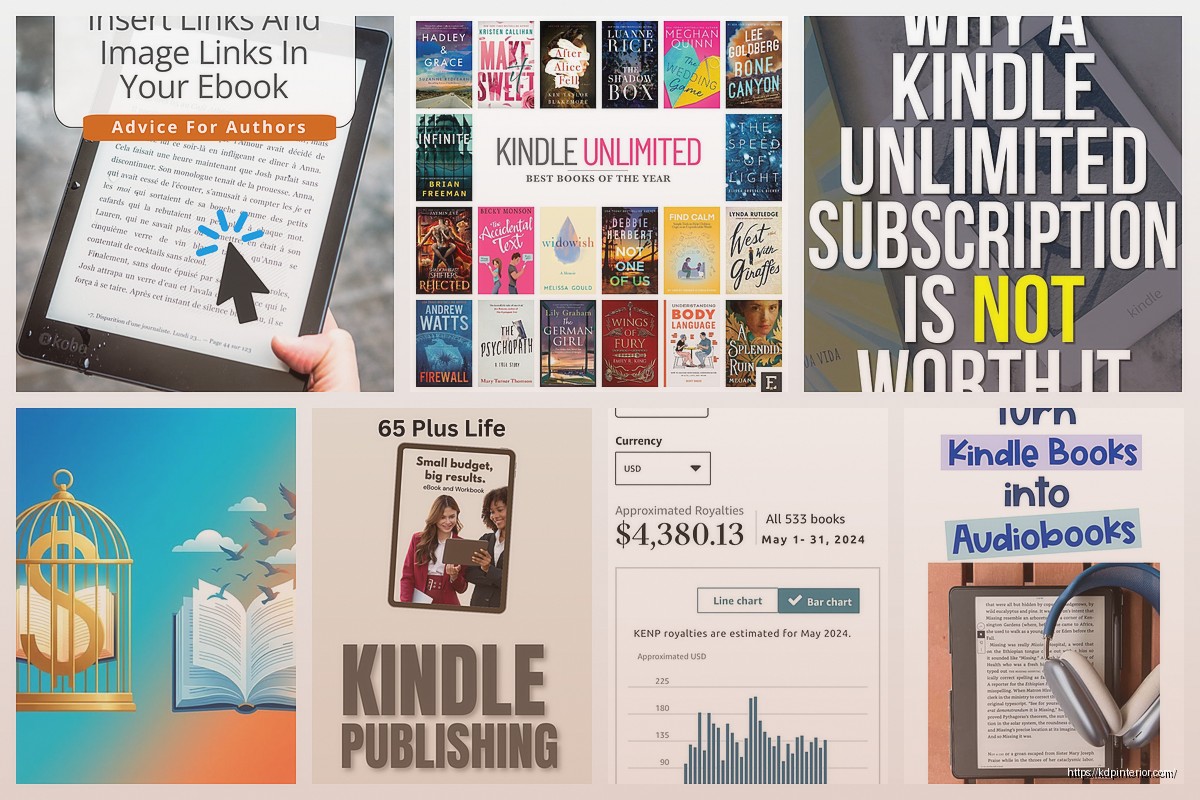
Oh and another thing – if you’ve got a series, KU is insane for read-through. Price book one at $0.99 or even perma-free using price matching, get them hooked, and they’ll binge the whole series in KU. I’ve got a 5-book mystery series where book 1 gets maybe 800 reads per month, but books 2-5 average 400 reads each. That’s 2,400 total reads across roughly 220 pages each.
That’s like $2,376 per month from one series. If I went wide, I’d need to sell… wait lemme actually calculate this… at $3.99 per book with 70% royalty that’s $2.79 per sale. I’d need to sell about 850 books per month across all platforms to match that. I’m not getting anywhere close to those numbers on Kobo and Apple combined.
When Going Wide Actually Works
Okay so non-fiction is different. Totally different animal.
I’ve got a cookbook that does way better wide than it ever did in KU. Non-fiction readers aren’t binging multiple books usually. They want THE book on pressure cooking or woodworking or whatever, and they’ll pay $6.99 or $9.99 for it across multiple platforms.
My pressure cooker guide sells maybe 30 copies per month on Amazon at $7.99. That’s $168 from Amazon. But I’m also getting:
- About 12 sales on Apple Books
- 8-10 on Kobo
- 5-7 on Google Play
- Maybe 3 on B&N if I’m lucky
That’s an extra 28-32 sales at $5.60 royalty each (70% of $7.99), so roughly $160-180 more per month. Almost doubling my income by going wide.
This is gonna sound weird but I also find that non-fiction buyers are more loyal to their preferred platform. Like Apple users REALLY prefer buying from Apple. They’re not gonna switch to a Kindle app just for your book.
Higher Price Points Change Everything
If you’re selling books at $9.99 or higher, the math shifts dramatically. KU pays per page read regardless of your list price. So a 300-page book read completely gives you about $1.35 whether you priced it at $2.99 or $29.99.
But a $9.99 sale gives you $6.99 in royalty. You’d need roughly 5 complete reads to equal one sale at that price. For premium non-fiction or specialized content, going wide makes way more sense.
The Testing Process I Actually Use
Okay so here’s how I test this stuff because you can’t just guess. You gotta run actual experiments.
Start a book in KU for 90 days. Track everything:
- Total page reads per month
- Sales at your chosen price point
- Where the book ranks in your categories
- Your total earnings from that book
After the first 90-day period, opt out of KU renewal. You’ll get an email like 3 days before it auto-renews – gotta catch that or you’re stuck for another 90 days. Wait I forgot to mention – if you unenroll, your book stays in KU until the current enrollment period ends. So if you opt out on day 45, you’re still exclusive until day 90.
Then publish wide. I use Draft2Digital because they distribute to like 8+ platforms at once and the interface doesn’t make me want to throw my laptop. PublishDrive is another option. Some people upload directly to each store but honestly that’s too much work unless you’re making serious money.
Track the same metrics for 90 days wide. Compare total earnings, not just unit sales. This is where people screw up – they see fewer sales and panic, but maybe you’re making more per sale across multiple platforms.
The Annoying Waiting Period
One thing that trips people up – when you leave KU and go wide, there’s this dead zone. Your Amazon sales usually drop because you lose the algorithm boost and the KU borrows obviously go to zero. But it takes 2-4 weeks for your book to get processed and live on other platforms.
I had one book where sales dropped from like $400/month in KU to $85 on Amazon-only, and I was freaking out thinking I’d made a huge mistake. Then Apple and Kobo kicked in after three weeks and I stabilized around $380/month total. Not quite the same but close enough that the freedom to sell everywhere felt worth it.
The Hybrid Strategy Nobody Does But Should
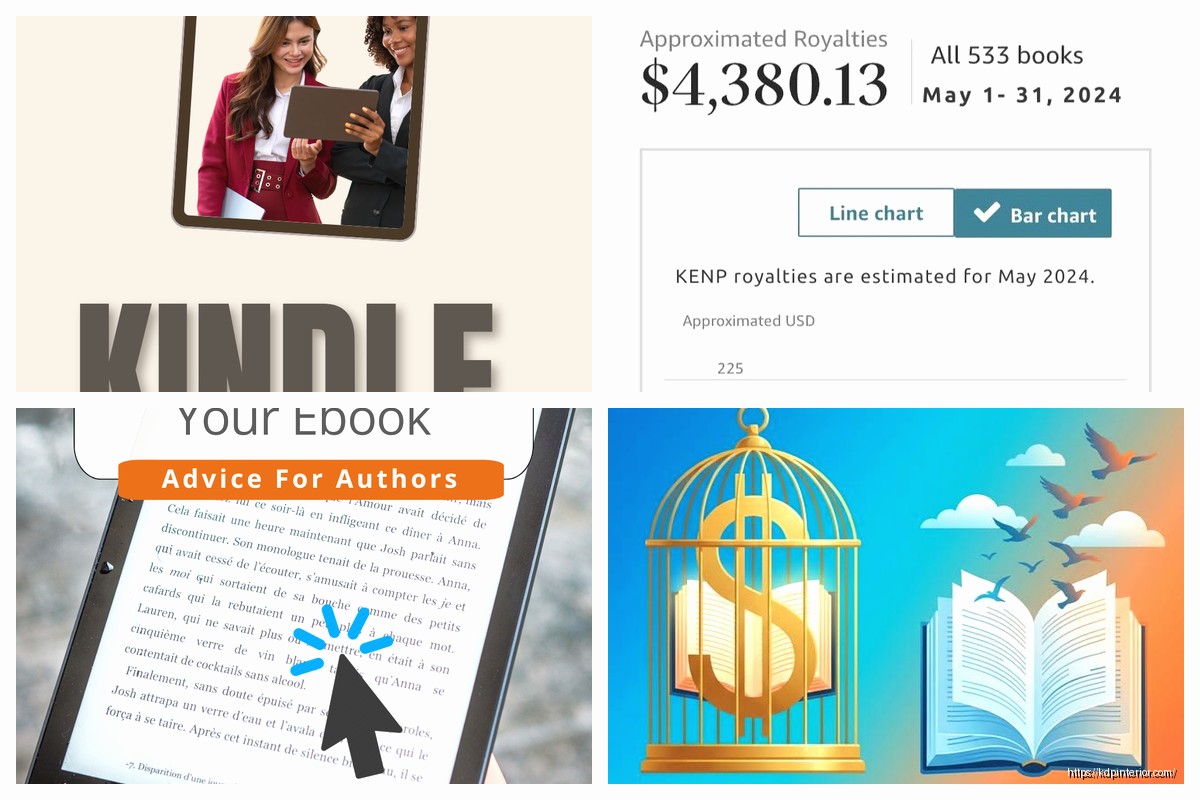
Here’s something I tested last year that actually worked pretty well – keep your main series in KU but publish companion content wide.
So like I’ve got a paranormal romance series that’s exclusive to KU. Those books are doing great there. But I wrote a prequel novella about a side character and published that everywhere. It’s a standalone story but mentions the main series.
The prequel funnels readers from other platforms to Amazon for the main series. I include links in the back matter like “if you enjoyed this, the complete series is available on Amazon Kindle Unlimited.” My Apple Books readers discover my stuff, and some of them will actually download the Kindle app or get a subscription to read more.
This is probably controversial but it’s working for me. The prequel makes maybe $60/month across all platforms, which isn’t much, but it’s found me probably 20-30 new KU readers per month who then binge the main series.
What The Data Actually Shows From My Publishing
Okay so across my whole catalog right now I’ve got 28 books in KU and 12 wide. My cat just jumped on my desk sorry – anyway, the KU books generate about 68% of my total income even though they’re only like 70% of my catalog.
But here’s the thing – the wide books are more stable. KU page reads fluctuate like crazy month to month. December’s usually great, January tanks, summer is weird. My wide books have way more predictable earnings.
For actual numbers, my KU books averaged $4,230 per month last quarter. The wide books did $1,890. But the wide books had a standard deviation of only like $180 month-to-month while KU swung from $3,100 to $5,800.
If you need consistent income for budgeting, wide might be better even if the total is lower. If you can handle volatility and want maximum earnings potential, KU usually wins for fiction.
The Tax Thing People Don’t Think About
Wait I forgot to mention taxes. When you’re wide, you’re dealing with international sales across multiple platforms. Each retailer handles tax differently. Draft2Digital simplifies this but you’re still getting 1099s from multiple sources potentially.
KU keeps everything in one place – just Amazon. My accountant charges me less because there’s less to sort through. Not a huge factor but worth considering if you’re already overwhelmed by the business side.
My Actual Recommendation Based On Where You’re At
If you’re brand new, start with KU. You need visibility more than anything, and KU helps you get borrows and reads that boost your ranking. The algorithm momentum is real.
Once you’ve got a backlist of 5+ books and you’re making $500+/month consistently, test going wide with one book. Not your best performer – pick something that’s middle of the pack. See what happens.
If you’re doing $2k+/month, you should definitely test wide with at least part of your catalog. The diversification protects you if Amazon changes something or your account has issues.
I know someone who had their KDP account suspended for like 6 weeks over a trademark dispute that was total BS. They eventually got reinstated but imagine losing 100% of your income for six weeks. If they’d been wide, they’d have still had money coming in from other platforms.
The paranoia about Amazon shutting you down is real and honestly justified. I backup everything and keep copies of all my covers, manuscripts, everything in like three different places now.
Oh and another thing – some authors do a rotating strategy where they keep books in KU for the initial launch when they need the visibility boost, then after 6-12 months they pull them out and go wide. The book’s already established on Amazon so it maintains some momentum even without KU, plus now it’s getting new readers on other platforms.
That’s probably the smartest long-term approach if you’re publishing consistently. Launch in KU, ride the algorithm, then expand once the initial push is done.
DISCOVER OUR FREE BEST SELLING PRODUCTS
Editable Canva Lined Journal: Express Your Thoughts – KDP Template
Lined Pages Journal 120 pages Ready to Upload PDF Commercial Use KDP Template 6×9 8.5×11 5×8 for Notebooks, Diaries, Low Content
Lined Pages Journal 120 pages Ready to Upload PDF Commercial Use KDP Template 6×9 8.5×11 5×8 for Notebooks, Diaries, Low Content
Cute Dogs Coloring Book for Kids | Activity Book | KDP Ready-To-Upload
Daily Planner Diary : Diary Planners for Everyday Productivity, 120 pages, 6×9 Size | Amazon KDP Interior
Wolf Coloring KDP interior For Adults, Used as Low Content Book, PDF Template Ready To Upload COMMERCIAL Use 8.5×11"
Coloring Animals Head Book for Kids, Perfect for ages 2-4, 4-8 | 8.5×11 PDF
Printable Blank Comic Book Pages PDF : Create Your Own Comics – 3 Available Sizes
Notes KDP interior Ready To Upload, Sizes 8.5×11 6×9 5×8 inch PDF FILE Used as Amazon KDP Paperback Low Content Book, journal, Notebook, Planner, COMMERCIAL Use
Black Lined Journal: 120 Pages of Black Lined Paper Perfect for Journaling, KDP Notebook Template – 6×9
Student Planner Journal 120 pages Ready to Upload PDF Commercial Use KDP Template 6×9" 8.5×11" for Low Content book
Recipe Journal Template – Editable Recipe Book Template, 120 Pages – Amazon KDP Interior