
Amazon KDP guide, KDP book publishing
Novel Outline Example: Story Structure Sample
Apr
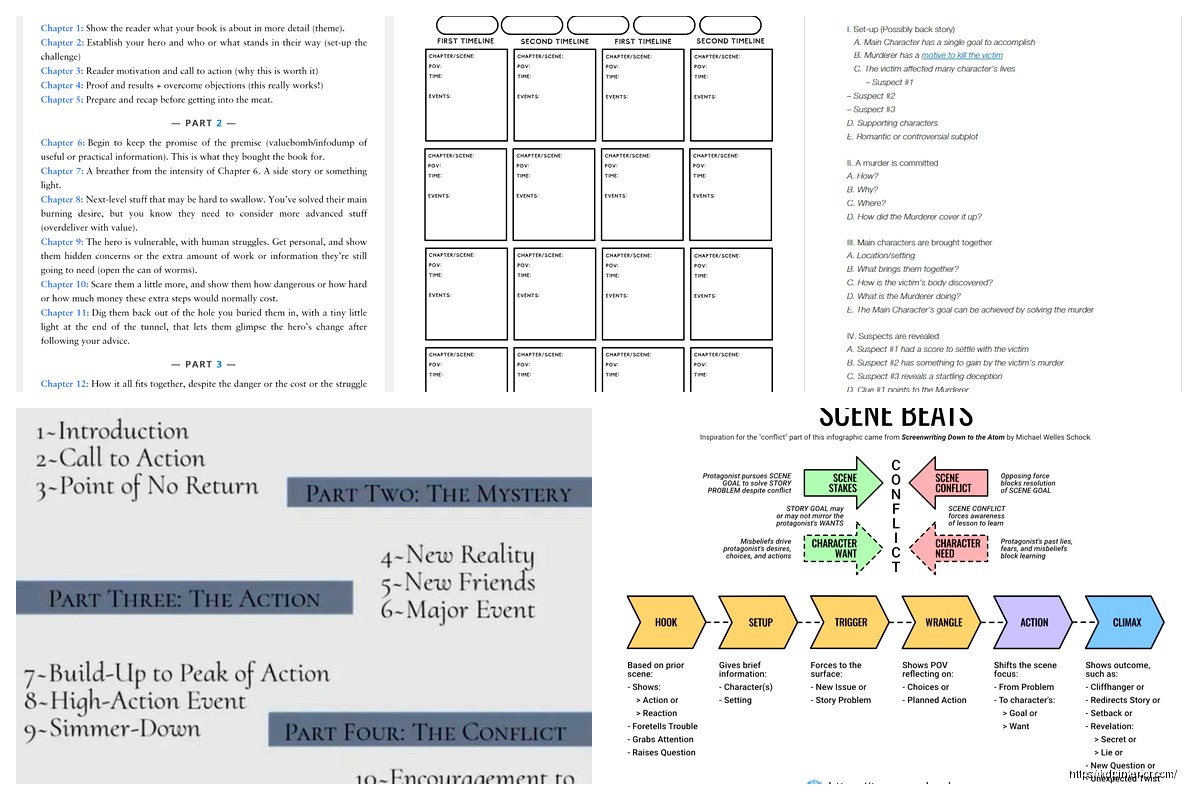
Okay so I was putting together an outline for my thriller last week and realized I should probably share what actually works because I’ve done this like 200+ times now and most outline examples you find online are either too vague or weirdly complicated.
The Basic Three-Act Structure Nobody Explains Right
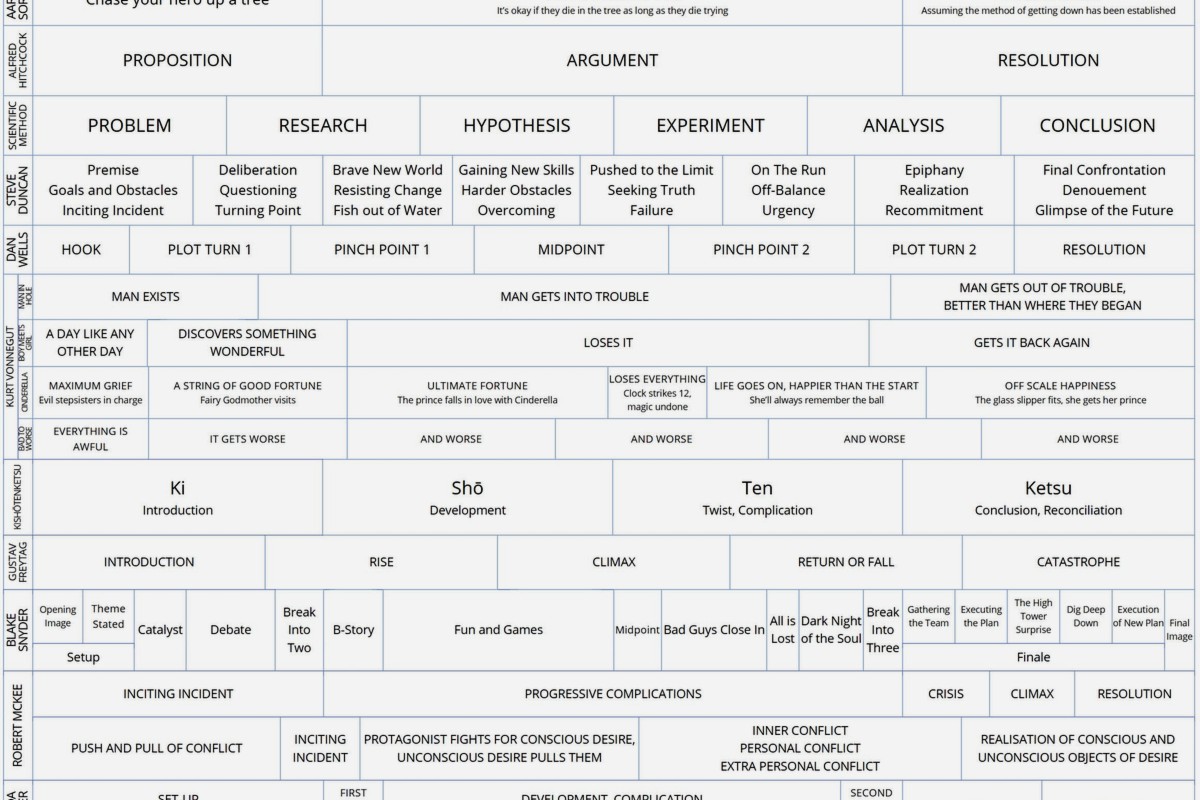
So the three-act thing is real but here’s what nobody tells you – it’s not about equal thirds. Act One is usually like 25% of your book, Act Two is 50%, and Act Three wraps up in the final 25%. I kept screwing this up in my early books because I thought it had to be perfectly divided and my middle section always felt rushed.
Here’s what each act actually needs:
- Act One: introduce protagonist, show their normal world, present the problem that kicks everything off
- Act Two: complications pile up, character tries different solutions, things get progressively worse
- Act Three: final confrontation, resolution, show how character has changed
The key thing is that transition between acts. You need a clear moment where the character commits to the journey (end of Act One) and another moment where they’ve lost everything and have to dig deep for the final push (end of Act Two).
My Actual Outline Template I Use
So I keep this saved in Google Docs and just duplicate it every time I start a new book. Takes me maybe 2-3 hours to fill out completely but saves me weeks of rewriting later.
Opening Image: This is literally the first scene. I write like one paragraph describing what readers see first. For a romance I did last year, it was the protagonist crying in her car outside a wedding venue. For the thriller, it was a guy finding an empty grave with his own name on the headstone.
Setup (Chapters 1-3ish): Here I list out what normal life looks like, what the character wants, what they’re afraid of. Also gotta introduce the main supporting characters here. I usually bullet point like 5-7 key scenes that establish the world.
Catalyst (around 10% mark): The thing that happens that changes everything. Job offer in another city, dead body discovered, mysterious letter arrives, whatever. This isn’t where the character decides to act yet – that comes later.
Debate (next few chapters): Character wrestles with whether to engage with the problem. Should I take this case? Should I trust this person? Should I leave town? I always include at least one scene where someone advises them NOT to do the thing, which makes it more interesting when they do it anyway.
The First Plot Point Changes Everything
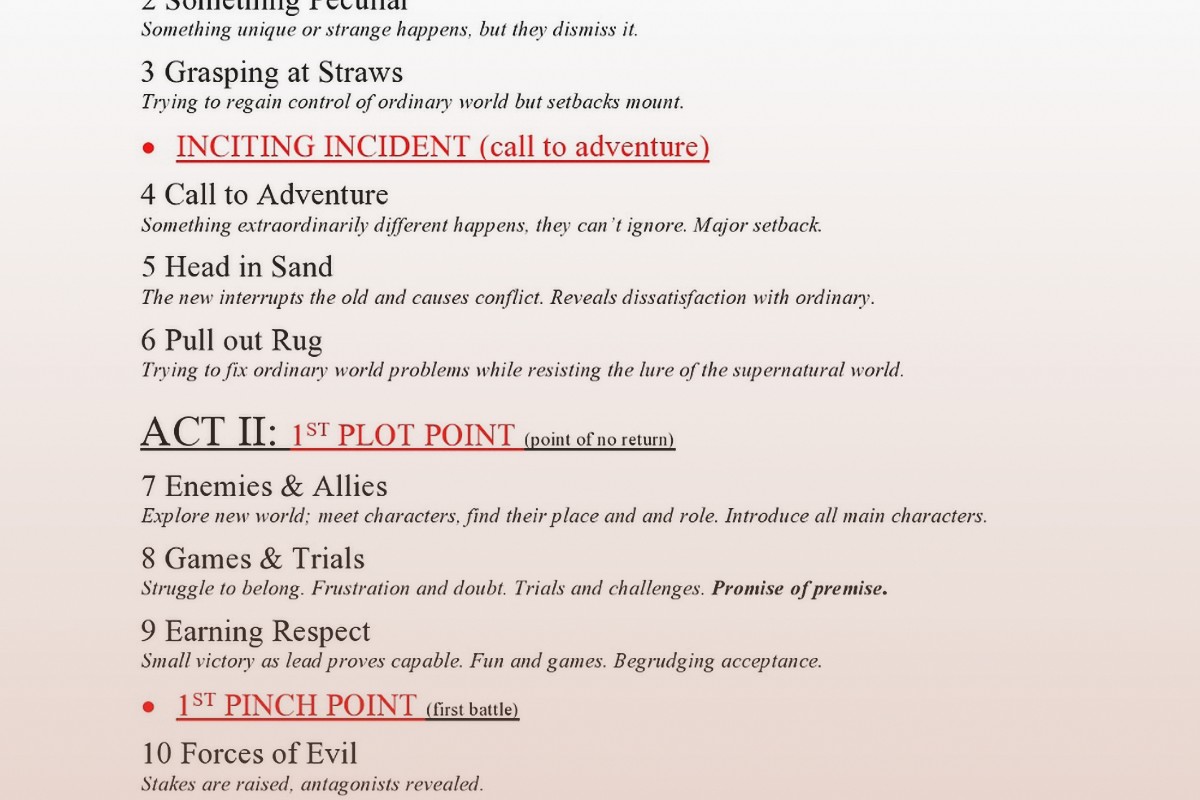
This hits around 25% and it’s where there’s no turning back. The character makes a choice or something happens that commits them to the journey. My cat just knocked over my coffee which is perfect timing for a break but anyway – this moment has to be clear and irreversible.
In a mystery, maybe they find evidence that implicates someone they love. In a romance, maybe they kiss the person they swore they’d never fall for. In fantasy, they cross the magical barrier or accept the quest or whatever.
Fun and Games (25-50% mark): This is actually the most enjoyable part to write and it’s where you deliver on the promise of your premise. If your book is about a chef competing in a cutthroat cooking competition, THIS is where we see all the cooking drama. If it’s about surviving on a deserted island, THIS is where we see creative survival tactics.
I outline like 8-10 scenes here that show the character actively pursuing their goal. They’re making progress, learning new skills, meeting allies and enemies. Things are hard but they’re managing.
The Midpoint Twist Nobody Told Me About
Okay so this was a game changer when I finally understood it. Right at the 50% mark, something happens that flips the story. Either a false victory (they think they’ve won but they haven’t) or a false defeat (everything seems lost).
The key is that new information comes to light that reframes everything. The killer they’ve been chasing isn’t working alone. The love interest has been lying about something important. The treasure map is fake. Whatever it is, the character can’t approach the problem the same way anymore.
I literally write “MIDPOINT REVERSAL” in caps in my outline and then describe in 2-3 sentences what changes. For my last romance, the midpoint was when the protagonist discovered her fake boyfriend (long story) was actually the journalist writing expose articles about her family business.
Bad Guys Close In
From 50-75% things get progressively worse. The character’s flaws start catching up with them. Allies might betray them or leave. Plans fall apart. I outline this section by listing escalating complications:
- First complication that’s manageable
- Second complication that’s more serious
- Third complication that makes them question everything
- Fourth complication that feels impossible to overcome
Each scene should make the situation more desperate. The antagonist (whether that’s a person, society, nature, or internal demons) is gaining power while the protagonist is losing ground.
All Is Lost Moment
Around 75% there’s this moment where everything falls apart. The character’s worst fear comes true. They lose the thing they care about most. Someone dies, a relationship ends, they fail publicly, whatever hurts most.
I call this the “dark night of the soul” in my outlines but that sounds pretentious when I say it out loud. Basically it’s the lowest point. The character is broken. If this was a movie, this is where they’d be sitting alone in the rain or staring at old photographs or burning bridges.
Important: This moment has to be EARNED. If your character hasn’t faced enough complications leading up to this, it’ll feel melodramatic. But if you’ve been piling on the pressure, this moment hits hard.
I usually write out this scene in more detail than others in my outline because it’s so critical. Like I’ll write a full paragraph describing the emotional beats and what specifically happens.
Finding the Solution
Then something shifts. The character has an epiphany, finds inner strength, gets unexpected help, or discovers a new approach. This doesn’t fix everything instantly but it gives them what they need for the final confrontation.
In my outline I note what specifically changes. Is it their attitude? New information? A skill they’ve developed? For the thriller, my protagonist realized the answer was in something his dead mentor told him in Act One – I actually went back and added that setup scene during revision.
Act Three Structure
The final 25% moves fast. I outline this in bigger chunks because once you’ve set everything up properly, the ending almost writes itself.
Gathering the Team/Resources: Quick sequence where the character prepares for the final confrontation. They might literally gather allies or just steel themselves mentally. Keep this short – maybe one chapter.
Climax (around 85-90%): The big confrontation. Character faces the antagonist/problem directly using everything they’ve learned. This is where their character growth becomes visible through action. They do something they couldn’t have done at the start of the book.
I outline the climax beat by beat because it’s too important to wing:
- Initial confrontation setup
- First attempt fails (usually because they’re still clinging to old methods)
- Moment of choice where they have to embrace their growth
- Second attempt succeeds (or fails in a tragedy, but you know)
- Immediate aftermath
Resolution: Last 10% is showing the new normal. How has the world changed? How has the character changed? You’re tying up loose ends but also showing that the journey mattered. I usually outline 2-3 short scenes here – don’t drag it out.
The Weird Stuff That Actually Helps
Okay so beyond the basic structure, here’s what I actually put in my outlines that makes the writing process smoother:
Character emotional arc bullets: Under each major plot point, I add a note about where the character is emotionally. “Still believes she doesn’t deserve love” or “Starting to question his assumptions about family” or whatever. This keeps me from having them make choices that don’t track with their development.
Subplot tracking: I use a different color or indent sublots under the main plot points. So if there’s a romance subplot in my thriller, I note where those beats happen in relation to the main mystery. Keeps me from forgetting about them for like 100 pages.
Scene purpose notes: For each scene I jot down what it accomplishes. “Establishes character flaw” or “Plants clue for later” or “Shows relationship deteriorating.” If I can’t articulate why a scene exists, I cut it from the outline.
Pacing flags: I mark scenes that should be fast-paced action vs slower emotional beats. Helps me balance the rhythm. Too many intense scenes in a row is exhausting; too many slow scenes is boring.
Common Mistakes I Made Like 50 Times
Starting the story too early. Your Act One doesn’t need to show three weeks of normal life. Start as close to the catalyst as possible and fill in backstory as needed.
Making Act Two a bunch of random stuff happening. Each complication should be connected and escalating. There should be causality – this happens BECAUSE that happened.
Rushing the ending because you’re tired of the story. I’ve done this so many times and always regret it. The climax needs proper setup and breathing room.
Forgetting to show character change. Your protagonist should make different choices at the end than they would’ve at the beginning. If they don’t, there’s no arc.
Example From My Actual Outline
Here’s literally what one section of my thriller outline looked like:
Midpoint (Chapter 15): Marcus breaks into the storage unit and finds his father’s research notes. Discovers the “accident” that killed his dad was actually murder – orchestrated by his current boss, Henderson. Evidence points to a larger conspiracy involving the pharmaceutical trials. EMOTIONAL: Betrayal, rage, but also fear because Henderson has all the power. PLANTS: Reference to “Subject 12” that won’t pay off until Ch 28.
See? It’s not fancy. Just functional notes that tell me what needs to happen and why.
How Detailed Should You Actually Get
This depends on your process honestly. I know pantsers who outline like five major beats and discover everything else while drafting. I know plotters who outline every single scene with page counts and everything.
I’m somewhere in the middle – I outline all major scenes and key turning points but leave room for discovery in between. Usually comes out to like 8-10 pages of outline for a 70,000 word novel.
The test is whether your outline gives you enough structure that you don’t get stuck, but enough flexibility that you’re still excited to write. If you’re bored outlining every detail, you’ll be bored writing it. If you have no idea where you’re going, you’ll probably write yourself into a corner around chapter 12.
One thing I learned publishing 200+ books – having a solid outline doesn’t kill creativity, it focuses it. You’re not wasting energy figuring out where to go next; you’re channeling everything into making each scene as good as possible.
Anyway that’s basically the structure I use for every novel now. Saves me so much revision time because the story actually works from the first draft instead of needing major surgery later. Still gotta polish and refine obviously but the bones are solid.
DISCOVER OUR FREE BEST SELLING PRODUCTS
Editable Canva Lined Journal: Express Your Thoughts – KDP Template
Lined Pages Journal 120 pages Ready to Upload PDF Commercial Use KDP Template 6×9 8.5×11 5×8 for Notebooks, Diaries, Low Content
Lined Pages Journal 120 pages Ready to Upload PDF Commercial Use KDP Template 6×9 8.5×11 5×8 for Notebooks, Diaries, Low Content
Cute Dogs Coloring Book for Kids | Activity Book | KDP Ready-To-Upload
Daily Planner Diary : Diary Planners for Everyday Productivity, 120 pages, 6×9 Size | Amazon KDP Interior
Wolf Coloring KDP interior For Adults, Used as Low Content Book, PDF Template Ready To Upload COMMERCIAL Use 8.5×11"
Coloring Animals Head Book for Kids, Perfect for ages 2-4, 4-8 | 8.5×11 PDF
Printable Blank Comic Book Pages PDF : Create Your Own Comics – 3 Available Sizes
Notes KDP interior Ready To Upload, Sizes 8.5×11 6×9 5×8 inch PDF FILE Used as Amazon KDP Paperback Low Content Book, journal, Notebook, Planner, COMMERCIAL Use
Black Lined Journal: 120 Pages of Black Lined Paper Perfect for Journaling, KDP Notebook Template – 6×9
Student Planner Journal 120 pages Ready to Upload PDF Commercial Use KDP Template 6×9" 8.5×11" for Low Content book
Recipe Journal Template – Editable Recipe Book Template, 120 Pages – Amazon KDP Interior