Okay so last month I was helping this romance author fix her bio and realized most people are completely overthinking this whole author bio thing. Like you don’t need some fancy template that costs $47 or whatever – you just need the basic structure and honestly it’s way simpler than you think.
The Basic Framework That Actually Works
So here’s what I tell everyone: your author bio needs like 3-4 core elements and that’s it. You got your credentials (what makes you qualified to write this book), your personal hook (something that makes you human), your writing focus (what you actually write about), and a call-to-action if you’re using it for marketing stuff.
The biggest mistake I see is people writing their bio like a resume. Nobody cares that you graduated summa cum laude from wherever unless that’s directly relevant to your book topic. I published a cookbook author last year who spent half her bio talking about her MBA and I’m like… we’re selling recipes here, tell me about your grandmother’s kitchen or something.
Short Bio vs Long Bio
You’re gonna need both versions honestly. Short one is like 50-75 words max for the back of your book or quick social media profiles. Long one can go 150-200 words for your website or Amazon author page.
Short version template goes something like:
- Name + what you write
- One credibility marker
- One personal detail
- Where you live (optional but people like this for some reason)
Example I literally just wrote for a client yesterday: “Sarah Mitchell writes contemporary romance featuring strong heroines and the men who challenge them. A former wedding planner, she brings insider knowledge to her stories about love and second chances. She lives in Portland with her rescue dog and an embarrassing collection of coffee mugs.”
See how that works? You immediately know what she writes, why she might be good at it, and there’s a personality thing at the end that makes her memorable.
The Long Version Structure
Alright so the longer bio is where you can actually breathe a little. This is what goes on your website’s “About” page or your Amazon author central profile. I usually structure it in three paragraphs but you can do four if you’re feeling chatty.
Paragraph one is your hook. This is where you grab attention with either your origin story or your most impressive credential. Don’t bury the lead here – if you’ve hit the NYT bestseller list, that goes first. If you haven’t, then tell us WHY you write what you write.
I worked with this mystery author who started with “I’ve been obsessed with true crime since I was twelve and found my mom’s Ann Rule collection” and that’s way more interesting than “I’m a mystery author with five published books.”
Paragraph two is your credibility section. This is where you list:
- Your publishing credits (books published, where they’re available)
- Any awards or recognition
- Professional background if relevant
- Media appearances or speaking gigs
- Your writing process or themes you explore
Don’t list every single article you’ve ever written unless you’re genuinely a journalist with major bylines. Pick the top 3-5 things that matter most.
Paragraph three gets personal but not TMI personal. This is the “when I’m not writing” section. You live somewhere, you have hobbies, maybe you have kids or pets or a weird obsession with vintage typewriters. This part humanizes you but keep it relevant-ish to your brand.
Oh and another thing – if you write under a pen name, you gotta decide how personal to get. Some of my clients keep it super vague like “lives in the Pacific Northwest” while others are fully themselves just with a different name on the cover.
Genre-Specific Adjustments
This is gonna sound weird but your genre really does change how you should approach your bio. Romance readers want different info than business book readers.
Fiction authors should emphasize:
- What you write (subgenre matters – don’t just say “romance” say “small-town contemporary romance” or whatever)
- Your series if you have one
- Comp authors if you’re brave enough
- Personal details that show you get your readers
Non-fiction authors need:
- Professional credentials upfront
- Why you’re THE person to write about this topic
- Results you’ve helped others achieve
- Media or speaking experience
I published a productivity book last year and the author kept wanting to add stuff about her cats and I’m like… your readers want to know you’ve managed Fortune 500 projects, not that Mr. Whiskers likes to sit on your keyboard. Save the cat content for Instagram.
The Credibility Problem When You’re New
Okay so here’s the awkward part – what if you literally have no credentials yet? You’re publishing your first book and you haven’t won any awards because you just finished the manuscript last month.
First off, don’t lie. I’ve seen people make up credentials and it always comes back to bite them. Instead, focus on:
Your expertise in the topic (you can be an expert without being published – maybe you’ve spent 10 years working in the field your novel is set in)
Your education if relevant (creative writing degree, PhD in the subject matter, whatever)
Your passion and commitment (how long you’ve been writing, your process, what drew you to this story)
Wait I forgot to mention – you can also borrow credibility from other people. If you got a great beta reader quote from someone with actual credentials, mention that you’ve been “praised by” whoever. If you’re in a critique group with published authors, that’s worth mentioning too.
Common Bio Mistakes That Tank Your Sales
I see these constantly and they drive me nuts:
Being too humble. This is especially common with women authors – they’ll write “I dabble in writing” or “I enjoy crafting stories” when they should be saying “I write” period. You’re a writer. Own it.
TMI about personal life. Nobody needs to know about your divorce or your health issues unless it’s directly relevant to your book’s message. I had a client who mentioned her fibromyalgia in her fantasy novel bio and I’m like… what does this add for readers?
Listing every job you’ve ever had. Your resume as a barista in college doesn’t matter unless you’re writing a book about coffee shop culture. Edit ruthlessly.
Making it all about your pets. I love dogs, I really do – my cat is literally sleeping on my desk right now and keeps stepping on my keyboard – but unless you write pet-related content, one sentence about animals is enough.
No call-to-action. If you’re using this bio for marketing, tell people what to do next. “Find me on Instagram @whatever” or “Join my newsletter at website.com” or “Check out my latest release on Amazon.”
Where to Use Each Version
You’re gonna need your bio in like seventeen different places so let’s break down what goes where:
Back of your book: Short version, 50-75 words max. This is printed real estate so keep it tight. Focus on credibility and one personality detail.
Amazon Author Page: Long version, full 200 words. You can elaborate here because people are actively looking for more info about you. Include your photo, links to social media, and update this when you release new books.
Your website: Longest version, can go 250-300 words. Break it into paragraphs with subheadings if you want. Add personality. This is YOUR space so you can be more relaxed.
Social media profiles: Super short, like 150 characters or whatever the limit is. Just the essentials: what you write + one hook.
Guest posts and interviews: Medium length, around 100 words. Usually the publication will ask for a specific length so have a few versions ready.
Speaking bios: Can be longer, 150-200 words. Focus more on professional credentials and less on personal quirks.
Updating Your Bio
Okay so funny story – I had a coaching call last week with an author whose bio still said “debut author” and she’d published six books. Update your freaking bio people!
You should revise your bio:
- Every time you publish a new book
- When you hit a milestone (bestseller list, award, whatever)
- If your writing focus changes
- At least once a year even if nothing major changes
Your old accomplishments become less relevant over time. Nobody cares that you won a contest in 2015 if you’ve published ten books since then. Lead with your most recent and impressive stuff.
The Photo Situation
This isn’t technically part of the written bio but people always ask – yes you need a professional-looking photo. It doesn’t have to be expensive but it should be:
- Recent (not from 15 years ago)
- Clear and high resolution
- Consistent with your brand/genre
- Actually of you (stock photos are obvious and weird)
I’ve seen authors use illustrated avatars or just skip photos entirely but honestly a real photo builds more trust with readers.
Voice and Tone Matters
Your bio should match the voice of your books. If you write humorous contemporary fiction, your bio can be funny. If you write serious literary fiction, keep it more formal. Business books need professional credibility.
Don’t try to be someone you’re not in your bio. Readers can smell fake from a mile away and honestly it’s just exhausting to maintain a persona that isn’t really you.
I write KDP guides and my bio is pretty straightforward about my background in self-publishing. I don’t try to sound like some guru or whatever – I just explain what I’ve done and what I can help with. That authenticity converts better than trying to sound impressive with a bunch of jargon.
Templates You Can Actually Use
Alright here’s some fill-in-the-blank templates you can steal:
Fiction Short Bio:
“[Name] writes [genre/subgenre] featuring [themes or character types]. [Credential or interesting fact]. [Personal detail]. Find [him/her/them] at [website/social].”
Non-Fiction Short Bio:
“[Name] is a [profession/expertise] who helps [audience] achieve [outcome]. [Credential]. [Personal detail]. Learn more at [website].”
Fiction Long Bio:
“[Name] has been [writing/reading/obsessed with] [genre] since [origin story]. [His/Her/Their] books feature [themes, character types, or settings that define your work].
[Published works, awards, or credentials]. [Something about your writing process or what you explore in your work].
When not writing, [personal details about location, family, hobbies]. Connect at [social media and website].”
Just plug in your own info and adjust the tone to match your voice. These aren’t meant to be rigid – they’re starting points.
The main thing is just to get something written and out there. You can always revise it later and honestly you probably will because your bio should evolve as your career does. Don’t get paralyzed trying to make it perfect right now.

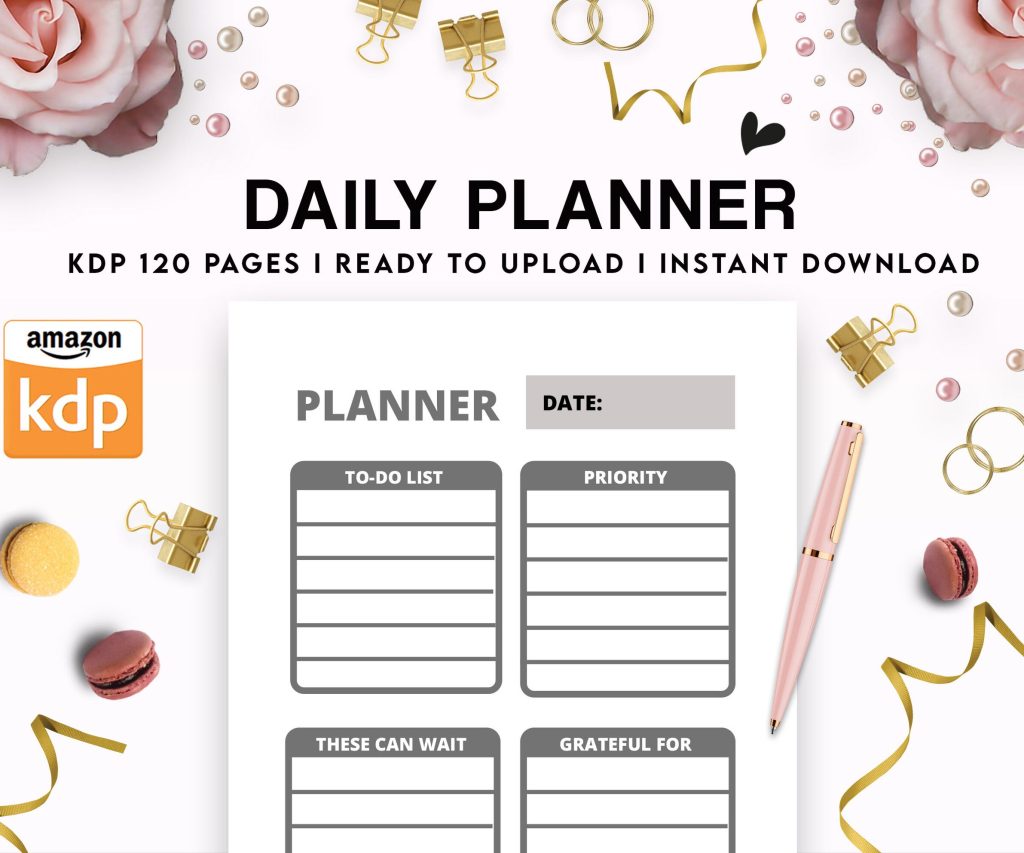 Daily Planner Diary : Diary Planners for Everyday Productivity, 120 pages, 6×9 Size | Amazon KDP Interior
1 × $0.00
Daily Planner Diary : Diary Planners for Everyday Productivity, 120 pages, 6×9 Size | Amazon KDP Interior
1 × $0.00 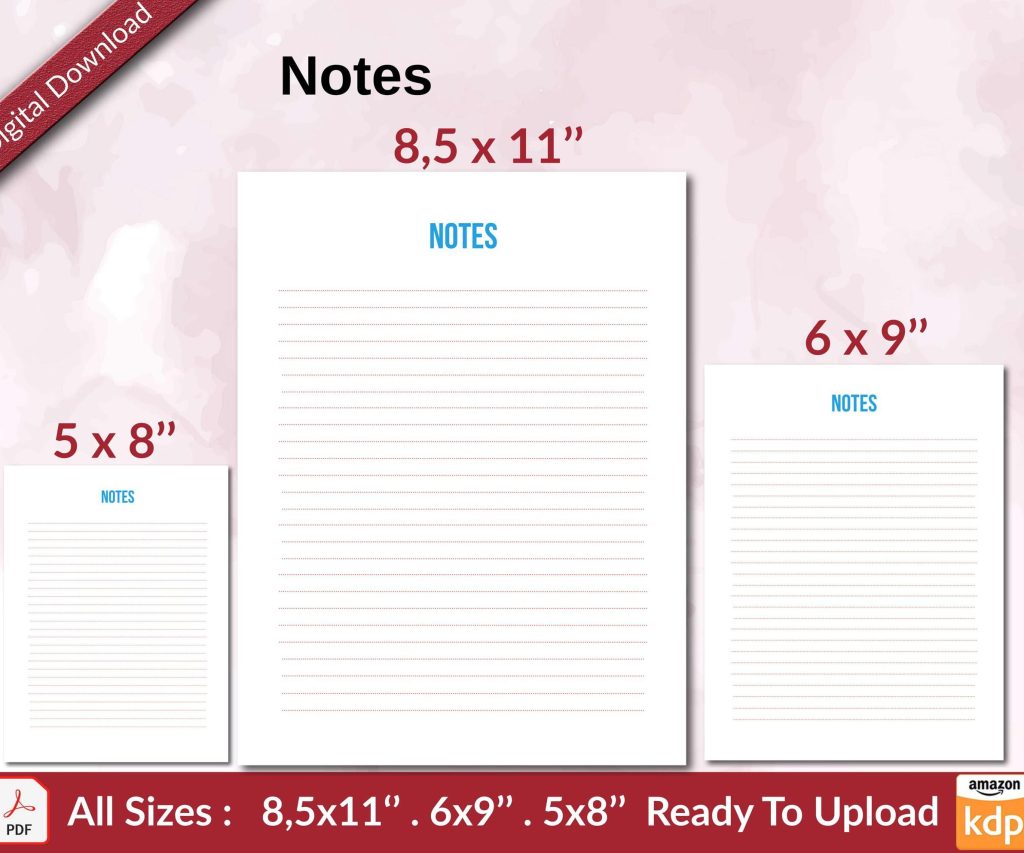 Notes KDP interior Ready To Upload, Sizes 8.5x11 6x9 5x8 inch PDF FILE Used as Amazon KDP Paperback Low Content Book, journal, Notebook, Planner, COMMERCIAL Use
1 × $0.00
Notes KDP interior Ready To Upload, Sizes 8.5x11 6x9 5x8 inch PDF FILE Used as Amazon KDP Paperback Low Content Book, journal, Notebook, Planner, COMMERCIAL Use
1 × $0.00 
DISCOVER OUR FREE BEST SELLING PRODUCTS
Editable Canva Lined Journal: Express Your Thoughts – KDP Template
Lined Pages Journal 120 pages Ready to Upload PDF Commercial Use KDP Template 6×9 8.5×11 5×8 for Notebooks, Diaries, Low Content
Lined Pages Journal 120 pages Ready to Upload PDF Commercial Use KDP Template 6×9 8.5×11 5×8 for Notebooks, Diaries, Low Content
Cute Dogs Coloring Book for Kids | Activity Book | KDP Ready-To-Upload
Daily Planner Diary : Diary Planners for Everyday Productivity, 120 pages, 6×9 Size | Amazon KDP Interior
Wolf Coloring KDP interior For Adults, Used as Low Content Book, PDF Template Ready To Upload COMMERCIAL Use 8.5×11"
Coloring Animals Head Book for Kids, Perfect for ages 2-4, 4-8 | 8.5×11 PDF
Printable Blank Comic Book Pages PDF : Create Your Own Comics – 3 Available Sizes
Notes KDP interior Ready To Upload, Sizes 8.5×11 6×9 5×8 inch PDF FILE Used as Amazon KDP Paperback Low Content Book, journal, Notebook, Planner, COMMERCIAL Use
Black Lined Journal: 120 Pages of Black Lined Paper Perfect for Journaling, KDP Notebook Template – 6×9
Student Planner Journal 120 pages Ready to Upload PDF Commercial Use KDP Template 6×9" 8.5×11" for Low Content book
Recipe Journal Template – Editable Recipe Book Template, 120 Pages – Amazon KDP Interior