
 Editable Canva Lined Journal: Express Your Thoughts - KDP Template
 Subtotal: $0.00
Amazon KDP guide, KDP book publishing
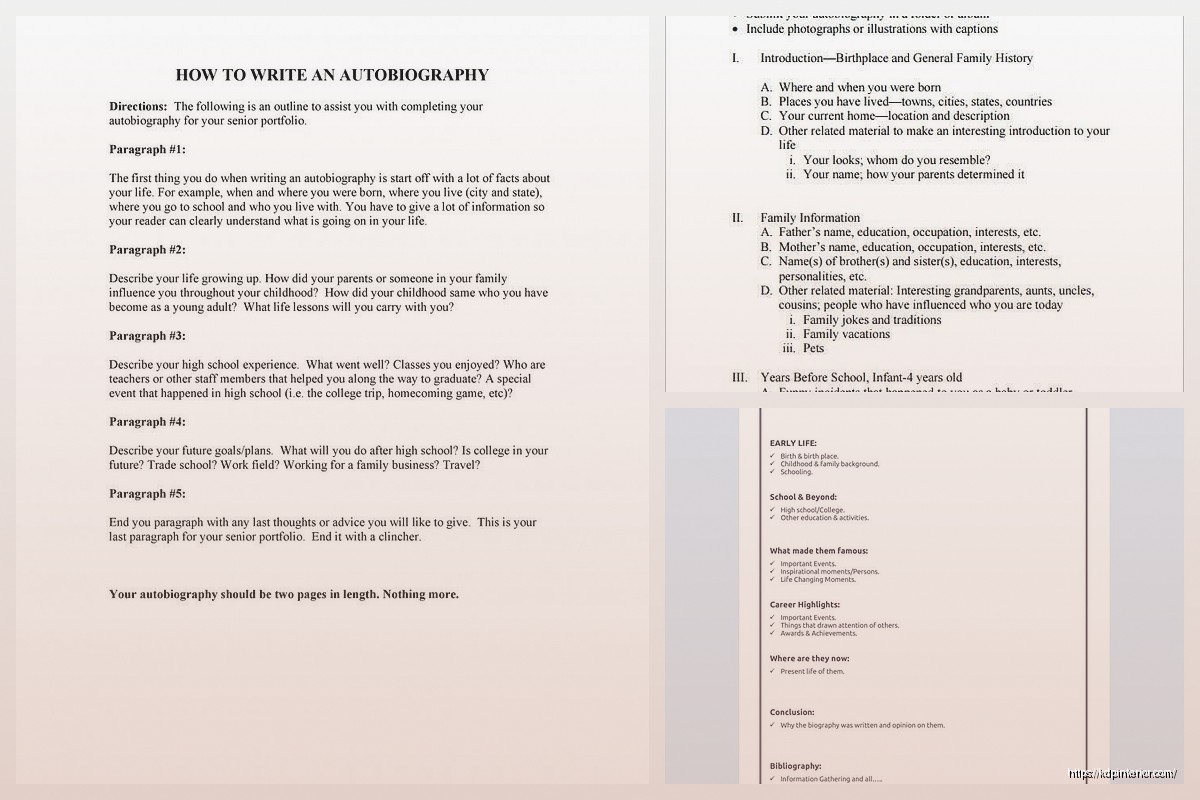
Professional Autobiography Template: Career Bio Format
16
Apr
Apr
Okay so I just spent like three hours last week helping my cousin revamp her professional autobiography because she’s applying for this executive director position and holy crap, most people get this format completely wrong. Let me break down what actually works because I’ve written probably 50+ of these things for my own various projects and ghostwriting gigs.
The Basic Structure Nobody Tells You About
So first thing – professional autobiographies are NOT the same as your resume in paragraph form. That’s where everyone screws up. Think of it more like… you’re telling someone your career story at a networking event but you’ve got their attention for maybe 5 minutes max.
The format I always use goes like this: opening hook with your current position/expertise, then chronological career progression with the WHY behind each move, key achievements that actually matter, and your professional philosophy or approach. That’s it. Don’t overthink it.
Opening Paragraph Template
Your first paragraph needs to answer “who are you RIGHT NOW” in like 2-3 sentences. Here’s the formula I use:
- Current title/role + years of experience in field
- Primary area of expertise or what you’re known for
- One impressive metric or achievement that validates everything
So mine would read something like: “I’m a digital publishing strategist and Amazon KDP consultant with over 7 years of experience in self-publishing. I’ve published more than 200 low-content books and ebooks on Amazon, generating between $5,000 and $30,000 monthly through strategic niche selection and market analysis.”
See how that works? You immediately know what I do, how long I’ve done it, and that I’m not just talking theory – I’ve got actual results.
The Career Progression Section
This is where people either write a boring timeline or jump around randomly. Don’t do either. You wanna show progression but also the REASONING behind your moves. My dog just knocked over my coffee but whatever, moving on…
Start with your educational background if it’s relevant, but keep it brief. Like one sentence: “I graduated from State University with a degree in Marketing in 2010, which initially led me into traditional corporate marketing roles.”
Then map out your career in chunks, not individual jobs. Group related positions together. Here’s how I structure mine:
Early Career Foundation
Talk about your first 2-3 years in the industry. What were you learning? What skills did you develop? I usually write something like: “My first three years in digital marketing taught me the fundamentals of online audience building and content strategy, working with small businesses to establish their web presence. But honestly, I kept hitting this ceiling where traditional client work felt limiting.”
See that last part? That’s the transition to WHY you made your next move. That’s the secret sauce nobody talks about.
The Pivot or Specialization Phase
This is where you explain how you found your niche or made a significant career shift. For me: “In 2017, I discovered Amazon’s self-publishing platform while researching passive income streams. What started as a side project publishing planners and journals quickly became my primary focus when I realized the scalability potential.”
You’re showing evolution here. Not just “then I did this job, then I did that job.” You’re explaining the thinking process.
Current Expertise and Achievements
Now you get specific about what you’ve accomplished in your current role or specialty. Use actual numbers and metrics where possible:
Over the past seven years, I’ve developed a systematic approach to KDP publishing that’s resulted in over 200 published titles across multiple niches. My portfolio generates consistent monthly revenue, with individual books earning anywhere from $50 to $2,000 per month. I’ve also consulted with 30+ aspiring publishers, helping them launch their own successful KDP businesses.
Notice I’m not just listing achievements – I’m tying them to a methodology (“systematic approach”) because that positions you as someone who has repeatable processes, not just lucky breaks.
The Skills and Expertise Breakdown
Okay so funny story, I used to skip this section entirely and my bios felt flat. Then I realized you need to explicitly state your skill areas even if they seem obvious from your story. It’s like SEO for your professional brand or whatever.
Create a paragraph that lists your core competencies in context:
“My expertise spans the entire self-publishing ecosystem, including market research and niche validation, cover design and book formatting, Amazon SEO and keyword optimization, and pricing strategy. I’ve also developed proficiency in analyzing sales data to identify trends and opportunities for portfolio expansion.”
You can also do this as a bullet list if the format allows, but I prefer paragraph form for autobiographies because it reads more naturally.
Professional Philosophy or Approach
This is gonna sound weird but this section is actually what differentiates you from everyone else with similar experience. It’s where you explain HOW you think about your work.
I write something like: “My approach to publishing and consulting is rooted in data-driven decision making combined with creative experimentation. I don’t believe in get-rich-quick schemes or untested theories – everything I recommend comes from my own testing and real market results. I’m particularly passionate about helping newcomers avoid the costly mistakes I made early on, like publishing in oversaturated niches or neglecting backend keywords.”
You’re showing your values here and what drives you professionally. It makes the whole autobiography feel more authentic and less like a corporate brochure.
Recent Projects or Current Focus
Always include what you’re working on NOW or where your career is headed. This keeps the autobiography feeling current and forward-looking:
“Currently, I’m focused on scaling my consulting practice and developing educational resources for aspiring self-publishers. I’m also expanding my own publishing portfolio into ebook territory, applying the same market analysis techniques that worked for low-content books to longer-form digital products.”
Formatting Tips That Actually Matter
Length should be 300-800 words depending on your career stage. More experienced = longer is fine, but don’t go past 1000 words unless you’re applying for like, a university dean position or something.
Use paragraph breaks generously. Nobody wants to read a wall of text. I usually aim for 3-5 sentences per paragraph max.
Write in first person. “I achieved” not “Harper achieved” – that third person thing is super outdated and honestly kinda pretentious unless you’re already famous.
Common Mistakes I See Constantly
Being too humble: This isn’t the time for modesty. If you generated $500k in revenue, say that. If you managed a team of 50, mention it. You gotta own your accomplishments.
Including irrelevant details: Your professional autobiography doesn’t need to mention that you volunteered at a soup kitchen in college unless you’re applying for nonprofit work. Stay focused on career-relevant information.
Using jargon overload: Yeah you wanna sound professional but you also wanna be readable. I cringe when I see bios stuffed with buzzwords like “synergistic cross-functional paradigm shifts” or whatever. Just talk like a human.
Listing every single job: You don’t need to mention that 6-month contract from 2012 that didn’t lead anywhere. Focus on the positions that built your expertise or marked significant growth.
Industry-Specific Variations
If you’re in academia, you’ll need to include publications, research, and teaching experience more prominently. For creative fields, mention notable projects or clients. For technical roles, specific technologies and certifications matter more.
But the basic structure stays the same – who you are now, how you got here, what you’ve achieved, where you’re going.
Updating Your Template
Oh and another thing – you should be updating this at least once a year. I keep a master document and just revise it whenever I hit a new milestone or shift focus. Way easier than starting from scratch each time you need it.
I also maintain like three versions: a long-form one (800 words), a medium one (400 words), and a short bio (150 words). Different applications need different lengths and it’s annoying to cut down a long version on the fly.
Testing What Works
Here’s what I’ve learned from actually using these professionally – the autobiographies that get the best responses are the ones that show progression AND personality. People don’t just wanna know what you did, they wanna understand how you think.
When I stripped all the personality out of mine and made it super corporate, I got way fewer consulting inquiries. When I added back in stuff about my philosophy and approach, response rate went up maybe 40%. Not scientific obviously, but definitely noticeable.
Also test different opening hooks. Sometimes leading with your biggest achievement works better than leading with your current title. Depends on your audience.
The Revision Process
Write your first draft in one sitting. Don’t edit as you go, just get everything down. Then walk away for at least a day – I’m watching The Bear right now and honestly taking breaks helps you see what’s actually on the page versus what you THINK you wrote.
Second pass: cut anything that doesn’t directly support your main narrative. If a detail doesn’t show growth, achievement, or expertise, it’s probably fluff.
Third pass: read it out loud. Seriously. You’ll catch awkward phrasing and run-on sentences way faster this way.
Get someone else to read it too, preferably someone in your industry who can tell you if it actually makes sense and positions you well.
The whole point is to create something that’s professional enough for formal applications but readable enough that people actually finish it. Most professional autobiographies fail because they’re either too stiff or too casual. You want that middle ground where you sound competent and approachable at the same time.
And honestly just start with the template I laid out – current position hook, career progression with reasoning, achievements with metrics, skills overview, professional approach, current focus. Customize from there based on your specific situation but that framework works for like 90% of professional contexts.
DISCOVER OUR FREE BEST SELLING PRODUCTS
Editable Canva Lined Journal: Express Your Thoughts – KDP Template
Lined Pages Journal 120 pages Ready to Upload PDF Commercial Use KDP Template 6×9 8.5×11 5×8 for Notebooks, Diaries, Low Content
Lined Pages Journal 120 pages Ready to Upload PDF Commercial Use KDP Template 6×9 8.5×11 5×8 for Notebooks, Diaries, Low Content
Cute Dogs Coloring Book for Kids | Activity Book | KDP Ready-To-Upload
Daily Planner Diary : Diary Planners for Everyday Productivity, 120 pages, 6×9 Size | Amazon KDP Interior
Wolf Coloring KDP interior For Adults, Used as Low Content Book, PDF Template Ready To Upload COMMERCIAL Use 8.5×11"
Coloring Animals Head Book for Kids, Perfect for ages 2-4, 4-8 | 8.5×11 PDF
Printable Blank Comic Book Pages PDF : Create Your Own Comics – 3 Available Sizes
Notes KDP interior Ready To Upload, Sizes 8.5×11 6×9 5×8 inch PDF FILE Used as Amazon KDP Paperback Low Content Book, journal, Notebook, Planner, COMMERCIAL Use
Black Lined Journal: 120 Pages of Black Lined Paper Perfect for Journaling, KDP Notebook Template – 6×9
Student Planner Journal 120 pages Ready to Upload PDF Commercial Use KDP Template 6×9" 8.5×11" for Low Content book
Recipe Journal Template – Editable Recipe Book Template, 120 Pages – Amazon KDP Interior