
 Editable Canva Lined Journal: Express Your Thoughts - KDP Template
 Subtotal: $0.00
Amazon KDP guide, KDP book publishing
Sample Book Press Release: Launch Announcements
10
May
May
Okay so here’s what you gotta do with book press releases because I literally just sent one out last week for a client’s cookbook launch and it actually got picked up by three local news sites which was wild…
The Basic Structure Nobody Tells You About
So press releases have this super specific format that sounds old-school but publishers and book reviewers actually still want it this way. Start with FOR IMMEDIATE RELEASE in all caps at the top left. Then skip a line and put your contact info – name, email, phone number. Some people put this at the bottom but I’ve had better response rates with it at the top because journalists are lazy (in a good way, they’re just busy).
Your headline needs to be punchy but also tell people exactly what the book is. I see so many authors try to be clever here and it just… doesn’t work. Something like “Local Teacher Releases Memoir About Overcoming Childhood Trauma” beats “A Journey Through Darkness Begins” every single time.
The dateline comes next – that’s your city and state, then the date. Looks like: AUSTIN, TX – January 15, 2025. Then you jump straight into the first paragraph.
That First Paragraph Is Everything
You’ve got maybe 3 seconds before someone decides if they care. First paragraph needs to answer: who, what, when, where, why. All of it. I usually write something like:
Author Sarah Mitchell announces the release of her debut novel “The Copper Hills Mystery,” a historical fiction set in 1920s Montana, available on Amazon and Barnes & Noble starting March 1st. The book explores themes of female independence and small-town secrets during the Prohibition era.
See how that hits everything? People know immediately if this is relevant to their audience or beat. When I first started doing these I’d try to build suspense or whatever and my open rates were terrible.
Second Paragraph: The Hook
This is where you explain WHY anyone should care. Not why YOU care, why THEY should care. What problem does the book solve, what gap does it fill, what’s timely about it?
For that cookbook I mentioned, we tied it into the whole meal prep trend and rising grocery costs. “With inflation affecting family budgets, Mitchell’s book offers 100 recipes under $3 per serving that can be prepared in bulk” – that kind of thing.
Oh and another thing – if your book connects to any current events or trends, PUT THAT HERE. I had a thriller author whose book dealt with data privacy and we released it right after a major data breach made headlines. Got way more coverage than her previous books.
The Middle Section: Details and Quotes
Third paragraph should have a quote from you as the author. And look, this is gonna sound weird but don’t try to sound super profound. Just be genuine about why you wrote the book or what you hope readers get from it.
Bad quote: “I poured my heart and soul into every word, crafting a masterpiece that will stand the test of time.”
Better quote: “I wrote this book because I kept seeing the same questions in parenting forums and realized there wasn’t a practical guide that addressed these issues without judgment.”
The second one tells me who the audience is and what the book actually does. The first one tells me nothing except the author thinks highly of themselves.
Fourth paragraph is where you can get into more detail about the book’s content, your background, or any credentials that matter. If you’re writing a book about dog training, mention that you’ve been a professional trainer for 10 years. If it’s fiction, maybe talk about your MFA or previous publications or… honestly if you don’t have traditional credentials, talk about why you’re passionate about the topic or what research went into it.
I was watching The Last of Us the other day while working on a press release for a post-apocalyptic novel and it reminded me – people want to know what makes YOUR version different. There are a million dystopian books out there, what’s yours bringing to the table?
The Optional But Sometimes Useful Stuff
If you’ve got endorsements or early reviews, paragraph five is where those go. Keep it brief – one or two sentences max. “The book has received advance praise from bestselling author John Davis, who called it ‘a gripping exploration of family dynamics.'”
Only include this if the endorsement is from someone readers would actually recognize or respect. Your mom saying it’s great doesn’t count here, sorry.
The Boring But Critical End Stuff
You need a boilerplate paragraph about yourself at the end. This is the same for every press release you send. Mine says something like:
Daniel Harper is a publishing consultant and author with over 200 titles published on Amazon KDP. He specializes in helping authors navigate the self-publishing landscape and has generated over $500k in book sales across various genres.
Then availability info: where people can buy the book, formats available, price if you want. I usually keep this simple:
“The Copper Hills Mystery” is available in paperback ($14.99), hardcover ($24.99), and ebook ($4.99) formats on Amazon, Barnes & Noble, and IndieBound.
Wait I forgot to mention – if you’re doing a launch event or book signing, put that information here too. Date, time, location, whether registration is needed.
End with three # symbols centered on their own line. That’s the traditional way to signal the end of a press release and yeah it’s outdated but people still look for it.
Timing Is Weirdly Important
Send your press release 4-6 weeks before launch for print media, 2-3 weeks for online outlets. Bloggers and podcasters appreciate even more lead time – like 6-8 weeks. They’re planning content calendars way in advance.
I learned this the hard way when I sent out a release one week before a book launch and got exactly zero responses. Sent the same release six weeks ahead for the next book and got picked up by four blogs and a local radio show.
Tuesday through Thursday mornings seem to work best. Avoid Mondays (everyone’s catching up from the weekend) and Fridays (people are mentally checked out). This is gonna sound weirdly specific but I’ve tracked this across like 50+ releases and the pattern holds.
Who Actually Gets This Thing
Don’t just blast it to every media outlet you can find. That’s spam. Target your list:
- Local newspapers and TV stations if there’s a local angle
- Book reviewers and bloggers in your genre
- Podcasts that feature author interviews
- Industry publications (Publishers Weekly, Kirkus, etc.)
- Niche publications related to your book’s topic
For that cookbook, we sent it to food bloggers, parenting magazines, budget-living sites, meal prep influencers. Cast a wide net but make sure everyone on your list actually covers books or topics related to yours.
Oh and personalize the email when you send it. Not the press release itself, but the email you attach it to. “Hi Sarah, I noticed you recently covered budget-friendly recipes on your blog and thought my client’s new cookbook might interest your readers” works way better than a generic blast.
Distribution Services: Worth It or Nah?
Places like PRWeb and eReleases will distribute your press release for you. I’ve used them both. PRWeb is cheaper (starts around $99) but you get what you pay for – mostly just your release posted on their site and maybe picked up by some aggregators.
eReleases ($299+) actually sends to journalists and has gotten me better results, but honestly? For most book launches, building your own targeted list and sending personalized emails works just as well and costs nothing but time.
The exception is if you’ve got a book with major mainstream appeal or a really strong news hook. Then the wider distribution might be worth it.
Common Mistakes That Kill Your Chances
Making it too long. One page, maybe two if you absolutely have to. I’ve gotten responses from 500-word releases. I’ve gotten zero responses from 2000-word releases. Keep it tight.
Being too salesy. This isn’t an ad, it’s news. Frame it as “here’s something interesting happening” not “please buy my book.”
Forgetting to proofread. I once sent out a release with the wrong publication date and had to send a correction. Super embarrassing. My cat walked across my keyboard right as I was doing final edits and I didn’t catch it before hitting send.
Not including review copies information. If someone wants to review your book, make it easy. “Review copies available upon request” or “Digital ARCs available for verified reviewers.”
Using weird fonts or formatting. Stick with something basic – Arial or Times New Roman, 12pt, black text. Save the fancy design for your book cover.
What Actually Happens After You Send It
Real talk: most press releases get ignored. That’s just the reality. If you get a 5-10% response rate, you’re doing great. I usually aim for 3-5 meaningful pickups per release and consider that a win.
Follow up once, maybe twice. Wait a week after sending, then send a brief email: “Just checking if you had a chance to review the press release I sent about [book title]. Happy to provide additional information or a review copy.”
If they don’t respond after that, let it go. They’re not interested or don’t have space, and that’s fine.
Track what works. I keep a spreadsheet of every outlet I contact, whether they responded, whether they covered the book. Over time you’ll see patterns in who covers what kinds of books and can refine your targeting.
The Local Angle Almost Everyone Misses
Local media LOVES local authors. Doesn’t matter if you’re writing romance or business books or whatever – if you live there, pitch it as a local interest story.
“Local Teacher Publishes First Novel” is more interesting to your hometown paper than “New Fantasy Novel Released.” They cover their community, so be part of that community angle.
I helped an author get a full feature in her local paper just by emphasizing she was a longtime resident and set parts of her book in recognizable local spots. The book itself wasn’t particularly newsworthy nationally, but locally it mattered.
Sample Template You Can Actually Use
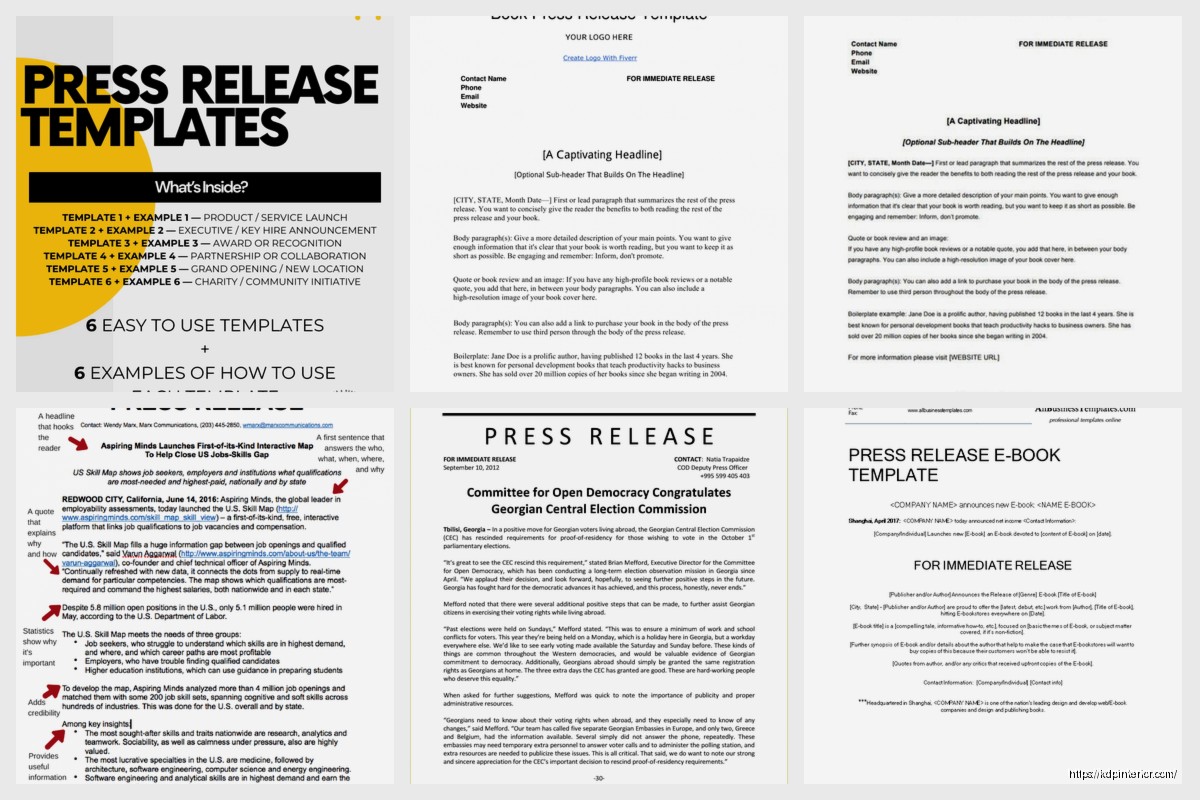
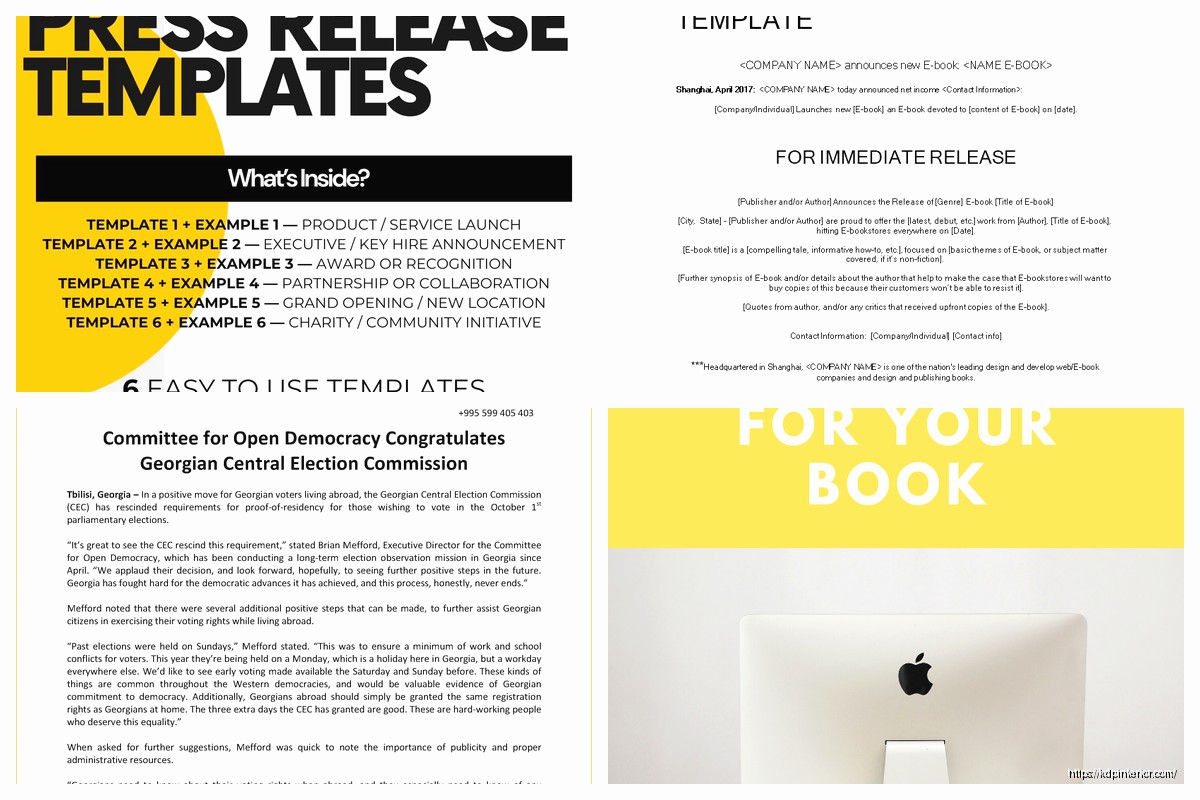
FOR IMMEDIATE RELEASE
Contact: [Your Name] Email: [your email] Phone: [your number]
[COMPELLING HEADLINE THAT INCLUDES BOOK TITLE AND MAIN HOOK]
[CITY, STATE] – [Date] – [Author name] announces the release of [book title], a [genre] that [brief description of what makes it unique/relevant]. The book is available [where and when]. [Second paragraph: Why this matters, what problem it solves, what’s timely about it, who it’s for]“[Quote from you about why you wrote it or what you hope readers get from it],” says [your name].
[Third paragraph: More details about content, your background/credentials if relevant, anything that establishes why you’re the person to write this book] [Optional: Brief endorsement or early review quotes if you have them from recognized sources] [Your boilerplate bio paragraph that you use for everything] [Book title] is available in [formats] for [prices] at [retailers]. [Any launch event info]. Review copies available upon request.###
That’s basically it. Don’t overthink it, just get the key information in there and make it easy for someone to decide if they want to cover your book.
DISCOVER OUR FREE BEST SELLING PRODUCTS
Editable Canva Lined Journal: Express Your Thoughts – KDP Template
Lined Pages Journal 120 pages Ready to Upload PDF Commercial Use KDP Template 6×9 8.5×11 5×8 for Notebooks, Diaries, Low Content
Lined Pages Journal 120 pages Ready to Upload PDF Commercial Use KDP Template 6×9 8.5×11 5×8 for Notebooks, Diaries, Low Content
Cute Dogs Coloring Book for Kids | Activity Book | KDP Ready-To-Upload
Daily Planner Diary : Diary Planners for Everyday Productivity, 120 pages, 6×9 Size | Amazon KDP Interior
Wolf Coloring KDP interior For Adults, Used as Low Content Book, PDF Template Ready To Upload COMMERCIAL Use 8.5×11"
Coloring Animals Head Book for Kids, Perfect for ages 2-4, 4-8 | 8.5×11 PDF
Printable Blank Comic Book Pages PDF : Create Your Own Comics – 3 Available Sizes
Notes KDP interior Ready To Upload, Sizes 8.5×11 6×9 5×8 inch PDF FILE Used as Amazon KDP Paperback Low Content Book, journal, Notebook, Planner, COMMERCIAL Use
Black Lined Journal: 120 Pages of Black Lined Paper Perfect for Journaling, KDP Notebook Template – 6×9
Student Planner Journal 120 pages Ready to Upload PDF Commercial Use KDP Template 6×9" 8.5×11" for Low Content book
Recipe Journal Template – Editable Recipe Book Template, 120 Pages – Amazon KDP Interior