-
×
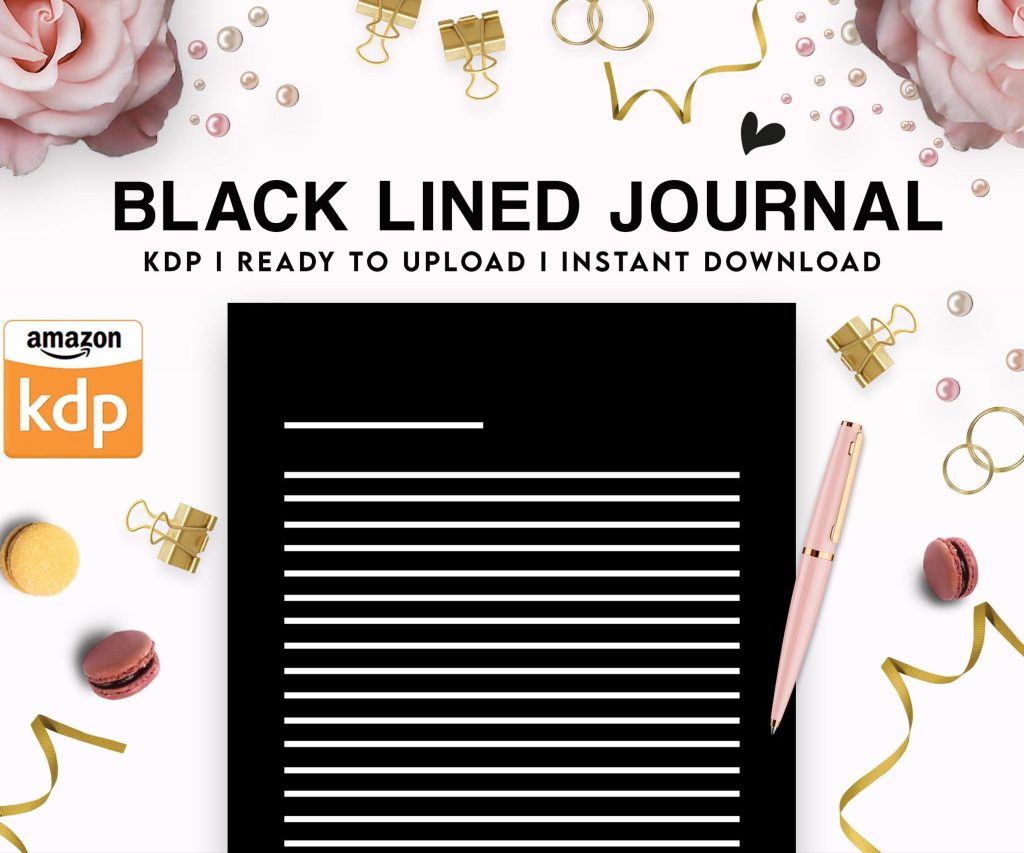 Black Lined Journal: 120 Pages of Black Lined Paper Perfect for Journaling, KDP Notebook Template - 6×9
1 × $0.00
Black Lined Journal: 120 Pages of Black Lined Paper Perfect for Journaling, KDP Notebook Template - 6×9
1 × $0.00
Subtotal: $0.00
 Black Lined Journal: 120 Pages of Black Lined Paper Perfect for Journaling, KDP Notebook Template - 6×9
1 × $0.00
Black Lined Journal: 120 Pages of Black Lined Paper Perfect for Journaling, KDP Notebook Template - 6×9
1 × $0.00 Subtotal: $0.00
Okay so last month I was reviewing some of my most successful self-published books on Amazon and realized something kinda obvious but also not – the authors who actually make money doing this have like three specific things in common, and it’s not what most beginner guides tell you.
So I’ve been consulting with indie authors since like 2017, and I’ve seen literally hundreds of success stories. The thing is, most people obsess over writing quality or cover design (which yeah, matters), but the authors pulling $3k-$15k monthly? They’re doing something different with their launch strategy.
First thing – they’re not launching one book. I know everyone says “write more books” but it’s specifically about how you sequence them. This author I worked with last year, she had written this paranormal romance that was honestly pretty good. Sat there making maybe $200/month. Then she wrote a prequel novella, priced it at 99 cents, and suddenly the main book started doing $1,500/month because the prequel was funneling readers.
This is gonna sound counterintuitive but hear me out. Your first book in a series should almost never be your main moneymaker. I learned this the hard way with my own low-content publishing stuff – was trying to make every planner or journal profitable on its own and it just… didn’t work the same way.
What successful indie authors do:
The math works because Amazon’s algorithms favor read-through. When someone buys book 1 for 99 cents and then immediately buys books 2 and 3, Amazon sees that series as HIGH VALUE and pushes it harder in recommendations.
Oh and another thing – category selection is probably responsible for like 60% of whether a book succeeds or fails. I was talking to this thriller author who was stuck in “Thriller > Suspense” making nothing, and we moved him to “Thriller > Medical” because his book had a doctor protagonist. Sales tripled in two weeks. Same book, same cover, same everything.
Here’s what I do now for every author I consult with:
Open Amazon in an incognito window. Search for books similar to yours. Look at the Top 100 in each category those books are in. If the #100 book in a category has a ranking better than 50,000, that category is competitive enough to matter but not so saturated you’ll never rank.
You want categories where #10 is around 5,000-15,000 BSR (Best Seller Rank). That’s the sweet spot. My dog just knocked over my coffee while I’m writing this, hang on…
Okay back. So the category thing – you get to pick two categories when you upload, but you can email KDP support and request up to 8 additional categories. Most authors don’t know this. I literally email them like “Hey, can you add my book to these categories” and list them out, and they just do it. Takes 24-48 hours.
Keywords are weird on Amazon because they’re not like Google keywords. You’re not trying to match search volume exactly – you’re trying to match buyer intent plus Amazon’s algorithm preferences.
Tools I actually use:
But here’s the thing nobody mentions – your subtitle is basically extra keyword space. I see so many authors waste it on poetic descriptions when you could literally put “A Small Town Romance with Second Chances and Found Family” and hit like four keyword phrases.
Wait I forgot to mention – your seven keyword boxes in KDP? Don’t put individual words. Use phrases. “cozy mystery cat” is better than just “cozy” or “mystery” separately. Amazon reads them as connected phrases.
So there’s this guy, won’t name him but he’s in my consulting group, who went from zero to $8k/month in about 14 months with LitRPG (gaming-based fantasy). His strategy was kinda genius and also exhausting.
He wrote book 1, published it. Then wrote book 2, published it TWO WEEKS later. Book 3 came out three weeks after that. By the time readers finished book 1, books 2 and 3 were already available. No waiting. The read-through rate was insane – like 70% of people who bought book 1 bought the whole series.
The psychology is simple: readers binge. If your series isn’t complete, they move to another author’s complete series. Momentum dies.
His specific numbers (he shared them with me):
Now he’s working on series two and three simultaneously. Burns him out sometimes but the income is stable.
Okay so funny story – I avoided Amazon ads for like two years because I thought they were too complicated. Then I finally learned them and realized I’d left probably $50k on the table with my own books. Don’t be me.
Start with Sponsored Products campaigns. Not Sponsored Brands, not Lockscreen ads, just regular Sponsored Products. Set your daily budget at $5-10 to start. You’re not trying to make profit immediately – you’re trying to gather data.
Target other authors’ books. Specifically, authors who write similar stuff but are slightly less popular than the TOP authors. Like if you write romance, don’t target Nora Roberts. Target the author ranked #5,000-#15,000 in romance. Their readers are looking for more books, and your ad budget goes further.
This is gonna sound weird but I target my own books sometimes. If someone’s looking at my book 2, I run ads showing them book 3. Costs like 8 cents per click and converts at 25-30% usually.
The biggest mistake I see: authors set their bid too low. Amazon suggests like 35 cents, authors bid 15 cents to save money, ad never shows. Start at Amazon’s suggestion, let it run for 100 clicks, then adjust based on ACoS (Advertising Cost of Sale).
Getting reviews is… yeah. It’s the worst part. You can’t buy them, can’t trade them, can’t incentivize them anymore. But successful authors do a few things that help.
They use Amazon’s “Request a Review” button in their KDP dashboard. For every sale, there’s a button you can click to send an automated review request. I do this for every single sale. Takes 30 seconds per day, generates maybe 1 review per 30-50 requests, but that adds up.
Also – and this helped one of my authors get 45 reviews in her first month – she built an ARC (Advanced Reader Copy) team through Facebook groups. Not posting in groups asking for reviews (that’s against TOS), but joining groups, being helpful, making friends, then mentioning “hey I have this book coming out, anyone want an early copy?” in casual conversation.
I put off building an email list for SO LONG because it seemed like extra work. But every successful indie author I know has one, and here’s why it matters:
When you launch a new book, you email your list. Even 200 people on a list can generate 20-40 sales in the first day. That initial velocity tells Amazon “this book is popular” and triggers better algorithm placement. It’s a snowball effect.
Use BookFunnel to deliver the books (free account works fine for starting out). Offer a free prequel or bonus chapter as the signup incentive. Put the signup link in the back of every book.
My friend Sarah (writes cozy mysteries) has 3,000 people on her list. When she launches a book, she makes $2,000 in the first 48 hours just from her list, which pushes the book into the top 1,000, which triggers Amazon’s recommendations, which generates another $3,000-5,000 in organic sales that first week.
This debate is exhausting but here’s my actual experience: for your first series, go KDP Select (Amazon exclusive). You get access to Kindle Unlimited, which is huge. Page reads count as royalties, and some genres (fantasy, sci-fi, romance) make MORE from KU than from sales.
Once you have three full series published and making consistent money on Amazon, then test going wide (Draft2Digital, IngramSpark, etc.). But starting wide is just… it’s splitting your focus when you should be learning one platform really well.
I have 200+ books published. First 150 were KDP Select only. Last 50 I’ve been testing wide. Wide is making me about 15% extra income, but it took 3-4 months to set up properly and learn each platform’s quirks.
Successful indie authors write fast. Not necessarily high quality on the first draft (that’s what editing is for), but they finish books. The average successful indie author I’ve worked with publishes 4-6 full-length novels per year, or 8-12 novellas.
They use dictation software (Dragon or even just Google Docs voice typing). They outline heavily before writing so they don’t get stuck. They batch their writing sessions – like writing three chapters in one four-hour session instead of spreading it out.
One author I know wakes up at 5am, writes until 7am, then goes to her day job. She finishes a 60,000-word novel every 8-10 weeks this way. It’s not glamorous but it’s consistent.
Let’s talk money because that’s what matters. A “successful” indie author making this their full-time income is usually:
Your royalty rate is 70% if you price between $2.99-$9.99, but Amazon deducts delivery costs (usually 5-15 cents). Under $2.99 or over $9.99, you only get 35% royalties.
KU page reads pay about $0.004 per page right now (changes monthly). A 300-page book fully read = $1.20. Sometimes that’s better than a $2.99 sale depending on your royalty after delivery costs.
This one author I worked with was pricing at $3.99 and making $2.73 per sale. We tested $4.99 and she made $3.45 per sale, and the higher price actually increased perceived value – sales went UP by 15%. Sometimes people think cheap = low quality.
Your book description needs to be formatted. Use HTML tags in the KDP dashboard:
Open with a hook, not a summary. “When Sarah’s husband disappears…” not “This is a thriller about…”
Include social proof if you have it (“Over 500 five-star reviews!”). End with a call-to-action (“Scroll up and click BUY NOW”).
Also, your A+ Content (if you’re enrolled in KDP Select) – use it. Add images, comparison charts, author bio. Books with A+ Content convert like 5-10% better according to Amazon’s own data.
Wait I forgot to mention series pages. If you have multiple books in a series, claim your series page through Author Central. It groups all your books together and creates a “buy the series” button. I’ve seen this increase box set sales by 30-40% easily.
The backend keyword boxes – I usually fill them with:
Don’t repeat words already in your title or subtitle. Amazon already indexes those.
Look, the honest truth is most indie authors fail because they publish one book, expect it to make $5k immediately, get discouraged, and quit. The ones who succeed treat it like a business – consistent output, data-driven decisions, long-term thinking. It takes 18-24 months usually to build momentum, but once you have it, the income is surprisingly stable. My best month ever was $31k across all my KDP books, but my average is more like $8k-$12k, and that’s after seven years of learning this stuff and making every mistake possible.
DISCOVER OUR FREE BEST SELLING PRODUCTS
Editable Canva Lined Journal: Express Your Thoughts – KDP Template
Lined Pages Journal 120 pages Ready to Upload PDF Commercial Use KDP Template 6×9 8.5×11 5×8 for Notebooks, Diaries, Low Content
Lined Pages Journal 120 pages Ready to Upload PDF Commercial Use KDP Template 6×9 8.5×11 5×8 for Notebooks, Diaries, Low Content
Cute Dogs Coloring Book for Kids | Activity Book | KDP Ready-To-Upload
Daily Planner Diary : Diary Planners for Everyday Productivity, 120 pages, 6×9 Size | Amazon KDP Interior
Wolf Coloring KDP interior For Adults, Used as Low Content Book, PDF Template Ready To Upload COMMERCIAL Use 8.5×11"
Coloring Animals Head Book for Kids, Perfect for ages 2-4, 4-8 | 8.5×11 PDF
Printable Blank Comic Book Pages PDF : Create Your Own Comics – 3 Available Sizes
Notes KDP interior Ready To Upload, Sizes 8.5×11 6×9 5×8 inch PDF FILE Used as Amazon KDP Paperback Low Content Book, journal, Notebook, Planner, COMMERCIAL Use
Black Lined Journal: 120 Pages of Black Lined Paper Perfect for Journaling, KDP Notebook Template – 6×9
Student Planner Journal 120 pages Ready to Upload PDF Commercial Use KDP Template 6×9" 8.5×11" for Low Content book
Recipe Journal Template – Editable Recipe Book Template, 120 Pages – Amazon KDP Interior