
Amazon KDP guide, KDP book publishing
Self Publishing KDP: Author Independence Blueprint
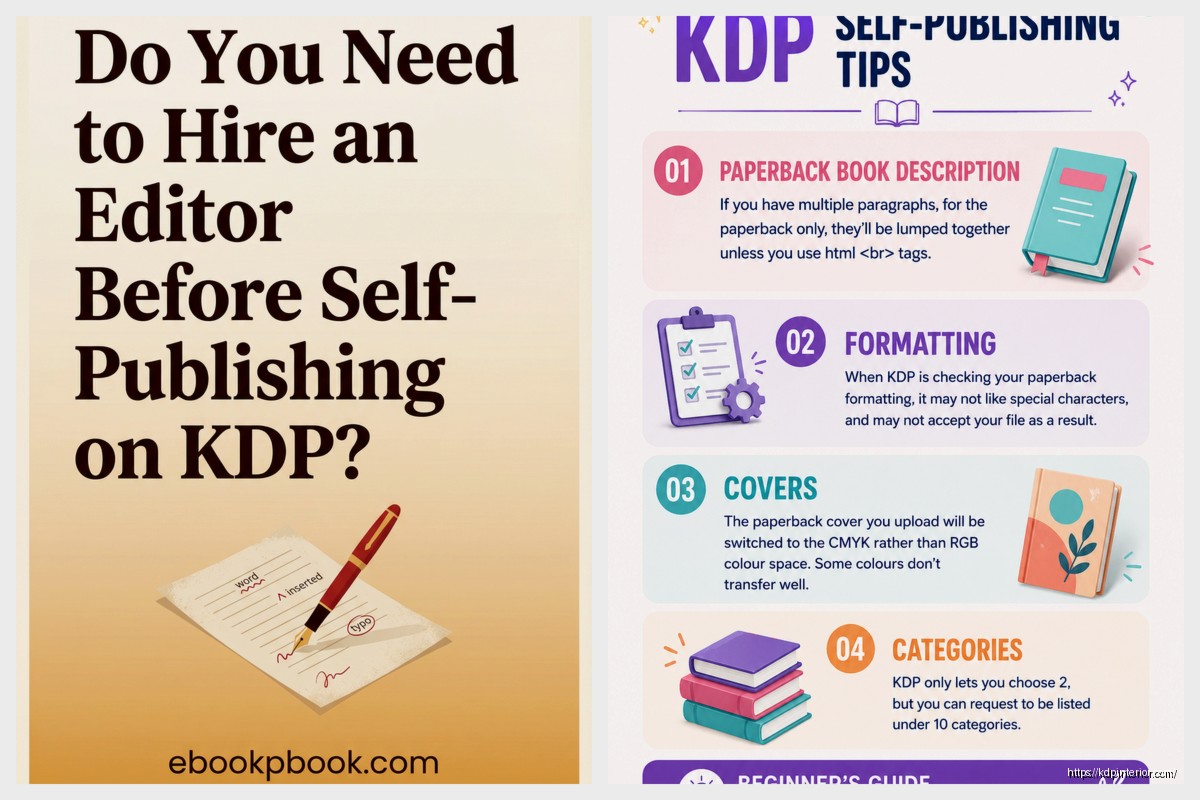
May
Okay so here’s the thing about KDP self-publishing that nobody really tells you upfront – it’s less about writing talent and more about treating it like an actual business from day one. I spent my first year doing everything backwards and honestly could’ve saved myself like six months if someone had just laid this out.
Getting Your Account Set Up Without Screwing It Up
First thing, when you’re creating your KDP account, use your legal name or your registered business name. I know everyone wants to jump straight to a pen name but that’s not what goes on your tax forms. Your pen name comes later in the publishing process. Also make sure you’ve got your tax information ready – either a W-9 if you’re in the US or the appropriate tax treaty forms if you’re international. Amazon holds your money hostage until this is done and it’s super annoying.
And get your bank account linked immediately. Sounds obvious but you’d be surprised how many people forget this step and then wonder why they haven’t been paid after 60 days.
The Niche Research Part That Everyone Gets Wrong
So niche research is where like 80% of authors completely bomb. They write what they wanna write without checking if anyone’s actually searching for it. Look, I love creative expression as much as the next person but if you want independence – like actual quit your job independence – you need to follow the data.
I use a combination of Publisher Rocket and just manually digging through Amazon’s categories. Publisher Rocket costs like $97 but it’s a one-time fee and honestly paid for itself in my first month. What you’re looking for is categories where books are selling (check the bestseller ranks, anything under 100k is moving copies) but where the competition isn’t absolutely dominated by trad published authors with huge marketing budgets.
My sweet spot? BSR between 20k-80k, with independently published books holding at least 40% of the top 20 spots in that category. That tells me real people are buying AND that indie authors can compete.
Quick Niche Validation Checklist
- Check the Look Inside feature on top books – are they actually good or is there room to do better
- Read the 3-star reviews – these tell you what readers wanted but didn’t get
- Count how many books the top authors have published – if they’ve got 50+ books they’re playing the volume game and you can too
- Search the main keyword on Amazon and see if ads show up – if companies are paying for ads there’s money in that niche
Actually Writing The Thing vs Outsourcing
Here’s where people get weird about self-publishing. Some authors will tell you that you MUST write everything yourself or you’re not a real author. That’s gatekeeping nonsense. I’ve written about 60% of my books myself and outsourced the rest through ghostwriters. Both approaches work.
If you’re writing it yourself, just get words on the page. Your first draft is gonna be terrible – mine always are. I usually write 1500-2000 words a day when I’m actively drafting and my cat keeps walking across my keyboard so half the time I’m backspacing anyway. The goal is just to finish. You can’t edit a blank page.
For outsourcing, I mainly use Upwork and Reedsy. Budget at least $0.03-0.05 per word for decent quality. Yeah it adds up – a 50k word book is gonna run you $1,500-2,500 plus editing. But if that book makes you $500/month for the next two years that’s a pretty solid ROI.
Editing Because Nobody Reads Typo-Filled Books Twice
Do NOT skip editing. I don’t care how good you think your grammar is. You need at minimum a solid proofread, ideally a copy edit. Developmental editing is great for fiction but for a lot of non-fiction you can get away with less intensive editing.
I found my main editor on the Editorial Freelancers Association website like four years ago and she’s saved me from publishing some truly embarrassing mistakes. Cost varies wildly but expect $500-1,500 for a full edit on a standard-length book.
If you’re really bootstrapping it, trade editing services with another author. I did this early on and it… works okay? You both need to actually know what you’re doing though or you’re just two blind people leading each other.
Cover Design That Doesn’t Look Like Garbage
Your cover is doing like 60% of the selling work. Maybe more. People absolutely judge books by their covers no matter what that saying claims.
I use a mix of 99designs for important launches (contests start around $299) and pre-made covers from places like Go On Write for quicker projects ($40-80). The pre-made route is totally fine as long as you’re not in a super saturated niche where everyone’s using the same templates.
What makes a good cover? It needs to look professional at thumbnail size. Open Amazon on your phone and scroll through your category. Can you read the title? Does the cover communicate the genre instantly? If you have to explain your cover, it’s not working.
Cover Elements That Actually Matter
- Title legibility at small size
- Genre-appropriate fonts and imagery
- Color schemes that pop against Amazon’s white background
- Author name that’s readable but not competing with the title
- No clipart unless you’re doing kids books and even then be careful
The Formatting Nightmare
Okay so formatting is weirdly technical for something that seems simple. You’ve got two formats to worry about: ebook and paperback.
For ebooks I just use Vellum. It’s Mac-only which sucks if you’re on Windows, but it’s literally click a button and your book is formatted perfectly for Kindle. Costs $249 for unlimited ebooks. If you’re on Windows, Atticus is similar and works on both platforms – $147 one-time fee.
Don’t try to format directly in Word and upload that. Amazon’s converter will make it look weird and you’ll spend hours fixing issues that shouldn’t exist.
For paperbacks, the interior is pretty straightforward if you’re doing text-only books. KDP has templates you can download. Just… actually use the templates. Match your trim size to what’s common in your genre. Most fiction is 5×8 or 6×9. Don’t get creative with weird sizes because printing costs go up and readers think it’s odd.
Keywords and Categories That Actually Get You Found
This is where I see authors leave so much money on the table. You get seven keyword phrases on KDP – use all seven. These aren’t just single words, they’re phrases up to 50 characters.
Use specific long-tail keywords that your target readers actually search for. “Romance” is useless. “Small town enemies to lovers romance” is much better. Check what’s working by looking at the subtitles of bestselling books in your niche – authors literally tell you their keywords in their subtitles.
For categories, you get two main categories when you upload but you can email KDP support and ask to be placed in up to 10 total categories. Just give them your book’s ASIN and the category paths you want. Takes like 24 hours and boom, you’re in more places where readers can find you.
Wait I forgot to mention – there’s this tool called KDP Rocket that’s the same as Publisher Rocket, they just renamed it. Don’t buy both like I almost did because I’m apparently bad at Google.
Pricing Strategy That Makes Sense
Ebook pricing is its own psychology game. The 70% royalty tier ($2.99-9.99) is usually where you wanna be for full-length books. I price most of my stuff at $4.99 which feels like good value to readers and gets me $3.50 per sale after delivery fees.
For launch strategy, some people do 99 cents to game the algorithms. I’ve tested this and… it works for visibility but you make no money during the promo and the algorithm doesn’t always treat you better afterward. Your mileage may vary.
Paperbacks need to be priced higher obviously because of printing costs. Amazon shows you the minimum price – I usually add $2-3 to that for my royalty. So if printing costs $4 and Amazon needs $0.60, I might price at $12.99 and make about $2 per sale.
The Launch Process Without Paid Ads
Okay so launching without spending money on ads is totally possible but you gotta work harder. I built my first 50 reviews through:
- My email list which was like 200 people at the time
- Posting in relevant Facebook groups (without being spammy)
- ARC readers through BookSirens and NetGalley
- Just asking friends and family honestly
Get your book up a few days before your official launch date so you can check for formatting issues. Set your launch date for a Tuesday or Wednesday – that’s when Amazon’s algorithms are most active for new releases.
When You Should Actually Start Running Ads
Don’t run ads until you’ve got at least 15-20 reviews and you know your book converts. I wasted probably $500 learning this lesson. Amazon ads are the main platform you’ll use – Facebook ads can work but they’re harder to make profitable.
Start with automatic campaigns to see what Amazon thinks your book should show up for. Budget like $5/day to start. Once you have data after a week or two, grab the keywords that converted and move them to manual campaigns where you can control the bids better.
This is gonna sound weird but I do all my ad work while watching TV because it’s so mindnumbing. Just logged into my account during that show with the dragons – you know the one – and optimized bids during commercial breaks.
Building The Publishing Business Infrastructure
Treat this like a business from month one. Open a separate bank account. Track your expenses because everything’s deductible – software, covers, editing, ISBNs, ads, even a portion of your internet if you’re working from home.
I use QuickBooks Self-Employed which is like $15/month and handles quarterly tax estimates. Speaking of taxes, set aside 25-30% of your earnings if you’re in the US. Self-employment tax is real and it hurts if you don’t plan for it.
Get your own ISBNs if you’re doing this seriously. Amazon gives you free ones but then Amazon owns that ISBN. Bowker sells them – $125 for one or $295 for ten. Just get the ten, you’ll use them faster than you think.
The Volume Game vs Quality Deep Dives
There are two main strategies in KDP land. Volume players publish 4-10+ books per year, often shorter works or series. Quality players publish 1-2 bigger books and market them heavily. Both work.
I’m somewhere in the middle – about 4-5 books per year with moderate marketing on each. My income is split pretty evenly across my catalog which is exactly what you want. If one book tanks it doesn’t kill your whole business.
The authors making $10k+ per month usually have at least 20-30 books published. That’s not to discourage you but to set realistic expectations. Your first book probably won’t quit your job for you. Your twentieth might.
Series Strategy For Sustainable Income
Series are where the real money is, especially in fiction. Readers who finish book one and love it will immediately buy book two. Your read-through rate is the most important metric once you have a series.
I price book one lower ($2.99 or even permafree) and books 2-5 at $4.99 each. If someone buys all five books I make way more than if I’d priced book one at $4.99 and they never continued.
Write at least three books before you publish the first one if possible. This lets you launch them rapidly – book one on week one, book two on week four, book three on week eight. The momentum keeps you visible in Amazon’s algorithms.
When This Actually Becomes Full-Time Income
Real talk – it took me 14 months to hit $2k/month consistently. That was with publishing about every 8-10 weeks and learning ads as I went. Some people do it faster with more aggressive publishing schedules or better niche selection. Some take longer.
The key is that it compounds. Book ten makes you more money than book one did because now you have nine other books to lead readers to. That back catalog is your asset.
Current numbers for me are between $5k-8k per month depending on seasonality, with about 180 titles live. Some are winners making $200+/month, some make $5/month, most are in the $20-80 range. It adds up.
DISCOVER OUR FREE BEST SELLING PRODUCTS
Editable Canva Lined Journal: Express Your Thoughts – KDP Template
Lined Pages Journal 120 pages Ready to Upload PDF Commercial Use KDP Template 6×9 8.5×11 5×8 for Notebooks, Diaries, Low Content
Lined Pages Journal 120 pages Ready to Upload PDF Commercial Use KDP Template 6×9 8.5×11 5×8 for Notebooks, Diaries, Low Content
Cute Dogs Coloring Book for Kids | Activity Book | KDP Ready-To-Upload
Daily Planner Diary : Diary Planners for Everyday Productivity, 120 pages, 6×9 Size | Amazon KDP Interior
Wolf Coloring KDP interior For Adults, Used as Low Content Book, PDF Template Ready To Upload COMMERCIAL Use 8.5×11"
Coloring Animals Head Book for Kids, Perfect for ages 2-4, 4-8 | 8.5×11 PDF
Printable Blank Comic Book Pages PDF : Create Your Own Comics – 3 Available Sizes
Notes KDP interior Ready To Upload, Sizes 8.5×11 6×9 5×8 inch PDF FILE Used as Amazon KDP Paperback Low Content Book, journal, Notebook, Planner, COMMERCIAL Use
Black Lined Journal: 120 Pages of Black Lined Paper Perfect for Journaling, KDP Notebook Template – 6×9
Student Planner Journal 120 pages Ready to Upload PDF Commercial Use KDP Template 6×9" 8.5×11" for Low Content book
Recipe Journal Template – Editable Recipe Book Template, 120 Pages – Amazon KDP Interior