
Amazon KDP guide, KDP book publishing
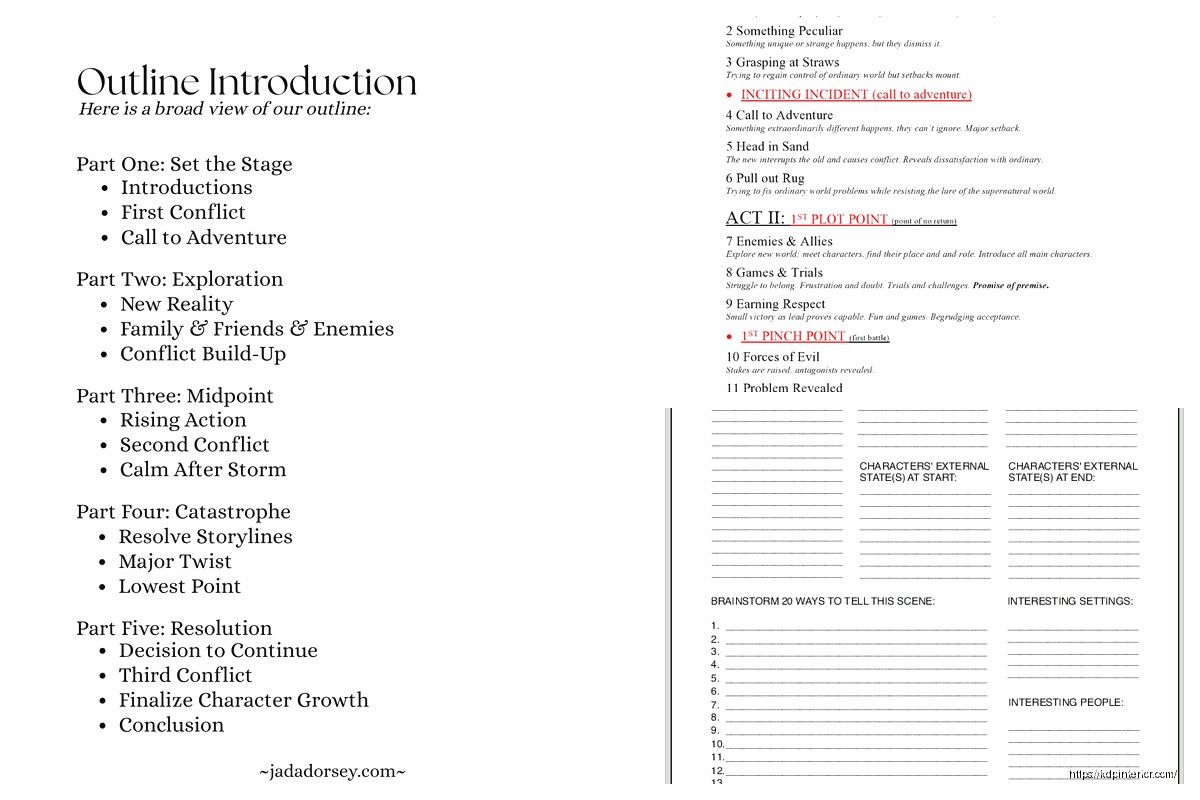
Writing a Book Template: Story Structure Frameworks

Mar
okay so I just spent like three hours yesterday mapping out story structures for this thriller client and honestly the whole template thing finally clicked for me in a way I can actually explain
The Three-Act Structure Because Obviously
Look, everyone starts here and there’s a reason. It’s basically the training wheels of story templates but you’re gonna use it forever anyway. Act One is your setup – roughly 25% of your book. You introduce your protagonist, show their normal world, then hit them with the inciting incident that kicks everything off.
Act Two is where you’ll spend like 50% of your page count and honestly this is where most people’s books fall apart because it’s just… long. Your character pursues their goal, hits obstacles, has a midpoint where something major shifts (either they move from reactive to proactive or vice versa), then things get progressively worse until you hit the lowest point.
Act Three is the final 25% – the climax, resolution, new normal. Simple right? Except it’s not because knowing this structure and actually USING it are completely different things.
Save the Cat Beat Sheet (I Use This Weekly)
Blake Snyder’s beat sheet is stupidly specific and that’s why it works. He breaks down exactly what should happen at what page count. For a 400-page novel you’d hit these beats:
- Opening Image (page 1-5) – snapshot of your protagonist’s life before
- Theme Stated (page 10-15) – someone mentions what your book is really about
- Catalyst (page 25) – the inciting incident
- Debate (page 25-50) – should they do the thing or not
- Break Into Two (page 50) – they commit to the journey
- B Story (page 55) – usually a relationship subplot starts
- Fun and Games (page 50-200) – the promise of your premise delivered
- Midpoint (page 200) – false victory or false defeat
- Bad Guys Close In (page 200-300) – everything falls apart
- All Is Lost (page 300) – lowest moment
- Dark Night of the Soul (page 300-320) – they wallow
- Break Into Three (page 320) – they figure out the solution
- Finale (page 320-390) – execute the plan
- Final Image (page 390-400) – opposite of opening image
I literally have this printed out and taped above my desk. When I’m outlining for clients I just plug their story into these beats and like 80% of the structure problems solve themselves.
The Hero’s Journey If You’re Writing Fantasy
Joseph Campbell’s thing is everywhere in fantasy and sci-fi. It’s got twelve stages but you don’t have to use all of them – I usually condense it depending on the book length.
The basic flow: Ordinary World, Call to Adventure, Refusal of the Call, Meeting the Mentor, Crossing the Threshold into the special world, Tests/Allies/Enemies, Approach to the Inmost Cave, Ordeal (the big crisis), Reward, The Road Back, Resurrection (final test), Return with the Elixir.
Star Wars follows this exactly. Harry Potter follows this exactly. The Matrix follows this exactly. It works but honestly it can feel formulaic if you don’t add your own spin. I was watching The Mandalorian last night and even that follows it episode by episode sometimes.
Wait I forgot to mention Story Circle
Dan Harmon created this simplified version of the Hero’s Journey and it’s actually more flexible. Eight stages in a circle:
- A character is in a zone of comfort
- But they want something
- They enter an unfamiliar situation
- Adapt to it
- Get what they wanted
- Pay a heavy price for it
- Then return to their familiar situation
- Having changed
You can use this for your whole book OR for individual chapters. I’ve used it for chapter-level plotting in serial fiction and it creates this nice rhythm where each chapter feels complete but also propels forward.
The Seven-Point Story Structure
Dan Wells teaches this and it’s gonna sound weird but you plot it backwards. You start with your Resolution, then figure out your Hook, then the Midpoint, then fill in the rest.
- Hook – your protagonist in their flawed state
- Plot Turn 1 – they’re forced into a new situation
- Pinch Point 1 – the antagonist/opposition flexes its power
- Midpoint – protagonist shifts from reactive to active
- Pinch Point 2 – antagonist really brings the pressure
- Plot Turn 2 – protagonist gains the final piece they need
- Resolution – confrontation and outcome
The backwards plotting thing actually helps because you know where you’re going. I use this mostly for mysteries where the ending really needs to be locked in before you write the beginning.
Freytag’s Pyramid For Literary Stuff
This is the old-school German dramatic structure and honestly it’s better for literary fiction than genre fiction. Five parts:
Exposition, Rising Action, Climax (which is in the MIDDLE not the end), Falling Action, Denouement.
The weird thing here is the climax happens at the midpoint and then you spend the second half dealing with the consequences. It’s less about external conflict resolution and more about internal character stuff playing out. If you’re writing anything literary or character-driven this template actually works better than three-act.
The Fichtean Curve (Never Used This Until Last Month)
This one starts with rising action immediately – no setup. You throw the reader into a crisis right away, then you have a series of escalating crises that build tension, eventually leading to the climax. Backstory and character development happen through flashbacks or brief pauses between crises.
It’s exhausting to read if done wrong but thrillers and action novels use this constantly. Think of those books that start with a car chase on page one. That’s Fichtean Curve.
Oh and another thing about templates
None of these are rigid. Like I know I’m laying them out all structured but in practice you’re gonna blend them. I usually start with Save the Cat for the overall arc, then use Story Circle for chapter plotting, then reference Hero’s Journey if I’m stuck on what the midpoint should be.
How I Actually Build a Template Document
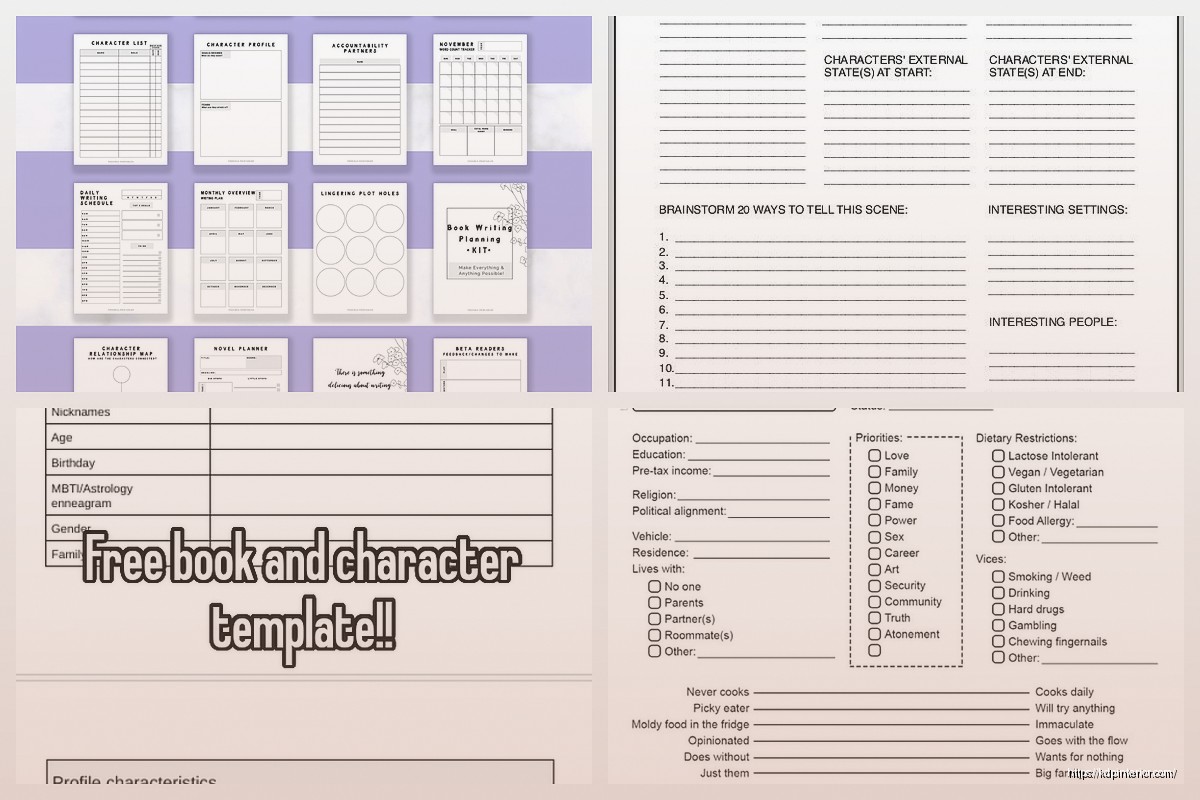
Okay so practically speaking here’s what I do. I open a Google Doc or Scrivener depending on the project. I choose my primary structure – usually Save the Cat or Seven-Point. Then I create sections:
Working Title and Logline at the top so I don’t lose sight of what the book is actually about.
Character Arc Section where I map where the protagonist starts emotionally vs where they end. What internal flaw are they overcoming. This runs parallel to plot structure.
Beat Breakdown where I list each major beat from whatever template I’m using. Under each beat I write:
- Target word count or chapter number
- What happens externally (plot)
- What happens internally (character)
- Specific scene ideas if I have them
Subplot Tracking because subplots need structure too. I usually give each subplot a mini three-act structure that weaves through the main plot.
Scene List at the bottom where I expand each beat into actual scenes with POV character noted if it’s multiple POV.
The whole template ends up being like 10-15 pages before I write a single word of the actual manuscript. My dog just knocked over my coffee so gonna pause here…
Genre-Specific Template Adjustments
okay back – Romance novels need specific beats that other genres don’t. The meet-cute, the first kiss, the commitment ceremony, the black moment breakup, the grand gesture. If you’re doing romance you gotta hit these or readers will feel cheated even if your three-act structure is perfect.
Mysteries need the clues planted at specific intervals. I usually put the first major clue around the 25% mark, a red herring around 40%, the twist that reframes everything at the midpoint, then accelerating reveals in the third act.
Thrillers need a ticking clock element built into the structure. Your template should note where time pressure increases.
The Actual Workflow
When someone hires me to help structure their book or when I’m doing my own, here’s the process:
First I make them write a one-sentence logline. If they can’t explain their book in one sentence the structure is gonna be a mess.
Then I ask: what’s the protagonist’s internal flaw and external goal? Structure hangs on these two things being in conflict.
Next I pick the template framework that fits their genre and style. Literary = Freytag. Genre fiction = Save the Cat. Epic fantasy = Hero’s Journey. Thriller = Fichtean Curve or Seven-Point.
I fill out the major beats first. Just bullet points. What happens at each structural moment. This takes maybe an hour.
Then I expand each beat into scenes. A beat might be one scene or five scenes. This is where the template becomes an actual outline.
Finally I look for pacing problems. Are there too many scenes in Act Two? Is the climax too rushed? Does the midpoint actually shift something or is it just another obstacle?
Common Template Mistakes
People treat templates like rules instead of guidelines. You can move beats around. The midpoint doesn’t have to be exactly at 50% – anywhere from 45-55% works.
Another mistake is forgetting that every scene needs its own mini-structure. Even a quiet conversation scene should have a beginning, middle, end with some kind of shift or revelation.
Also people forget that character arc and plot structure have to align. Your protagonist’s internal change should happen at the same time as major plot beats. The moment they overcome their fear should coincide with them taking the action that leads to climax.
Templates I Don’t Use Much
The Snowflake Method is too detailed for me personally. You start with a one-sentence summary then expand it to a paragraph then to a page then to character sketches then… it’s a lot. Some people love it but I find it takes longer to plan than to just write.
The Hollywood Formula with all its specific page counts only works if you’re writing a screenplay or a 90k word novel. Shorter or longer and the math gets weird.
Kishotenketsu is a four-act structure from East Asian storytelling that doesn’t use conflict as the driving force. It’s intro, development, twist, reconciliation. I’ve tried using it and Western readers find it unsatisfying because they expect conflict-driven plots.
Making Templates Work for Pantsers
If you hate outlining you can still use templates retroactively. Write your messy first draft, then map what you wrote onto a structure template and see what’s missing. Usually you’ll find you instinctively hit some beats but missed others.
Then in revision you add scenes or beef up existing scenes to hit the missing beats. I do this with probably 30% of my clients who are pantsers – we reverse-engineer the structure after the draft exists.
Look the main thing is templates are just diagnostic tools. They help you figure out why a story feels off or where it’s dragging. Once you internalize them you stop thinking about them consciously and they just become how you naturally structure stories. But starting out you gotta be deliberate about it. Print out Save the Cat, stick it on your wall, use it for your next three books, and then you won’t need it anymore because it’ll be muscle memory.
DISCOVER OUR FREE BEST SELLING PRODUCTS
Editable Canva Lined Journal: Express Your Thoughts – KDP Template
Lined Pages Journal 120 pages Ready to Upload PDF Commercial Use KDP Template 6×9 8.5×11 5×8 for Notebooks, Diaries, Low Content
Lined Pages Journal 120 pages Ready to Upload PDF Commercial Use KDP Template 6×9 8.5×11 5×8 for Notebooks, Diaries, Low Content
Cute Dogs Coloring Book for Kids | Activity Book | KDP Ready-To-Upload
Daily Planner Diary : Diary Planners for Everyday Productivity, 120 pages, 6×9 Size | Amazon KDP Interior
Wolf Coloring KDP interior For Adults, Used as Low Content Book, PDF Template Ready To Upload COMMERCIAL Use 8.5×11"
Coloring Animals Head Book for Kids, Perfect for ages 2-4, 4-8 | 8.5×11 PDF
Printable Blank Comic Book Pages PDF : Create Your Own Comics – 3 Available Sizes
Notes KDP interior Ready To Upload, Sizes 8.5×11 6×9 5×8 inch PDF FILE Used as Amazon KDP Paperback Low Content Book, journal, Notebook, Planner, COMMERCIAL Use
Black Lined Journal: 120 Pages of Black Lined Paper Perfect for Journaling, KDP Notebook Template – 6×9
Student Planner Journal 120 pages Ready to Upload PDF Commercial Use KDP Template 6×9" 8.5×11" for Low Content book
Recipe Journal Template – Editable Recipe Book Template, 120 Pages – Amazon KDP Interior