-
×
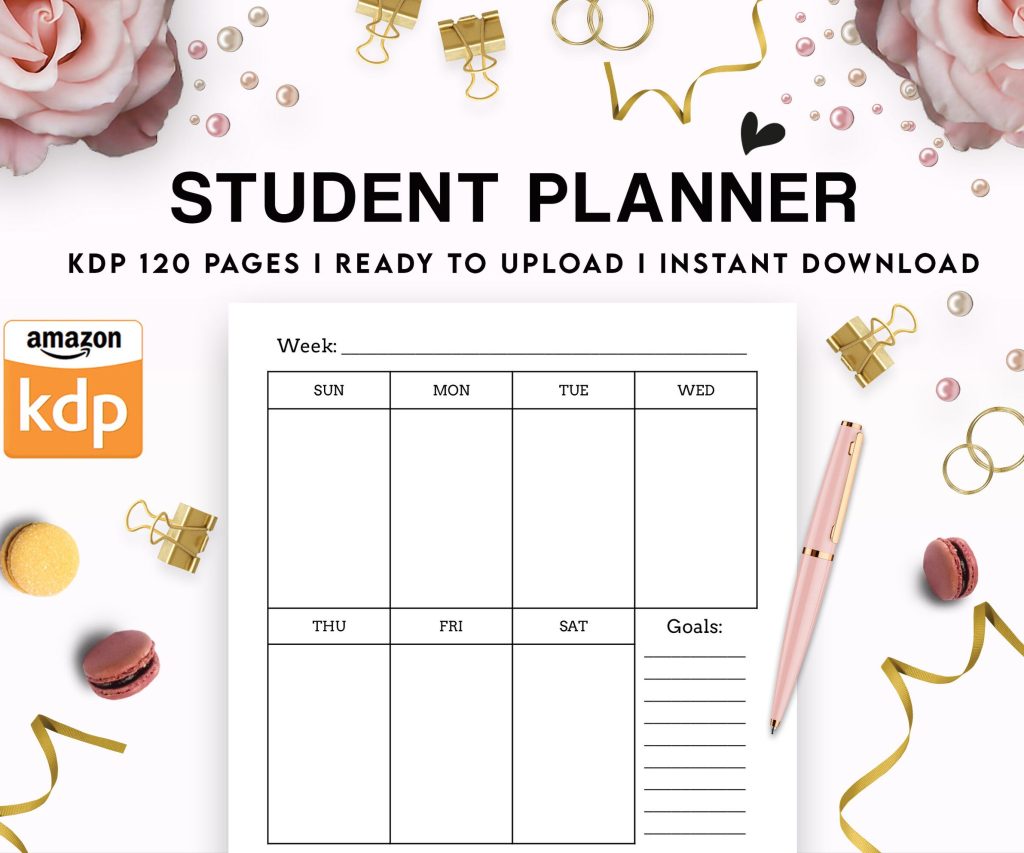 Student Planner Journal 120 pages Ready to Upload PDF Commercial Use KDP Template 6x9" 8.5x11" for Low Content book
2 × $0.00
Student Planner Journal 120 pages Ready to Upload PDF Commercial Use KDP Template 6x9" 8.5x11" for Low Content book
2 × $0.00
Subtotal: $0.00

Okay so the Amazon cover template thing is honestly way more specific than most people realize and I spent like three hours last Tuesday figuring out why my paperback covers kept getting rejected even though they looked perfect on my screen.
The basic deal is Amazon has different templates for different book types and if you mess up even slightly they’ll reject your cover during review. KDP paperback covers need this whole bleed and trim setup that’s different from just designing a regular image.
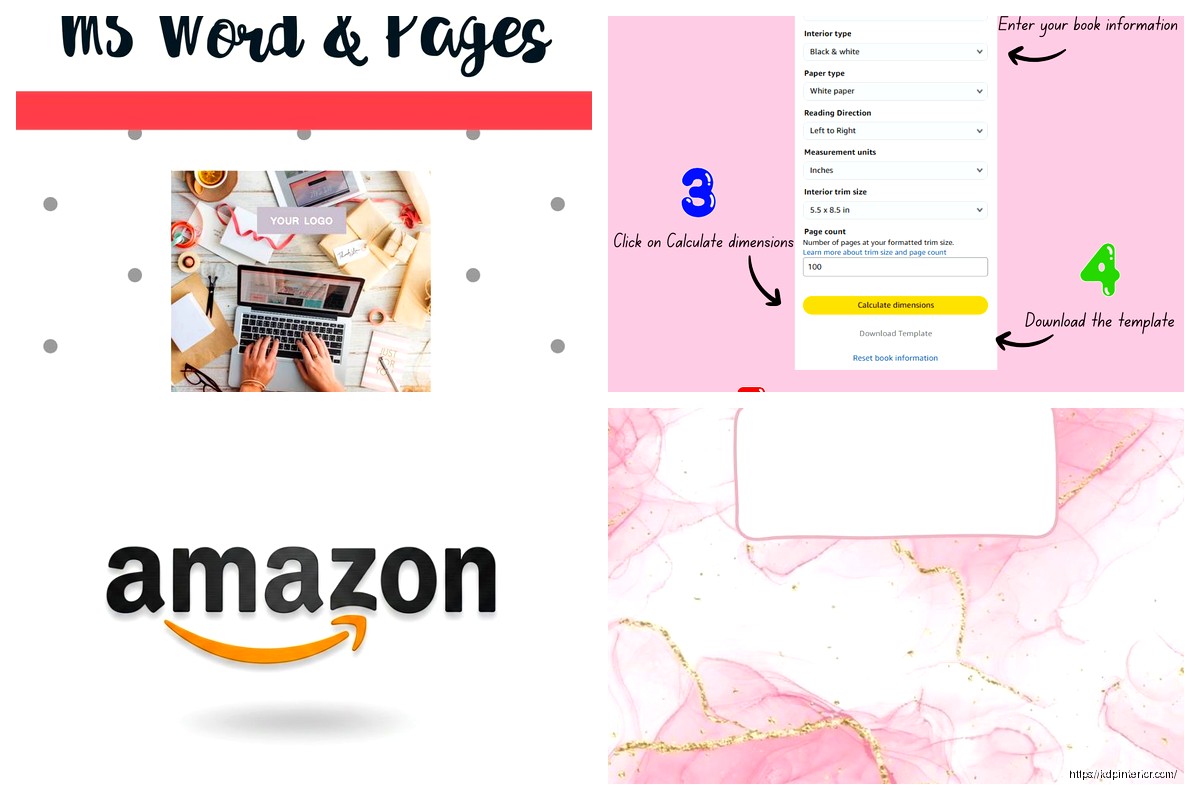
So first thing – you gotta download the template calculator directly from KDP. It’s not just one template, it changes based on your page count and paper type. Go to your KDP dashboard, start creating a paperback, enter your trim size and page count, then there’s this link that says “Download Cover Template” or something like that.
The template gives you a PDF with three sections marked – back cover, spine, and front cover. The red lines are your trim lines (where they actually cut the book) and then there’s this bleed area outside that which is like 0.125 inches on all sides. Anything in the bleed gets cut off so don’t put important stuff there.
Most of my books are 6×9 because it’s the standard for non-fiction and Amazon’s algorithms seem to favor common sizes. But here’s what’s available:
The spine width calculation is automatic in their template but it depends on page count and paper type. White paper makes a thinner spine than cream paper even with same page count which I didn’t know until like my 50th book.
Amazon’s super picky about a few things and they won’t tell you exactly what failed, they just reject it and say “cover doesn’t meet specifications” which is infuriating.
Your cover needs to be a single PDF or image file that includes all three parts – front, spine, back. The dimensions have to match their template exactly. Like if they say your cover should be 12.550 x 9.250 inches, it needs to be exactly that, not 12.5 x 9.25 rounded.
Minimum 300 DPI for print. I always design at 300 DPI from the start because trying to upscale later looks terrible. Amazon recommends 400 DPI for best quality but honestly I can’t tell the difference on most covers and the file sizes get huge.
For ebooks it’s different – they want 2560 pixels on the longest side for optimal quality. Most of my ebook covers are 2560 x 1600 pixels which works great. Minimum is like 1000 pixels but don’t go that low, looks bad on tablets.
So the spine calculation… okay this is where people mess up constantly. Amazon calculates spine width based on:
Here’s the rough formula but honestly just use their calculator – for white paper it’s about 0.002252 inches per page, for cream it’s 0.0025 inches per page. So a 200-page book on white paper has about a 0.45 inch spine. Don’t put important text on spines under 0.25 inches because it won’t print clearly.
Wait I forgot to mention – if your page count is under like 75 pages, sometimes Amazon won’t even show the spine text clearly on the product page mockup, so test your book size first before spending hours on spine design.
Besides KDP’s own template generator, there’s a few places I grab templates from:
KDP Cover Template Generator – this is the official one, it’s at kdp.amazon.com in the help section or when you’re setting up a book. You need to know your exact specs first.
Canva has KDP templates built in now which is honestly a game changer. Search “KDP Cover” in Canva and there’s templates for common sizes. The free version has basic templates, Pro has more. I design probably 60% of my covers in Canva now because it’s just faster than Photoshop for simple designs.
Creative Fabrica and similar sites have pre-made KDP cover templates if you’re doing like low-content books or want to start from something professional. Some are free, most are paid but cheap.
I’ve used pretty much everything at this point:
Adobe InDesign – overkill for most covers but if you’re doing complex layouts it’s good. Handles bleed settings perfectly.
Photoshop – what I used for my first 100 books probably. Set up your canvas at exact dimensions plus bleed, 300 DPI, CMYK color mode for print (RGB for ebook). It works fine.
Canva – like I said, this is my current go-to. It’s just easier. The learning curve is nothing. You can do custom dimensions for exact KDP specs.
GIMP – free alternative to Photoshop, works but the interface is clunky. Better than nothing if you’re on a budget.
Affinity Publisher/Photo – one-time purchase unlike Adobe subscription. Really solid actually, I recommended this to someone last month and they love it.
This is gonna sound weird but Amazon accepts both RGB and CMYK for print now, though they convert everything to CMYK internally. I still design in CMYK when I remember because what you see is closer to what prints. RGB colors can shift when they convert them, especially bright blues and greens.
For file format, PDF is safest. I export as PDF/X-1a:2001 from InDesign or “Press Quality” PDF from Photoshop. Amazon also accepts TIFF and JPEG but PDF is standard.
Oh and another thing – flatten everything before you upload. No layers, no transparency, just a flat image. Amazon’s system sometimes chokes on layered files even though they’re supposed to accept them.
Beyond the trim line, keep important text at least 0.25 inches inside. Amazon calls this the “safe zone” or “live area” depending on which help doc you’re reading. I usually keep text 0.375 inches from trim to be safe because printing isn’t perfectly precise and you don’t want your title getting cut off.
For the spine, if your book is thin (under 130 pages usually), center your text carefully and keep it small. Amazon’s printing can shift slightly so spine text sometimes ends up partially on the front or back cover if you’re not careful.
I’ve had covers rejected for the dumbest stuff:
That last one got me twice before I figured it out. My cat walked across my keyboard while I was checking a cover once and I accidentally submitted the wrong file, that was fun to fix.
Order a proof copy always. Like always. I don’t care how perfect it looks on screen. Colors print darker than they appear on most monitors, and spine alignment can be off. It’s like $4 plus shipping to order a proof, totally worth it.
I usually order 2-3 proofs for new designs because the first one always has something I want to tweak. Could be the colors are off, could be text is too close to the edge, whatever.
Totally separate thing – ebook covers are just the front cover, no spine or back. They need to look good as tiny thumbnails because that’s how most people see them in search results.
I make my ebook covers at 2560 x 1600 pixels, 72 DPI is fine (Amazon’s gonna compress it anyway), RGB color mode, and save as JPEG at high quality. File size should be under 50MB but honestly under 5MB is better.
Test your cover at thumbnail size – like literally shrink it down to 150 pixels wide and see if the title is readable. If not, make your text bigger or simpler.
Since you asked how I actually do this – I open Canva, select custom size based on my KDP template dimensions, design the cover with all three sections, export as PDF (print quality, include bleed), double-check dimensions in Adobe Acrobat, then upload to KDP. Takes maybe an hour for a simple cover.
For more complex stuff I’ll start in Photoshop, work in CMYK, keep everything organized in layer groups, flatten when done, export as PDF with crop marks and bleed. Maybe 2-3 hours depending on how fussy I’m being.
The template from Amazon is your bible – download it, open it in whatever software you use, and design directly on top of it. That way you know everything’s positioned right. Delete the template layer before exporting obviously.
One more thing – if you’re doing a series, keep your template files organized. I have folders for each series with the base template, fonts used, color codes, everything. Makes it way faster to pump out book 2, 3, 4 when you’re not starting from scratch each time.
Most of my rejected covers were early on when I was winging it. Now that I follow their specs exactly and always use their template generator, I haven’t had a rejection in like 18 months. It’s really just about being precise with the technical stuff, the creative part is whatever you want.
DISCOVER OUR FREE BEST SELLING PRODUCTS
Editable Canva Lined Journal: Express Your Thoughts – KDP Template
Lined Pages Journal 120 pages Ready to Upload PDF Commercial Use KDP Template 6×9 8.5×11 5×8 for Notebooks, Diaries, Low Content
Lined Pages Journal 120 pages Ready to Upload PDF Commercial Use KDP Template 6×9 8.5×11 5×8 for Notebooks, Diaries, Low Content
Cute Dogs Coloring Book for Kids | Activity Book | KDP Ready-To-Upload
Daily Planner Diary : Diary Planners for Everyday Productivity, 120 pages, 6×9 Size | Amazon KDP Interior
Wolf Coloring KDP interior For Adults, Used as Low Content Book, PDF Template Ready To Upload COMMERCIAL Use 8.5×11"
Coloring Animals Head Book for Kids, Perfect for ages 2-4, 4-8 | 8.5×11 PDF
Printable Blank Comic Book Pages PDF : Create Your Own Comics – 3 Available Sizes
Notes KDP interior Ready To Upload, Sizes 8.5×11 6×9 5×8 inch PDF FILE Used as Amazon KDP Paperback Low Content Book, journal, Notebook, Planner, COMMERCIAL Use
Black Lined Journal: 120 Pages of Black Lined Paper Perfect for Journaling, KDP Notebook Template – 6×9
Student Planner Journal 120 pages Ready to Upload PDF Commercial Use KDP Template 6×9" 8.5×11" for Low Content book
Recipe Journal Template – Editable Recipe Book Template, 120 Pages – Amazon KDP Interior