
 Coloring Animals Head Book for Kids, Perfect for ages 2-4, 4-8 | 8.5x11 PDF
 Subtotal: $0.00
Amazon KDP guide, KDP book publishing
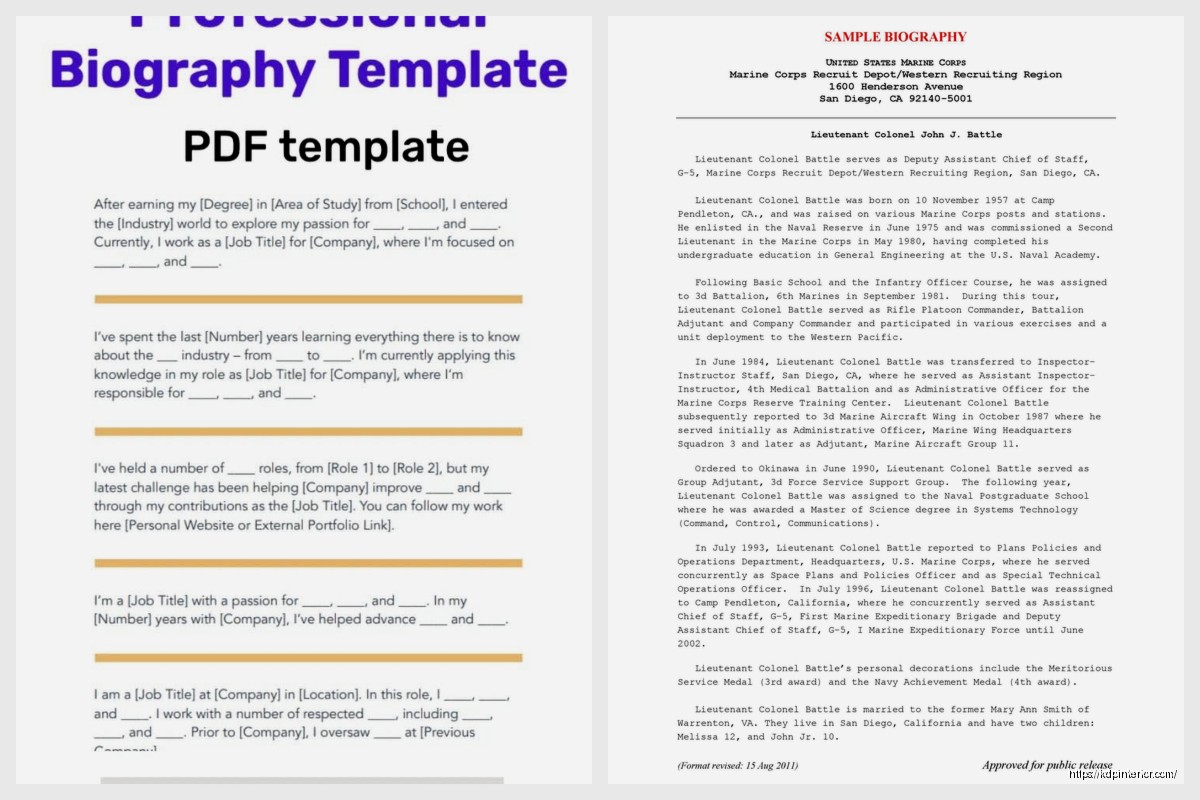
Biography Format Example: Sample Life Story
21
Apr
Apr
okay so you’re asking about biography formats and honestly I was just working on one for a client’s book last week while my cat kept walking across my keyboard so I get the timing here
The Basic Structure Nobody Tells You About
Right so here’s the thing with biography formats – there’s like three main approaches and everyone acts like there’s only one “right” way but that’s BS. I’ve published over 200 books and the format completely depends on whether you’re writing about yourself or someone else, and whether it’s gonna be a full book or just a short bio for like a website or book jacket.
The chronological format is the default everyone uses. Birth to present day, straightforward timeline. It’s what I used when I first started writing life stories because it felt safe, you know? You start with “John was born in 1952 in Cleveland” and just march forward through time. The problem is it can get boring real fast if the person’s life doesn’t have like major dramatic events every five years.
Then there’s thematic organization which I discovered around year 3 of doing KDP stuff. Instead of going year by year, you break the biography into themes or topics. Like one chapter is about their career, another about family, another about their hobbies or activism or whatever. This works really well for people who had parallel tracks in life – like someone who was simultaneously a doctor AND a jazz musician AND raised five kids.
The third approach is starting with the climax moment and then backtracking. Think about how every celebrity memoir now starts with them at rock bottom or their biggest achievement, then goes “but let me back up.” It’s more dramatic but honestly harder to pull off without sounding gimmicky.
Sample Format for a Full Biography Book
So let me give you the actual structure I use for full-length biographies, this is the template I have saved in Google Docs that I just copy every time:
Front Matter:
- Title page
- Copyright page
- Dedication (optional but people love these)
- Table of contents
- Foreword or preface – this is where you explain WHY this person’s story matters
Main Content Structure:
- Introduction/Prologue (2-5 pages) – Set the scene, give a snapshot of who this person is
- Early Life chapter (birth through childhood)
- Formative Years (teenage years, education, early influences)
- Career/Life Path chapters (this might be multiple chapters depending on length)
- Major Achievements or Challenges
- Personal Life (family, relationships, interests)
- Later Years and Legacy
- Conclusion or Epilogue
Back Matter:
- Acknowledgments
- Bibliography or sources if it’s researched
- Index for longer works
- Photo section (people eat this stuff up on KDP)
Short Bio Format Example
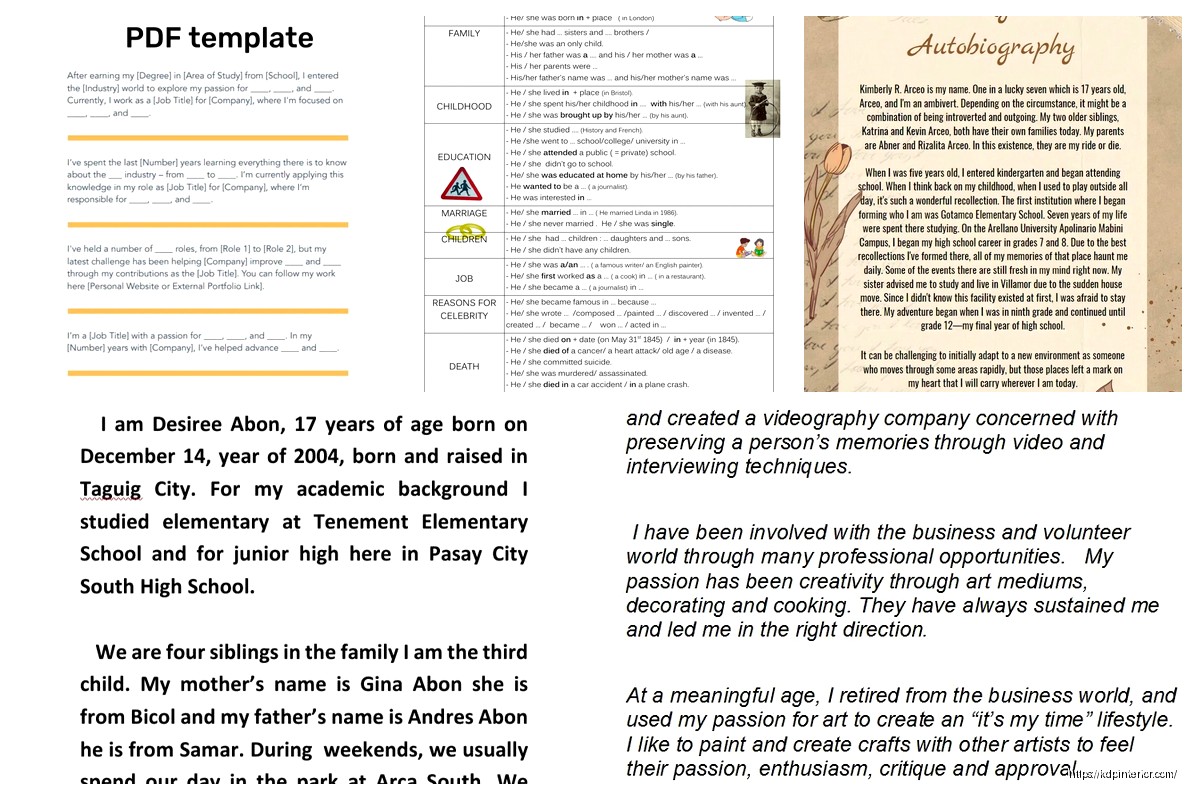
Wait I forgot to mention – if you just need a SHORT biography like for a speaker introduction or book jacket, the format is completely different. I use this structure and it’s never failed:
Paragraph 1: Current position and main claim to fame. “Sarah Chen is the founder and CEO of GreenTech Solutions, a company that has revolutionized solar panel efficiency.”
Paragraph 2: Background and credentials. Where they came from, education, relevant experience.
Paragraph 3: Achievements and recognition. Awards, publications, notable projects.
Paragraph 4: Personal touch and current focus. Maybe where they live, a hobby, what they’re working on now.
Keep it under 200 words for most purposes, maybe 300-400 if it’s for a more detailed press kit.
The Actual Writing Part That Trips People Up
So the format is one thing but actually writing in biography style is where I see people struggle on KDP all the time. You gotta use third person even if you’re writing your own story (unless it’s a memoir, different beast entirely).
Here’s a sample of how a biography paragraph should actually read:
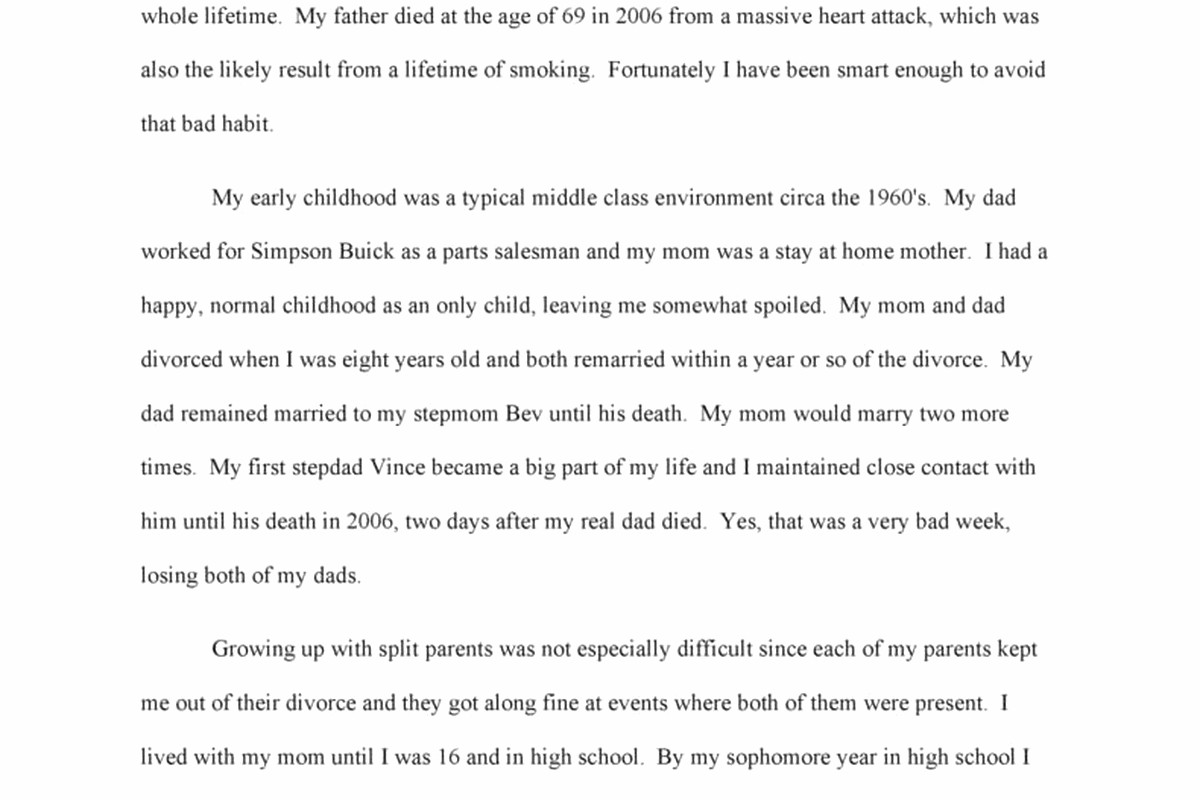
Robert Martinez was born on March 15, 1968, in San Antonio, Texas, the youngest of four children. His father worked as a mechanic while his mother managed the household and took in sewing work to supplement the family income. From an early age, Robert showed an aptitude for mathematics, often helping his older siblings with their homework despite being years younger.
See how that flows? Factual, third person, but still tells a story. You’re not just listing facts like a resume.
What to Include in Each Section
okay so breaking down what actually goes in each part because the outline is useless if you don’t know what content fits where…
Early Life Section:
- Birth date and place
- Family background and parents’ occupations
- Siblings and birth order
- Childhood home and neighborhood
- Early personality traits or interests
- Significant childhood events or challenges
- Cultural or historical context of the time period
This is gonna sound weird but I always include at least one specific childhood memory or anecdote. Makes the whole thing feel less like a Wikipedia entry. Like “Robert’s mother recalls him taking apart the family radio at age seven, spreading components across the kitchen table with complete confidence he could reassemble it. He couldn’t.”
Education and Formative Years:
- Schools attended
- Academic performance and favorite subjects
- Influential teachers or mentors
- Extracurricular activities
- First jobs or work experiences
- Pivotal decisions or turning points
- Challenges overcome during this period
Career/Main Life Work:
- How they got started in their field
- Early struggles or breakthrough moments
- Major projects or accomplishments
- Evolution of their work over time
- Collaborators and important relationships
- Obstacles faced and how they handled them
- Recognition and awards
Timeline Format Alternative
oh and another thing – sometimes a straight timeline format works better, especially for historical figures or people with really event-driven lives. I used this for a biography of a WWII veteran last year and it was perfect:
1925: Born in rural Montana to farming family
1943: Enlisted in Army Air Corps at age 18
1944-1945: Served as bombardier in European theater, flew 32 missions
1946: Returned home, enrolled at University of Montana on GI Bill
You get the idea. Each entry has the year in bold, then a brief description. Works great for people who lived through major historical events or had very linear career progressions.
Common Mistakes I See All The Time
Since we’re here and I’m rambling anyway – these are the things that make biographies tank on Amazon or just read terribly:
Too much chronological detail. You don’t need to account for every single year of someone’s life. I see people writing “In 1987, nothing significant happened. In 1988, John continued working at the same job.” Just skip those years, seriously.
No narrative thread. A biography isn’t just facts in order, it needs to tell a STORY. What’s the through-line? What’s the character arc? Even real people have arcs in their life stories.
Ignoring the historical context. If someone grew up in the 1960s, you gotta mention what was happening in the world. It matters. Context makes everything more interesting.
Being too formal or too casual. Biography voice is this weird middle ground – professional but readable. Not academic, not chatty. It’s a balance.
Length Guidelines That Actually Matter
For KDP specifically since that’s my world – here’s what I’ve learned about biography length and what sells:
- Short biography/profile: 1,000-5,000 words
- Medium biography: 20,000-40,000 words (this is like a thin paperback)
- Full biography: 50,000-100,000+ words
- Comprehensive/definitive biography: 100,000-200,000 words
The 30,000-40,000 word range is honestly the sweet spot for KDP. Long enough to feel substantial, short enough that you can actually finish it and price it reasonably. I was watching some crime show the other night and thinking about how they structure those stories – biographies need that same pacing.
Sample Opening Paragraphs
Let me show you a few different ways to start a biography because the opening sets the entire tone:
Traditional Opening:
Eleanor Rodriguez was born into a world of stark contrasts. The year was 1955, and her hometown of Laredo, Texas, sat at the crossroads of two cultures, two languages, and two very different visions of the American dream. As the daughter of Mexican immigrants who had crossed the border seeking opportunity, Eleanor’s early years were marked by both struggle and determination.
Action-Oriented Opening:
The courtroom fell silent as Eleanor Rodriguez rose to deliver her closing argument. It was 1982, and she was about to become the first Latina prosecutor in the county’s history to win a major felony case. But the path that led her to this moment began twenty-seven years earlier, in a small house on the outskirts of Laredo.
Reflective Opening:
In her later years, Eleanor Rodriguez would often say that she never intended to make history. She simply wanted to practice law, to seek justice, to make her parents proud. Yet the trajectory of her life – from the daughter of immigrants to a groundbreaking legal career – tells a different story, one of quiet revolution and persistent courage.
See how different those feel? Same person, totally different entry points into her story.
Research and Source Documentation
If you’re writing about someone else (not yourself), you gotta document your sources. I keep a running Google Doc with:
- Interview dates and subjects
- Documentary sources (letters, journals, records)
- Published sources (books, articles, archives)
- Photo and image sources
- Dates when you verified facts
This saves your butt later when someone questions a detail or you need to cite something. Trust me on this one – I learned the hard way on a biography project in 2019 where I had to go back and re-verify like 50 facts because I didn’t track sources properly the first time.
Formatting The Actual Document
For the physical formatting in your Word doc or whatever you’re using:
- 12pt font, Times New Roman or similar
- Double-spaced for drafts, single-spaced for finals
- 1-inch margins all around
- Chapter headings in larger font or bold
- Page numbers (seriously, always use page numbers)
- Section breaks between chapters
If you’re uploading to KDP, you’ll wanna use their formatting guidelines but this standard format converts easily.
The Personal Details Question
People always ask me how personal to get in a biography. Like, do you mention someone’s divorce? Their struggles with addiction? Their failures?
My rule: if it’s relevant to understanding their life story and publicly known, include it with respect and context. Don’t sensationalize, but don’t sanitize either. The most compelling biographies show the full human being – successes AND struggles.
Obviously if you’re writing your own bio for professional purposes, you control what goes in. But for a full life story? The messy parts often matter most.
I gotta wrap this up because it’s getting long but honestly the best way to learn biography format is to read a bunch of them. Pick up three or four biographies from your genre or time period and just study how they’re structured. I did this when I first started and it taught me more than any writing guide.
DISCOVER OUR FREE BEST SELLING PRODUCTS
Editable Canva Lined Journal: Express Your Thoughts – KDP Template
Lined Pages Journal 120 pages Ready to Upload PDF Commercial Use KDP Template 6×9 8.5×11 5×8 for Notebooks, Diaries, Low Content
Lined Pages Journal 120 pages Ready to Upload PDF Commercial Use KDP Template 6×9 8.5×11 5×8 for Notebooks, Diaries, Low Content
Cute Dogs Coloring Book for Kids | Activity Book | KDP Ready-To-Upload
Daily Planner Diary : Diary Planners for Everyday Productivity, 120 pages, 6×9 Size | Amazon KDP Interior
Wolf Coloring KDP interior For Adults, Used as Low Content Book, PDF Template Ready To Upload COMMERCIAL Use 8.5×11"
Coloring Animals Head Book for Kids, Perfect for ages 2-4, 4-8 | 8.5×11 PDF
Printable Blank Comic Book Pages PDF : Create Your Own Comics – 3 Available Sizes
Notes KDP interior Ready To Upload, Sizes 8.5×11 6×9 5×8 inch PDF FILE Used as Amazon KDP Paperback Low Content Book, journal, Notebook, Planner, COMMERCIAL Use
Black Lined Journal: 120 Pages of Black Lined Paper Perfect for Journaling, KDP Notebook Template – 6×9
Student Planner Journal 120 pages Ready to Upload PDF Commercial Use KDP Template 6×9" 8.5×11" for Low Content book
Recipe Journal Template – Editable Recipe Book Template, 120 Pages – Amazon KDP Interior